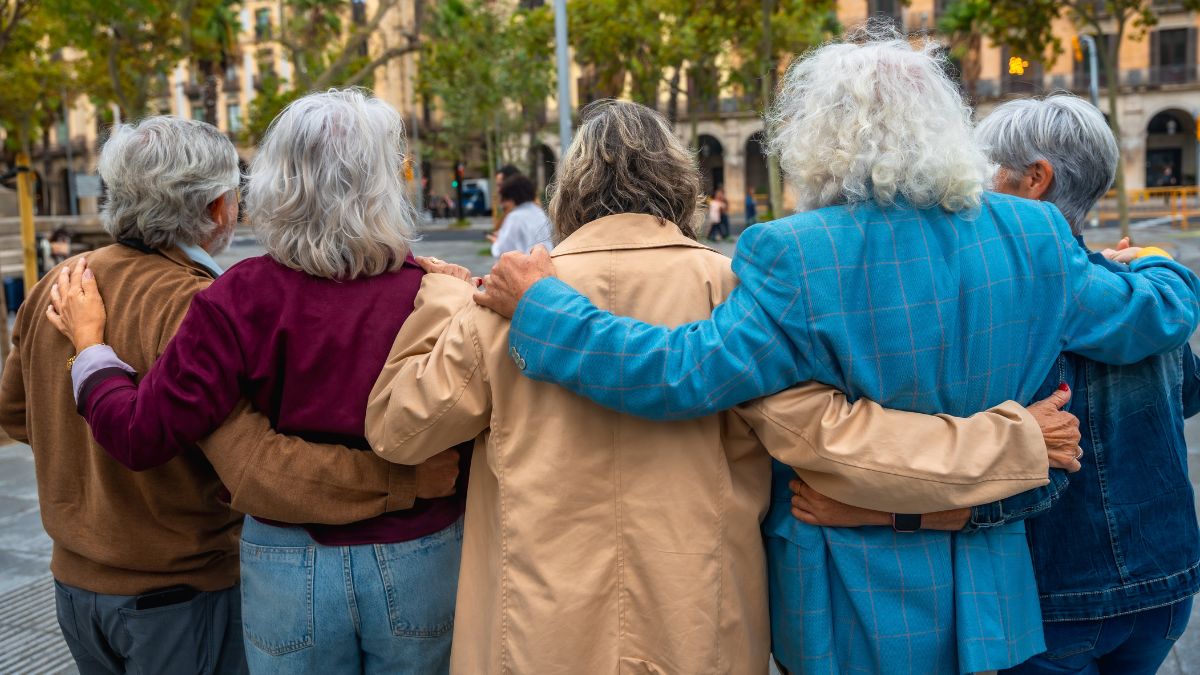
Retirement is often framed around financial readiness, leisure time, and personal freedom. Less discussed is the social transition that follows. For many, the most unexpected change is not boredom or loss of purpose, but the quiet disappearance of relationships once tied to daily work.
This shift is rarely abrupt. It unfolds gradually, often without conflict, making it harder to identify and address. Knowing why this happens can help retirees better prepare for and respond to the change.
Transition
Workplaces provide more than income. They create structured environments where interaction is routine and unavoidable. Colleagues share space, schedules, and tasks, which naturally fosters familiarity.
Over time, these repeated interactions can feel like friendship. Conversations during breaks, shared challenges, and daily proximity create a sense of connection. However, much of this connection is supported by the structure itself.
When retirement removes that structure, the interactions it sustained often disappear as well.
Structure
The workplace acts as an organizing system for social life. It determines when people meet, what they discuss, and how often they interact.
This can be illustrated clearly:
| Element | Workplace Role | After Retirement |
|---|---|---|
| Schedule | Fixed interactions | No built-in contact |
| Topics | Shared work context | Limited common ground |
| Frequency | Daily exposure | Occasional or none |
Without these elements, maintaining the same level of connection requires deliberate effort, which many people are not accustomed to making.
Decline
The loss of contact typically occurs gradually rather than suddenly.
Initial check-ins may occur in the early months after retirement. Over time, these decrease as former colleagues remain occupied with their own routines. The absence of shared daily experiences reduces the natural reasons to communicate.
This process can feel like a slow fading rather than a clear ending. Because there is no defining moment, it is difficult to address directly.
Misconception
A common assumption is that long-term interaction guarantees lasting friendship. In reality, duration does not always equal independence.
Many workplace relationships are dependent on proximity and shared purpose. When those conditions are removed, the relationship may not sustain itself.
This does not mean the connection was insincere. The interactions were real, but they were supported by an external system.
Impact
Research on retirement consistently identifies social disconnection as a key challenge. A significant portion of retirees report that the transition is more difficult than expected, largely due to reduced social interaction.
The effects are not only emotional. Studies from institutions such as the National Academies of Sciences indicate that prolonged social isolation is associated with increased health risks, including higher rates of cardiovascular issues and cognitive decline.
This highlights that the issue extends beyond personal feelings into broader well-being.
Generational
Cultural factors also play a role, particularly among older generations.
Many individuals were not encouraged to express loneliness or emotional need. As a result, the loss of social connection may go unspoken, even when it is strongly felt.
Instead of addressing the change directly, individuals may adapt quietly, often by withdrawing further. This can reinforce isolation over time.
Contrast
Not all relationships are affected equally.
Connections that exist outside of work structures tend to remain more stable. These relationships are typically maintained through deliberate effort rather than shared obligation.
Examples include:
- Regular social gatherings
- Family routines
- Long-standing friendships with independent habits
These relationships have their own systems in place, making them less vulnerable to disruption when work ends.
Response
Adjusting to this change requires a shift from passive to active social engagement.
During working years, interaction often occurs automatically. After retirement, it must be created intentionally. This can involve:
- Initiating contact rather than waiting for it
- Establishing regular meetups or routines
- Participating in group activities or classes
- Volunteering or joining community organizations
These actions help rebuild the structure that work once provided.
Adaptation
Developing new social patterns later in life can feel unfamiliar. It may involve initial discomfort, particularly when conversations are no longer centered around shared work.
However, over time, new forms of connection can emerge. These may differ in tone, often becoming more personal and less task-focused.
The key factor is consistency. Repeated interaction, even in new settings, gradually builds familiarity and trust.
Insight
The experience of losing work-based friendships is not unusual, though it is often unacknowledged. It reflects the extent to which social life can be shaped by external structures.
Recognizing this allows for a more accurate understanding of the transition. Rather than viewing the change as a personal loss or failure, it can be seen as a shift in environment.
With deliberate effort, new forms of connection can develop. While they may not replicate the exact dynamics of the workplace, they can provide meaningful and sustainable social engagement over time.
FAQs
Why do work friendships fade after retirement?
They depend on shared routines and proximity.
Is this loss normal in retirement?
Yes, many retirees experience it.
Does it mean friendships were not real?
No, they relied on workplace structure.
How to rebuild social connections?
Create routines and initiate contact.
Can new friendships form later in life?
Yes, with consistent effort and engagement.