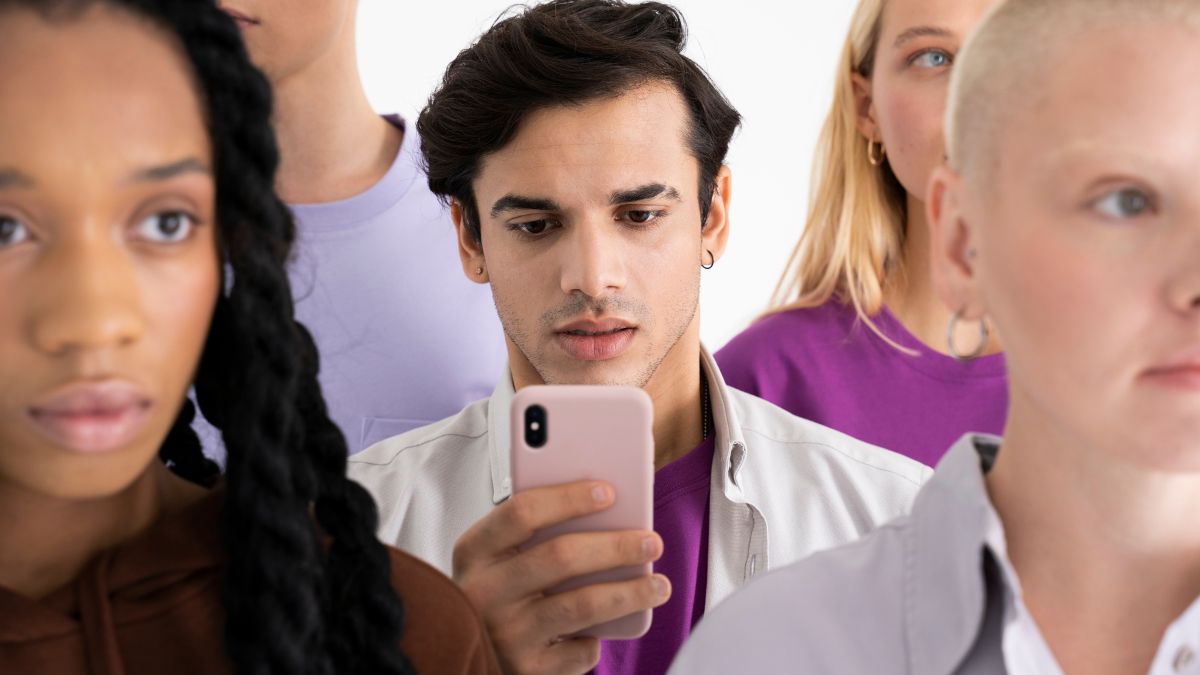
Social media is often described as a space built for sharing. Platforms encourage users to post updates, comment on discussions, and react to content from others. Because of this design, people who rarely post or interact are sometimes labeled as disengaged or antisocial.
However, psychology offers a different interpretation. Many individuals who quietly observe social media are not avoiding connection. Instead, they may be preserving a sense of self that exists outside of public performance.
In a digital environment where thoughts, photos, and experiences are frequently shaped for an audience, choosing to observe rather than participate can represent a deliberate and thoughtful form of self-protection.
Identity
Researchers who study digital identity often describe social media as a place where multiple versions of the self can appear at once.
Psychologist Qi Wang explains that individuals often operate with three overlapping identities in the digital era.
| Type of Self | Description |
|---|---|
| Internal self | Who a person believes they are |
| Presented self | The version shared online |
| Perceived self | How others interpret the online image |
Managing these versions can require ongoing attention. Each post or comment involves choices about tone, content, and presentation.
For individuals who prefer to observe rather than post, stepping away from this process can reduce the pressure of shaping their identity for public viewing. Observing allows them to remain connected to information and conversations without constantly adjusting how they appear to others.
Observation
Observation plays an important role in human awareness. Psychologists sometimes refer to the “observer self” as the part of consciousness that notices experiences without immediately reacting or performing.
This perspective allows people to process information and reflect before responding.
In the context of social media, silent observers engage primarily through this awareness. They watch discussions, read updates, and follow events while maintaining distance from the performative aspects of the platform.
Rather than withdrawing from social spaces entirely, they participate through attention rather than expression.
Performance
Posting on social media often involves presenting selected aspects of life. Users typically highlight achievements, opinions, or meaningful moments.
Although this process can help people share experiences and maintain relationships, it also introduces an element of performance. Each post represents only a portion of a person’s identity.
Technology researcher Sherry Turkle has argued that frequent sharing can sometimes create tension between connection and authenticity. When people repeatedly shape their experiences for public consumption, they may begin to focus more on presentation than reflection.
This does not mean that sharing is harmful in itself. However, it does illustrate why some individuals choose a more observational role. By not posting frequently, they avoid the need to transform personal moments into public content.
Experience
Another factor involves how social media affects real-world experiences.
Many people have noticed situations where moments are documented and shared immediately rather than simply experienced. Photographs, captions, and reactions become part of the event itself.
Silent observers bypass much of this process. Because they do not feel pressure to share everything publicly, they can experience events without deciding how they should appear online.
This approach can reduce the cognitive effort associated with curating personal moments for an audience.
Research
Research into social media behavior shows mixed results regarding active and passive use.
Some studies suggest that spending large amounts of time on social platforms, whether posting or scrolling, can be associated with increased feelings of loneliness. The effect appears to relate less to the specific behavior and more to the overall environment of comparison and constant visibility.
Other research indicates that different forms of engagement affect people in different ways. Passive browsing may sometimes increase anxiety when users compare their lives with the curated images they see online.
At the same time, observational use can also provide information, entertainment, and awareness without requiring the emotional investment that public posting sometimes involves.
These findings suggest that social media behavior cannot be reduced to simple categories such as active or passive participation.
Choice
For some individuals, remaining quiet on social media is not accidental. It is a deliberate decision about how they want to interact with digital environments.
Choosing not to post can reduce the pressure of maintaining a public identity. It also allows individuals to maintain a clearer separation between their private thoughts and their online presence.
This decision does not necessarily mean a person is disconnected. Many silent observers stay informed about their communities, follow discussions, and keep up with friends and family through reading rather than posting.
Their engagement simply takes a quieter form.
Balance
Psychologists often emphasize the importance of balance when discussing digital communication. Social media can strengthen relationships and provide access to information, but it can also encourage constant comparison and performance.
Observational participation offers one possible way to maintain that balance.
By limiting how often they post or interact publicly, individuals may reduce the psychological pressure that comes from managing an online persona. They remain connected to the digital world while protecting their internal sense of identity.
In the end, silent observation on social media should not automatically be viewed as disengagement. For many people, it represents a conscious choice about how they wish to participate in digital spaces. Rather than constantly presenting themselves to an audience, they preserve the quieter version of themselves that exists before thoughts and experiences are shaped for public display.
FAQs
What is a silent observer on social media?
Someone who reads and watches content without posting.
Is passive social media use unhealthy?
Not always, but excessive use may affect wellbeing.
Why do some people avoid posting online?
They may prefer privacy or avoid social pressure.
Does social media affect identity?
Yes, online presentation can shape self perception.
Can observing online still be participation?
Yes, many people engage by reading and following.