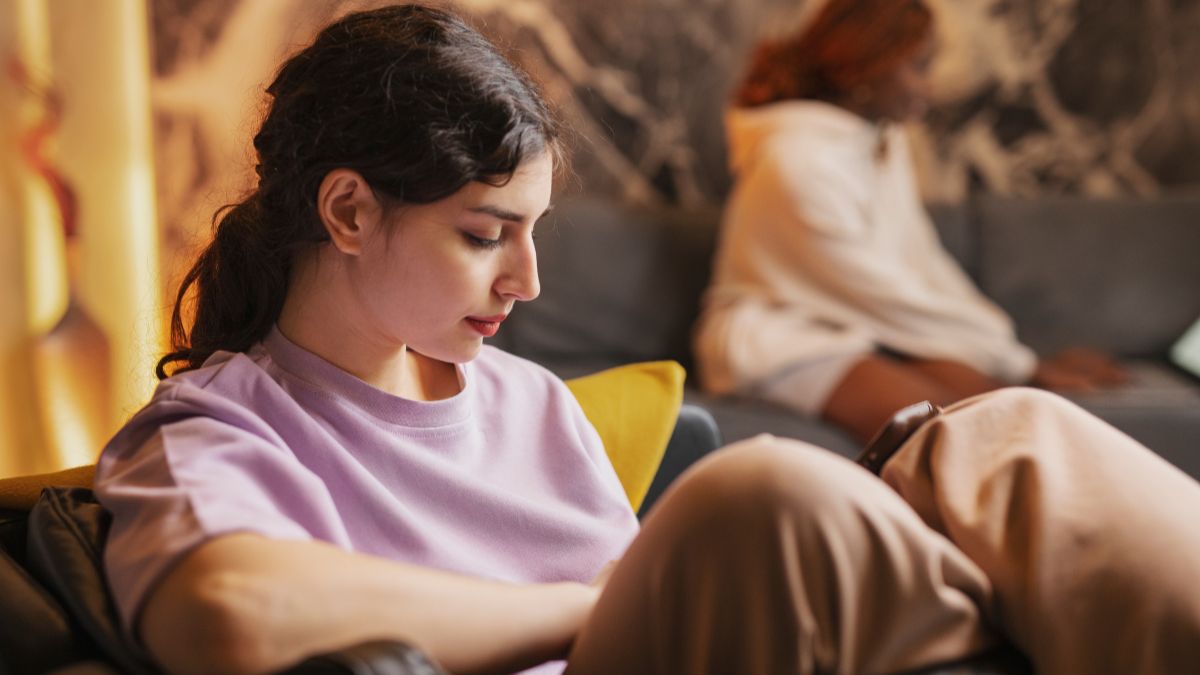
Loneliness is often imagined as the result of isolation. The common assumption is simple: people who lack social contact are the ones most likely to feel lonely. Yet psychological research increasingly shows that loneliness does not always come from a lack of people. Sometimes it emerges from a lack of being truly known.
This idea helps explain an interesting pattern psychologists are beginning to observe. Women who appear socially confident, empathetic, and well connected may still experience deep loneliness. The very qualities that make them excellent at maintaining relationships can sometimes create subtle barriers to authentic connection.
When someone becomes skilled at managing conversations, supporting others, and keeping social interactions smooth, they may end up performing connection rather than experiencing it.
Roles
Many socially capable women often occupy a familiar role within their social circles. They are the person others rely on for emotional support. Friends call them during difficult times, colleagues trust them with sensitive conversations, and family members depend on their ability to listen and offer thoughtful advice.
In these roles, they become emotional anchors.
Research from the Pew Research Center illustrates how frequently women participate in emotional support networks.
| Source of Support | Women | Men |
|---|---|---|
| Mother | 54% | 42% |
| Friend | 54% | 38% |
| Other family member | 44% | 26% |
| Mental health professional | 22% | 16% |
These figures show that women are more likely to both seek and provide emotional support within their relationships.
However, there can be an unintended consequence. When someone consistently plays the role of the listener or problem solver, others may begin to associate them mainly with stability and reliability. Over time, this can make it harder for that person to express their own vulnerability.
The role becomes fixed, even if the person behind it needs support as well.
Competence
Social competence can sometimes function as a form of emotional masking. People who are skilled communicators often learn techniques that help conversations flow smoothly. They ask open questions, remember personal details, and guide discussions in ways that make others feel comfortable.
These behaviors are valuable social skills, but they can also hide internal struggles.
Someone who appears confident in social situations may still feel anxious, uncertain, or disconnected internally. Because their outward behavior communicates confidence, others rarely suspect that deeper emotions exist beneath the surface.
Researcher Ragini Verma from the University of Pennsylvania has noted that women often show stronger emotional involvement in conversations and may remember social details more easily. This ability helps maintain relationships but can also create a mental workload.
Remembering birthdays, personal stories, family events, and emotional histories requires ongoing attention. Over time, the effort involved in maintaining these connections can become exhausting.
When competence becomes expected, it can feel like a responsibility rather than a choice.
Loneliness
Large-scale surveys show that loneliness affects women in distinctive ways. Data from Social Science Works indicates that women report feeling lonely more often than men by several measures. They are also significantly less likely to report never experiencing loneliness.
This pattern may seem surprising because women generally maintain larger social networks and communicate more frequently with friends and family.
The explanation may lie in the difference between social contact and emotional recognition. Being surrounded by people does not necessarily guarantee that others understand one’s inner experiences.
When social interactions focus mainly on supporting others, the individual providing that support may remain unseen.
Brain
Neuroscience research adds another layer to this discussion. Studies examining loneliness suggest that people who feel isolated may process social information differently from others. Brain activity in regions associated with shared understanding and perspective taking can differ between lonely individuals and those who feel socially connected.
This does not mean that loneliness is purely neurological. Rather, the brain appears to adapt to repeated experiences of disconnection.
For socially capable women, this can create a subtle feedback loop. Their strong social awareness allows them to navigate interactions effectively, yet their authentic emotions may remain unexpressed. Over time, this difference between external behavior and internal experience can deepen feelings of separation.
The individual becomes skilled at social participation while still feeling unseen.
Technology
Modern communication tools also influence how people experience connection. Messaging platforms, social media, and digital conversations allow people to maintain frequent contact with large networks.
However, these interactions are often brief and structured around surface level updates.
Some research has suggested that heavy reliance on digital communication tools, including conversational technologies, can sometimes increase feelings of loneliness over time. While these tools create the appearance of connection, they may not always provide the depth of understanding found in face to face relationships.
For individuals who already rely on strong social skills to manage interactions, digital communication can reinforce the performance aspect of connection.
The interaction remains smooth, but emotional depth may remain limited.
Balance
Psychologists often emphasize that genuine connection requires vulnerability. Authentic relationships develop when people share uncertainty, confusion, or difficulty rather than presenting only competence.
For socially capable individuals, this can feel uncomfortable. The habits that make them effective communicators can also encourage them to manage conversations carefully and avoid exposing personal struggles.
Learning to step away from constant emotional management can create opportunities for deeper relationships. Allowing pauses in conversation, admitting uncertainty, or expressing personal challenges may feel unfamiliar but can invite more balanced interactions.
These moments of openness often encourage others to respond with their own honesty.
Connection
The broader lesson emerging from research is that the quantity of relationships does not determine emotional connection. Instead, the quality and authenticity of those relationships matter far more.
A person may know many people, maintain active conversations, and participate in social gatherings while still feeling that no one truly understands them.
In contrast, a few relationships built on mutual openness and honesty can significantly reduce loneliness.
This distinction highlights why socially capable individuals sometimes experience loneliness despite having strong interpersonal skills.
Their ability to maintain relationships is not the problem. The challenge lies in allowing those relationships to include their own needs and vulnerabilities.
In the end, loneliness among socially capable women is not a contradiction but a reflection of how social roles develop. Skills like empathy, emotional awareness, and communication are powerful tools, yet they can unintentionally create expectations that hide the individual behind them. Real connection often begins when those skills are balanced with openness and the willingness to be imperfect in front of others.
FAQs
Why do social women still feel lonely?
They may support others more than share themselves.
Can strong social skills cause loneliness?
Sometimes they mask true emotions.
Do women report loneliness more often?
Studies show women report it more frequently.
Does technology increase loneliness?
Heavy digital interaction may reduce deep connection.
How can loneliness be reduced?
Through honest and vulnerable relationships.