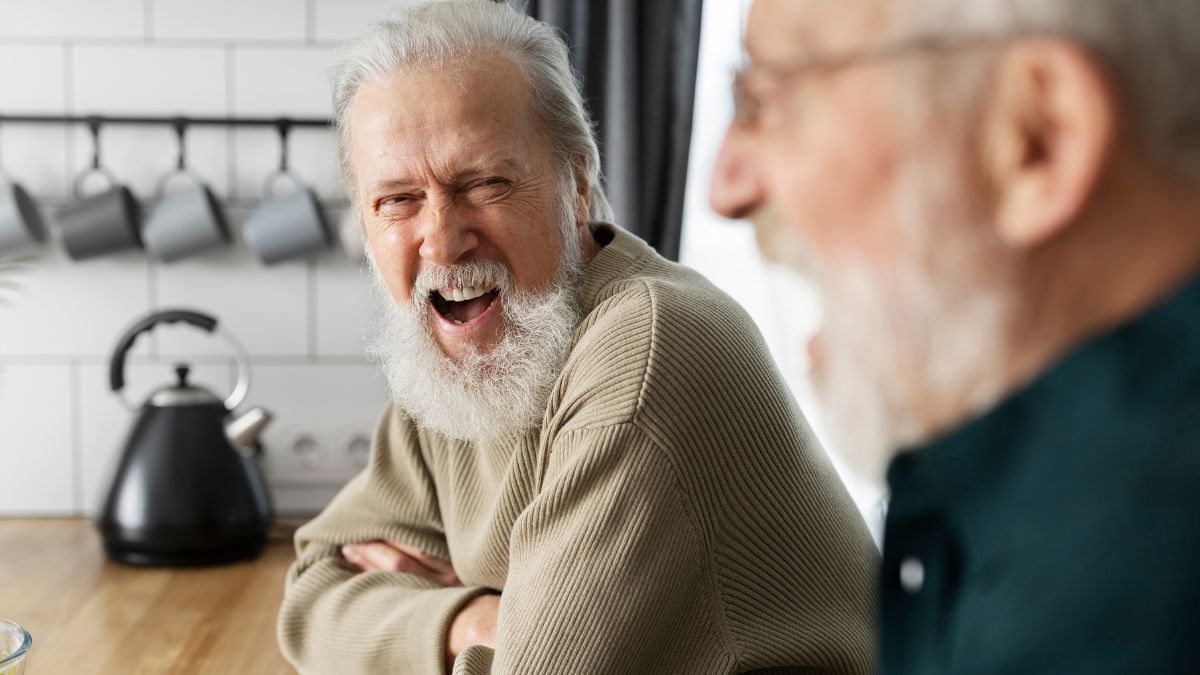
Many people notice that older men sometimes appear tense, distant, or quietly angry. It is easy to interpret this behavior as bitterness or stubbornness. However, psychology suggests a more complex explanation. For decades, many men were raised in cultures where emotional vulnerability was discouraged or even punished. Expressions of sadness, fear, or insecurity were often viewed as signs of weakness. Anger, on the other hand, was often the only emotion considered socially acceptable for men to display.
Because of this expectation, many men learned to hide their true feelings. Over time, suppressed emotions accumulated and often emerged as frustration or quiet anger. Knowing this pattern can help families, partners, and communities recognize that this behavior may reflect long-term emotional conditioning rather than personality alone.
Background
To understand the quiet anger sometimes seen in older men, it is useful to consider the social norms that shaped earlier generations. In many societies during the mid-20th century, men were expected to fulfill clearly defined roles as providers, protectors, and authority figures within families and workplaces.
Emotional restraint was widely encouraged. Boys were often taught phrases such as “boys don’t cry” or “be strong.” These messages reinforced the belief that expressing sadness or fear was inappropriate.
Read Also- Night Showers and Social Fatigue – Why Some People Prefer Washing Away the Day
Over time, this created a situation where men experienced many emotions but had limited socially acceptable ways to express them. Anger often became the only permitted outlet.
This emotional pattern can be summarized as follows:
| Emotion Experienced | Social Expectation | Typical Outcome |
|---|---|---|
| Sadness | Hide it | Internal stress |
| Fear | Avoid showing it | Anxiety |
| Disappointment | Suppress it | Frustration |
| Loneliness | Rarely discussed | Isolation |
| Multiple emotions | Express as anger | Irritability |
In many cases, anger became a substitute language for emotions that were otherwise discouraged.
Expectations
Men from earlier generations often carried significant social and economic responsibility. Many worked long hours to support their families, sometimes in physically demanding or stressful jobs.
Within these environments, emotional control was frequently interpreted as professionalism and strength. Displays of vulnerability could be viewed as weakness and might affect workplace reputation or authority.
In some professional settings, anger could even be interpreted as determination or leadership. However, showing sadness or uncertainty could lead to criticism or loss of respect.
As a result, many men learned to convert a wide range of emotions into anger because it was safer to express.
Consequences
Long-term emotional suppression can have psychological and physical effects. Studies in behavioral science suggest that consistently hiding emotions can increase stress and place strain on the body.
Over time, suppressed emotions may contribute to health and relationship challenges.
Some commonly discussed outcomes include:
| Effect | Description |
|---|---|
| Chronic stress | Continuous emotional restraint |
| Elevated blood pressure | Physical response to long-term tension |
| Emotional distance | Difficulty expressing feelings |
| Relationship strain | Limited emotional communication |
| Persistent irritability | Anger becoming a default response |
These patterns do not occur in every case, but research indicates they are common among individuals who have spent many years suppressing emotions.
Communication
Another important aspect is emotional vocabulary. Many men who grew up under strict emotional norms were rarely encouraged to describe or discuss their feelings.
As a result, they may have limited language for expressing complex emotions. When asked how they feel, responses may be brief, such as “fine,” “tired,” or “angry.”
This does not necessarily mean the emotions are absent. Instead, it often reflects a lack of practice in discussing them.
In family relationships, this can sometimes be interpreted as emotional distance. In reality, it may simply reflect habits developed over decades.
Cultural Change
Social attitudes toward emotional expression have gradually shifted. Younger generations are often encouraged to talk more openly about mental health and personal experiences.
Public discussions about emotional well-being, therapy, and stress have become more common. As a result, younger men may feel more comfortable discussing vulnerability than previous generations.
However, these changes can also highlight the differences between generations. Men who spent decades following older expectations may find it challenging to adopt new forms of emotional communication.
Learning new emotional habits later in life can take time and patience.
Adaptation
Despite these challenges, change is possible at any age. Mental health professionals often suggest practical steps that can help individuals develop greater emotional awareness.
These steps may include:
- pausing during moments of anger
- identifying the underlying emotion
- practicing more specific language for feelings
- discussing concerns with trusted people
Even gradual changes can improve communication and reduce emotional tension.
Families and communities can also play a role by creating environments where open discussion is accepted and respected.
Knowing the origins of quiet anger can lead to more constructive conversations across generations. Many older men developed emotional habits in response to social expectations that emphasized strength and restraint.
Recognizing this context does not excuse harmful behavior, but it helps explain how those patterns formed. As cultural attitudes continue to evolve, greater emotional awareness can provide opportunities for healthier relationships and improved well-being.
FAQs
Why do some older men appear quietly angry?
Often due to decades of suppressed emotions.
Was emotional expression discouraged in the past?
Yes, many cultures expected men to hide vulnerability.
Can suppressed emotions affect health?
Yes, they may contribute to stress-related conditions.
Why do some men struggle to describe feelings?
They were rarely encouraged to discuss emotions.
Is emotional awareness possible later in life?
Yes, emotional skills can be developed over time.