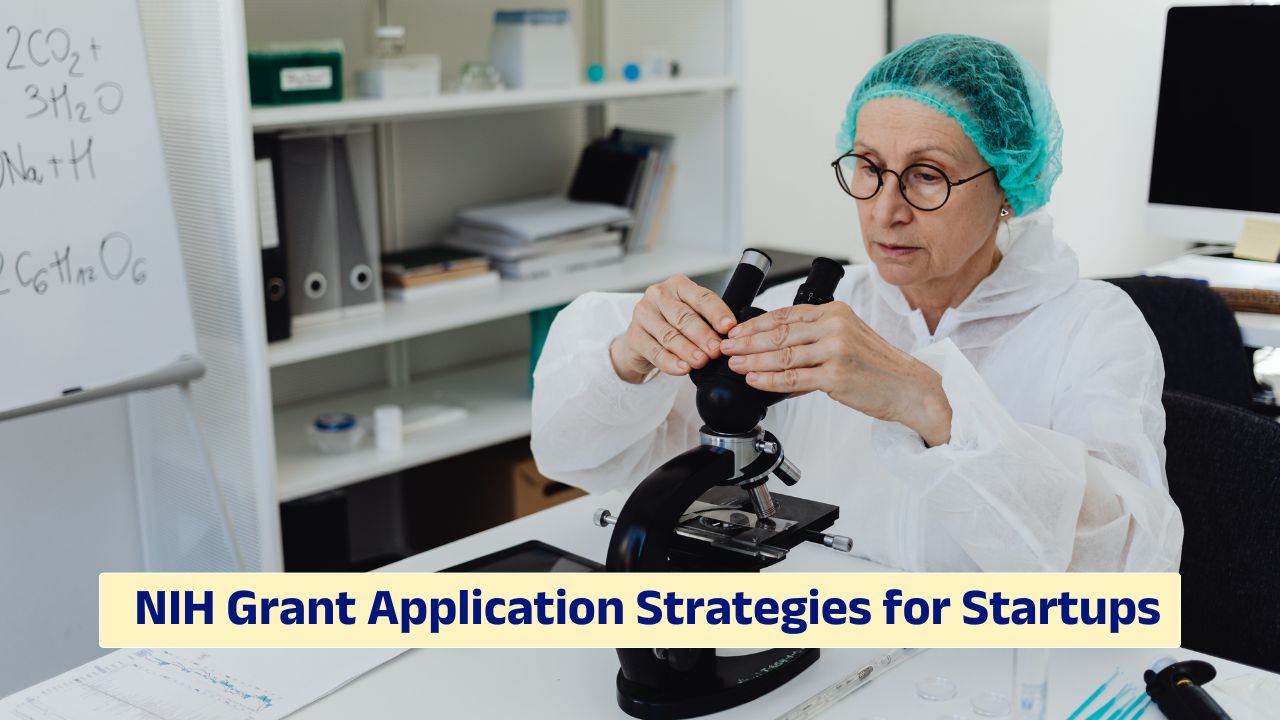
Securing funding through the National Institutes of Health represents a pivotal milestone for early-stage biotechnology startups in the United States. Unlike venture capital, NIH grants offer non-dilutive financing that supports high-risk, high-impact scientific innovation.
However, the application process is highly competitive, requiring startups to align scientific rigor with federal funding priorities while demonstrating a credible path toward commercialization.
| Projects aligned with FDA pathways gain a strategic advantage | Details |
|---|---|
| Funding Mechanisms | SBIR and STTR programs are primary entry points for startup applicants |
| Review Criteria | Scientific merit, innovation, and commercialization potential drive scoring |
| Regulatory Alignment | Projects aligned with FDA pathways gain strategic advantage |
| Team Composition | Experienced leadership and academic partnerships strengthen applications |
| Commercialization Plan | Clear market strategy is essential for Phase II and beyond |
Positioning
Effective NIH grant applications begin with the precise positioning of the scientific problem within federal research priorities. Startups must demonstrate how their innovation addresses unmet medical needs while aligning with NIH institute-specific missions.
This requires careful selection of funding announcements and a deep understanding of how review panels interpret significance and impact.
Clarity of hypothesis and translational relevance is critical. Reviewers expect startups to articulate not only the scientific novelty but also the potential pathway toward clinical or commercial application.
Projects that bridge observation and development tend to score more favorably, particularly within translational funding mechanisms.
Early engagement with program officers can provide valuable insight into funding priorities and application fit. These discussions often help refine proposal scope and improve alignment with agency expectations before submission.
Design
Study design remains a central determinant of application success. NIH reviewers prioritize methodological rigor, reproducibility, and feasibility within proposed timelines. Startups must present well-defined aims supported by preliminary data or a strong scientific rationale, even at early stages.
Budget justification should reflect realistic operational needs without appearing inflated. Overly ambitious proposals without adequate resourcing often raise concerns about execution risk. Conversely, under-budgeting can signal a lack of understanding of development complexity.
Compliance with NIH policies, including human subjects protection and data management requirements, is non-negotiable. Detailed planning in these areas reinforces credibility and reduces administrative delays during review.
Commercialization
For startup applicants, commercialization strategy is increasingly scrutinized, particularly in SBIR and STTR programs. Reviewers assess whether the proposed technology has a viable market pathway, including competitive positioning, reimbursement considerations, and scalability.
Integration of regulatory strategy strengthens the application narrative. Startups that outline potential interactions with the U.S. Food and Drug Administration demonstrate a knowledge of downstream development requirements.
This includes identifying relevant regulatory pathways and anticipating key milestones.
Market analysis should be grounded in realistic assumptions rather than speculative projections. Clear articulation of target populations, clinical adoption drivers, and payer dynamics enhances reviewer confidence in the startup’s execution capability.
Execution
The composition of the founding team and external collaborators significantly influences application outcomes.
NIH reviewers evaluate whether the team possesses the expertise required to execute the proposed work. Partnerships with academic institutions or experienced advisors can mitigate perceived gaps.
Operational planning should demonstrate clear milestones and deliverables within the grant period. Startups that present structured timelines with measurable outcomes are more likely to secure funding, as this reduces uncertainty around project progression.
Documentation quality also plays a crucial role. Well-organized applications with clear, concise language improve readability and facilitate reviewer evaluation. Poor formatting or ambiguous descriptions can undermine otherwise strong scientific proposals.
Trends
Recent trends indicate increasing emphasis on translational impact and real-world applicability in NIH funding decisions. Startups that integrate clinical validation strategies early in development are better positioned to secure grants.
This reflects broader federal priorities aimed at accelerating the movement of innovations from bench to bedside.
Digital health integration, advanced therapeutics, and platform technologies are attracting growing attention within NIH funding portfolios. Startups operating in these domains may benefit from targeted funding opportunities and cross-institute initiatives.
Transparency in reporting and adherence to evolving federal guidelines remain essential. Detailed guidance available through the NIH grants portal provides foundational resources for applicants navigating submission requirements.
Additionally, compliance with federal research standards outlined by the U.S. Department of Health and Human Services ensures that ethical and regulatory expectations are fully addressed within the proposal.
As competition for NIH funding intensifies, startups must approach grant applications as strategic exercises that integrate science, regulation, and commercialization.
Success depends not only on innovation but on the ability to communicate a coherent and executable vision aligned with federal priorities and market realities.
FAQs
What NIH programs are most relevant for startups
SBIR and STTR programs are the primary NIH funding mechanisms designed specifically for small businesses and startups.
How important is commercialization in NIH applications
Commercialization is critical, especially for later-stage grants, as reviewers assess market viability and potential return on federal investment.
Do startups need preliminary data for NIH grants?
While not always mandatory, strong preliminary data significantly improves credibility and increase the likelihood of funding.
How can startups improve their chances of approval
Aligning with NIH priorities, engaging program officers, and presenting a clear, feasible plan are key strategies for success.
What role does regulatory strategy play in NIH proposals
Regulatory planning demonstrates awareness of development pathways and strengthens the application’s feasibility and commercialization potential.