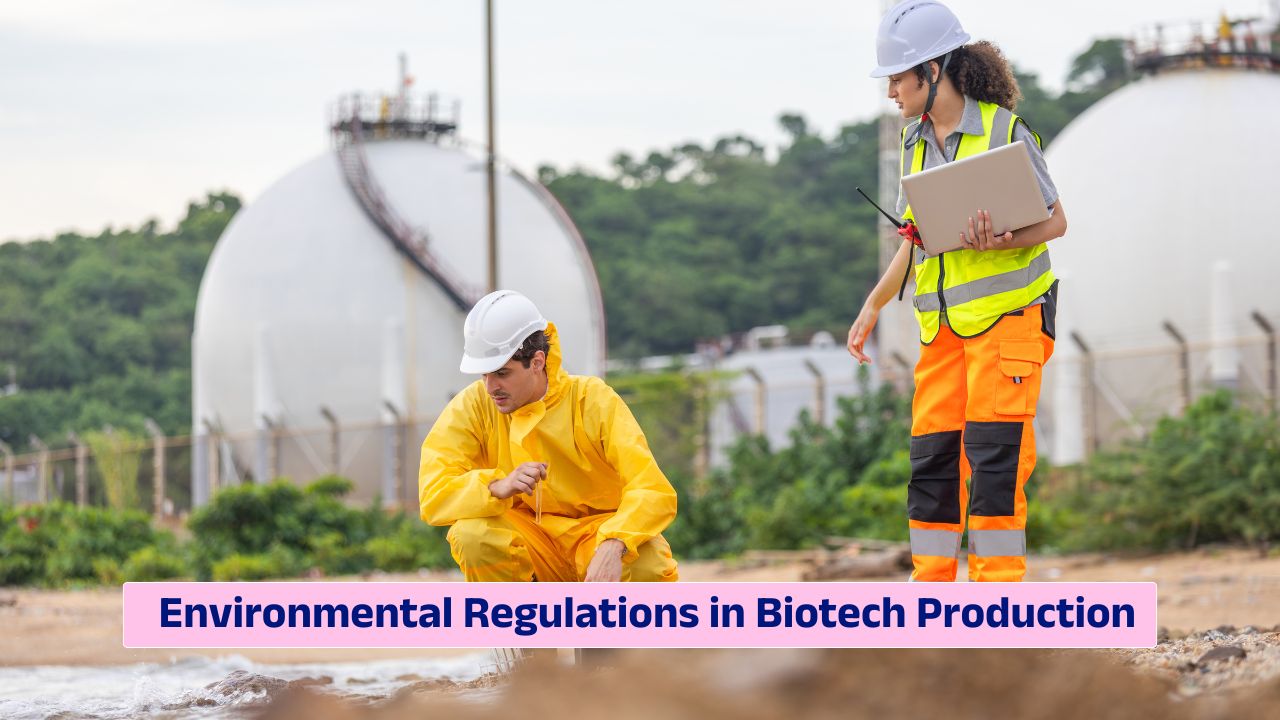
Environmental regulations play a critical role in shaping how biotechnology companies design and operate manufacturing facilities. Biotech production processes often involve biological materials, specialized chemicals, and high resource consumption, requiring careful environmental oversight.
In the United States, regulatory frameworks aim to ensure that biotechnology manufacturing maintains environmental safety while supporting innovation in pharmaceuticals, biologics, and industrial biotechnology.
Biotechnology manufacturing facilities must comply with a combination of federal, state, and local environmental regulations. These policies address waste management, emissions control, water usage, and biosafety standards.
For biotech companies scaling production of biologics, cell therapies, or fermentation-based products, environmental compliance is increasingly integrated into operational planning and facility design.
| Environmental regulations influence facility design, production scale-up strategies, and long-term operational costs. | Details |
|---|---|
| Regulatory oversight | Environmental compliance in biotech manufacturing is guided by federal and state regulatory agencies. |
| Waste management | Facilities must manage biological waste, chemical residues, and hazardous materials responsibly. |
| Water and emissions | Production facilities monitor wastewater discharge and air emissions from fermentation and processing operations. |
| Sustainability strategies | Biotech companies increasingly adopt green manufacturing technologies and energy efficient infrastructure. |
| Operational impact | Environmental regulations influence facility design, production scale up strategies, and long term operational costs. |
Framework
The United States maintains a comprehensive environmental regulatory framework that applies to biotechnology production facilities. Many manufacturing operations fall under the oversight of the U.S. Environmental Protection Agency, which enforces environmental protection laws related to air quality, water discharge, and hazardous waste management.
These regulations ensure that industrial activities do not pose unacceptable risks to public health or surrounding ecosystems.
Biotechnology manufacturing sites must also follow federal biosafety guidelines when working with genetically engineered organisms or microbial fermentation systems.
Compliance includes containment protocols, monitoring systems, and controlled waste disposal procedures designed to prevent environmental release of biological materials.
Environmental assessments are often required when companies construct new manufacturing facilities or significantly expand production capacity. These assessments evaluate the potential impact of industrial activities on air quality, water systems, and local ecosystems before operations begin.
Waste
Waste management is one of the most significant environmental considerations in biotechnology manufacturing. Bioprocessing operations generate multiple waste streams, including biological cultures, chemical solvents, filtration residues, and laboratory materials.
Facilities must implement controlled treatment and disposal processes that comply with federal and state environmental standards.
Many biotechnology facilities use sterilization systems such as autoclaving or chemical treatment before disposing of biological waste. These procedures ensure that genetically modified organisms or pathogenic materials are neutralized before leaving the facility. Proper containment and waste treatment reduce the risk of environmental contamination.
Industrial wastewater generated during fermentation and purification processes must also meet regulatory discharge standards. Monitoring systems track water quality parameters to ensure that treated wastewater complies with municipal or federal environmental guidelines.
Sustainability
Environmental sustainability is increasingly becoming a strategic priority for biotechnology companies. Investors, regulators, and healthcare partners are placing greater emphasis on environmentally responsible manufacturing practices.
As a result, many biotech firms are integrating sustainability initiatives directly into their production infrastructure.
Examples include energy-efficient bioreactor systems, water recycling technologies, and waste reduction strategies within bioprocessing workflows. These approaches can reduce environmental impact while also improving operational efficiency.
Sustainable manufacturing practices are particularly important for large-scale biologics production, where resource consumption can be significant.
Industry organizations such as the Biotechnology Innovation Organization also encourage environmental stewardship through best practice guidelines and sustainability initiatives across the biotech sector.
Strategy
Environmental regulations influence strategic decisions throughout the biotechnology manufacturing lifecycle. Companies must incorporate environmental compliance into facility design, supply chain planning, and operational risk management. Early planning can help companies avoid costly retrofits or regulatory delays during production expansion.
Biotech firms developing new manufacturing facilities increasingly collaborate with environmental engineers and regulatory specialists during the design phase. These experts help integrate emission control systems, waste treatment infrastructure, and sustainable energy solutions into production facilities.
As the biotechnology sector continues to grow, environmental oversight will remain an essential component of responsible production. For biotechnology executives and manufacturing leaders, balancing regulatory compliance with scalable production capacity will be critical for long term industry sustainability.
Ultimately, environmental regulations do more than enforce compliance. They also encourage innovation in manufacturing processes that reduce environmental impact while supporting the safe development of biotechnology products that benefit global healthcare and industrial markets.
FAQs
Why are environmental regulations important in biotech production
Environmental regulations ensure that biotechnology manufacturing processes manage waste, emissions, and biological materials safely to protect public health and ecosystems.
Which US agency oversees environmental compliance in biotech manufacturing
The U.S. Environmental Protection Agency plays a major role in enforcing environmental laws related to industrial emissions, wastewater discharge, and hazardous waste management.
What types of waste are produced in biotech manufacturing
Biotechnology production can generate biological waste, chemical solvents, laboratory materials, and wastewater from fermentation and purification processes.
How do biotech companies manage biological waste?
Facilities typically sterilize biological materials using autoclaving or chemical treatment before disposal to prevent environmental contamination.
Are sustainability practices growing in biotech manufacturing
Yes. Many biotechnology companies are investing in energy-efficient bioprocessing equipment, water recycling technologies, and waste reduction strategies to improve environmental sustainability.