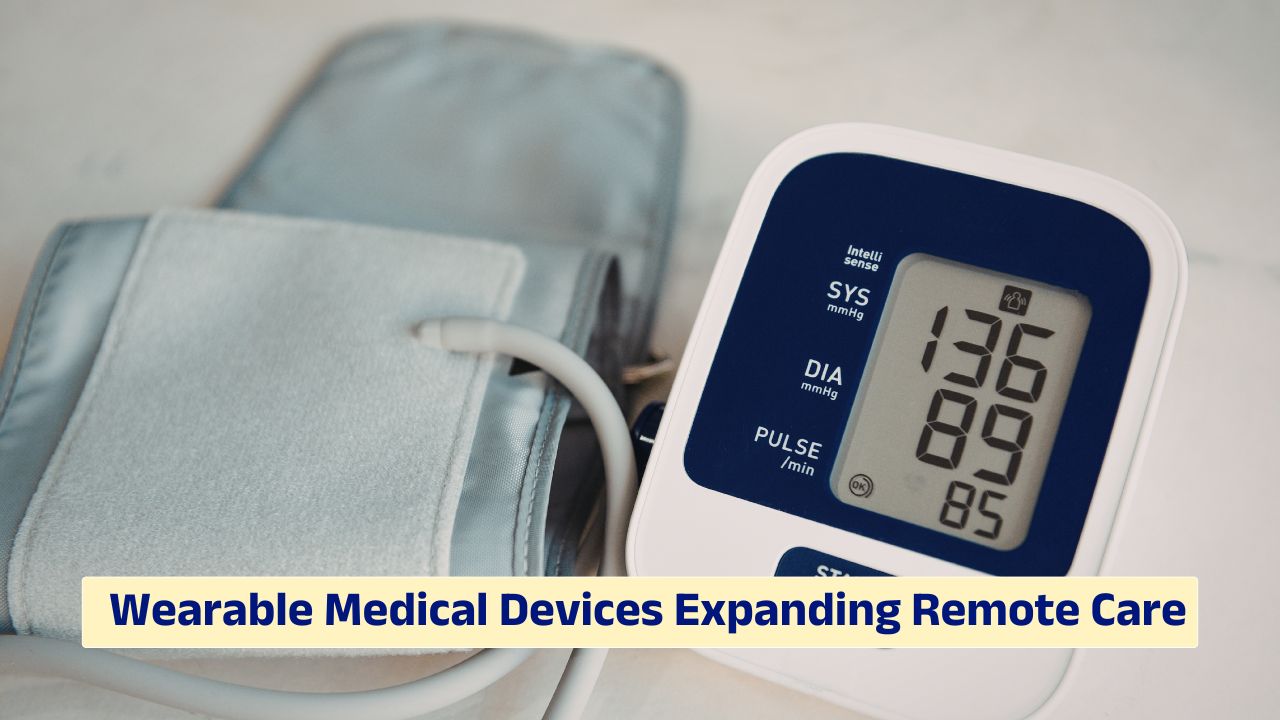
Wearable medical devices are rapidly expanding remote care capabilities across the United States, reshaping how providers monitor chronic conditions and manage post-acute recovery.
What began as consumer fitness tracking has evolved into FDA-cleared technologies capable of transmitting clinically actionable data directly into electronic health records.
For health systems facing workforce shortages and value-based reimbursement pressures, wearable platforms represent a structural shift rather than incremental innovation.
The convergence of biosensors, cloud infrastructure, and reimbursement reform has accelerated adoption. Remote physiologic monitoring codes under CMS, combined with expanded telehealth utilization following the COVID-19 public health emergency, have created clearer financial pathways for providers integrating wearable medical devices into longitudinal care models.
| FDA clearance through 510(k), De Novo, or PMA, depending on device risk classification. | Details |
|---|---|
| Clinical Monitoring | Continuous tracking of heart rate, glucose, oxygen saturation, and rhythm abnormalities. |
| Regulatory Pathways | FDA clearance through 510(k), De Novo, or PMA depending on device risk classification. |
| Reimbursement Models | CMS remote physiologic monitoring codes support provider billing for device-enabled oversight. |
| Data Integration | Interoperability with EHR systems critical for clinical adoption and compliance. |
| Commercial Strategy | Partnerships with payers and health systems drive scalable deployment. |
Technology
Modern wearable medical devices incorporate advanced biosensors capable of continuous electrocardiogram monitoring, glucose sensing, blood oxygen measurement, and blood pressure estimation.
Miniaturization and battery optimization have improved patient adherence, while Bluetooth and cellular connectivity enable real-time transmission to secure cloud platforms.
Artificial intelligence algorithms increasingly filter signal noise and flag clinically significant anomalies. The FDA Digital Health Center of Excellence provides guidance on software validation and cybersecurity requirements, reinforcing the expectation that wearable systems meet rigorous safety and data integrity standards.
Integration with electronic health record platforms remains a decisive adoption factor. Without seamless interoperability, wearable data risks becoming informational overload rather than actionable insight. Standards promoted by federal interoperability initiatives under HHS are shaping how vendors architect their platforms.
Regulation
Wearable medical devices intended for diagnosis or treatment fall under the FDA medical device classification frameworks. Lower-risk monitoring tools may pursue 510(k) clearance, while novel technologies without predicate devices may require the De Novo pathway. High-risk implants or life-sustaining systems follow premarket approval requirements.
Cybersecurity and post-market surveillance are receiving heightened scrutiny. The FDA expects manufacturers to maintain ongoing risk management programs and address vulnerabilities proactively. As remote care expands, regulators are increasingly attentive to data privacy, particularly under HIPAA oversight.
CMS reimbursement policies further influence commercialization. Remote physiologic monitoring and remote therapeutic monitoring codes define how providers can bill for device-enabled oversight. Clear reimbursement alignment often determines whether pilot programs scale across health systems.
Commercialization
Commercial success in wearable medical devices depends on more than technological performance. Manufacturers must demonstrate clinical utility, cost-effectiveness, and workflow compatibility.
Health systems evaluate whether device data reduces hospital readmissions, improves chronic disease control, or supports population health targets.
Payer engagement is increasingly central. Evidence demonstrating reduced emergency visits or improved medication adherence strengthens contracting negotiations. Some companies pursue risk-sharing agreements tied to measurable outcomes, aligning incentives across providers, payers, and device manufacturers.
Capital markets are selectively supportive. Public investors examine regulatory milestones, reimbursement traction, and enterprise contracts rather than consumer adoption metrics alone. For venture-backed startups, validation from large integrated delivery networks often precedes durable valuation growth.
Care Models
Remote care models powered by wearable medical devices extend monitoring beyond hospital walls. Cardiology programs use ambulatory rhythm monitoring to detect atrial fibrillation earlier, while endocrinology practices rely on continuous glucose monitoring to optimize therapy adjustments.
The Centers for Disease Control and Prevention emphasizes chronic disease management as a national priority, highlighting the potential role of continuous monitoring in reducing long-term complications.
Public health strategies increasingly intersect with digital device deployment, especially in underserved rural regions.
Looking ahead, integration of wearable data with predictive analytics may enable earlier intervention thresholds and personalized risk stratification.
For US healthcare leaders, the strategic imperative lies in balancing innovation with regulatory compliance, cybersecurity resilience, and reimbursement sustainability. Organizations that align clinical validation with scalable business models will define the next phase of remote care expansion.
FAQs
What are wearable medical devices?
Wearable medical devices are FDA-regulated technologies that continuously monitor physiological parameters such as heart rhythm, glucose levels, or oxygen saturation for clinical use.
How do wearable devices support remote care?
They transmit real-time patient data to healthcare providers, enabling monitoring, early intervention, and reduced need for in-person visits.
Are wearable medical devices reimbursed by CMS?
Yes, CMS provides billing codes for remote physiologic and therapeutic monitoring, supporting provider reimbursement when regulatory criteria are met.
Do wearable devices require FDA clearance?
Devices intended for diagnosis or treatment typically require FDA clearance or approval, depending on their risk classification.
What challenges limit the adoption of wearable medical devices?
Key challenges include data interoperability, cybersecurity risks, reimbursement alignment, and demonstrating measurable clinical value to providers and payers.