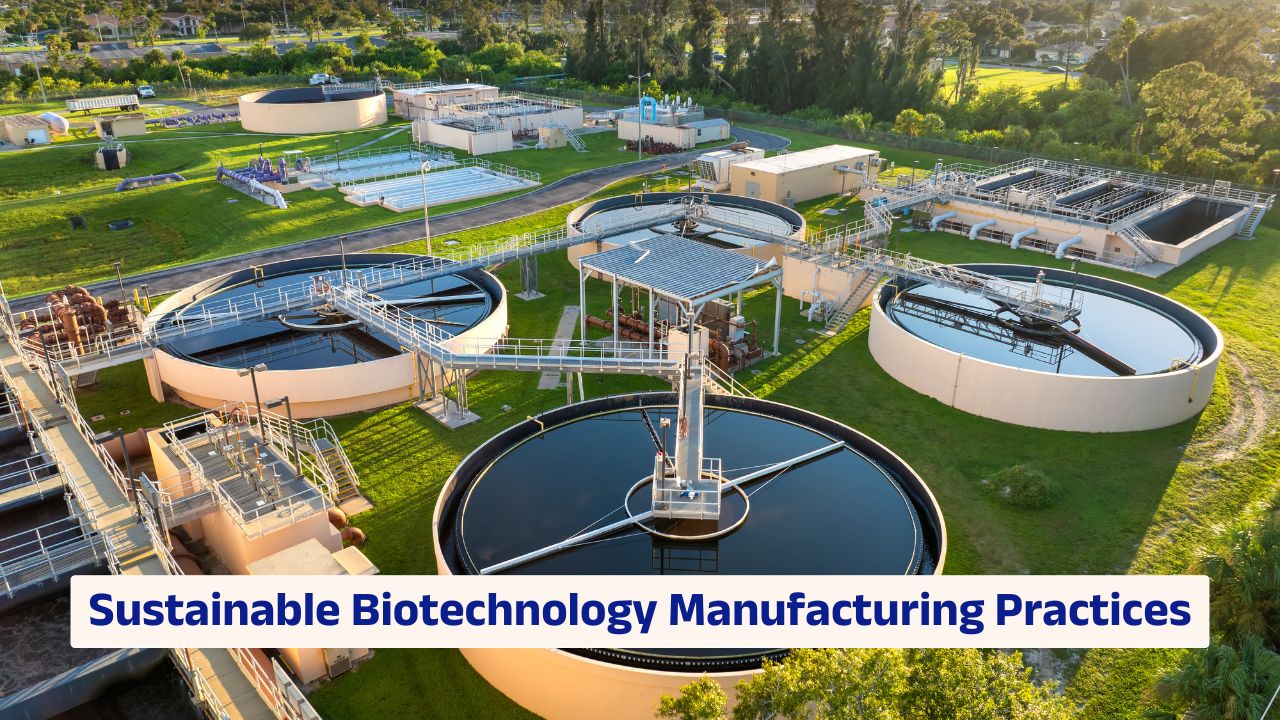
Sustainable biotechnology manufacturing practices are moving from corporate social responsibility initiatives to core operational strategy across the US life sciences sector.
As biologics, cell therapies, and advanced modalities scale, manufacturers face increasing pressure to reduce carbon intensity, optimize resource utilization, and comply with evolving environmental regulations.
Sustainability is no longer peripheral. It is directly tied to regulatory risk, investor scrutiny, and long-term cost competitiveness.
Federal policy momentum around domestic biomanufacturing capacity, coupled with Environmental Protection Agency oversight and SEC climate disclosure expectations, has elevated sustainability metrics within board-level decision-making.
Biotech executives are now integrating environmental performance indicators alongside yield efficiency and batch success rates.
| High-efficiency bioreactors and facility-level energy monitoring | Details |
|---|---|
| Energy Optimization | High efficiency bioreactors and facility level energy monitoring |
| Water Stewardship | Closed loop purification and wastewater recycling systems |
| Single Use Systems | Balancing disposables with lifecycle waste management strategies |
| Regulatory Compliance | EPA emissions standards and state environmental reporting |
| Investor Pressure | ESG disclosures influencing public market valuations |
Energy Efficiency
Biologics manufacturing is energy-intensive, particularly in upstream fermentation and downstream purification processes. Modern facilities are deploying high-efficiency bioreactors with advanced control systems that reduce power consumption while maintaining consistent cell growth parameters.
Smart facility management platforms enable real-time monitoring of heating, ventilation, and cleanroom air exchange loads.
These investments align with federal decarbonization priorities and can reduce long-term operational expenditures. Energy optimization also supports resilience in regions facing grid volatility, an increasingly relevant factor in site selection decisions for new US manufacturing plants.
Water Management
Water for injection production and clean-in-place systems consume substantial volumes of purified water. Sustainable biotechnology manufacturing practices increasingly incorporate closed-loop recycling technologies and advanced filtration to minimize freshwater withdrawal.
Facilities located in water-stressed regions must integrate conservation planning into expansion strategies.
Wastewater treatment compliance is governed by federal and state environmental standards. Guidance from the Environmental Protection Agency on industrial discharge parameters shapes infrastructure design, as detailed by the EPA National Pollutant Discharge Elimination System.
Early alignment with discharge requirements prevents costly retrofits and enforcement actions.
Single Use Debate
Single-use bioprocessing systems have improved flexibility and reduced cross-contamination risk, particularly in multiproduct facilities. However, their environmental profile remains under scrutiny due to plastic waste generation.
Companies are evaluating lifecycle assessments to balance reduced water and chemical usage against solid waste outputs.
Recycling partnerships and supplier innovation are emerging to address disposal concerns. Strategic sourcing decisions now include environmental impact metrics alongside quality and cost criteria.
As ESG disclosures become more standardized, transparent reporting on single-use waste management may influence investor perception.
Regulatory Drivers
Sustainable biotechnology manufacturing practices intersect with regulatory compliance beyond environmental statutes. Facilities must maintain FDA Good Manufacturing Practice standards while integrating energy and waste reduction technologies.
Process changes designed to improve sustainability must undergo validation to ensure product quality and comparability.
Additionally, climate-related disclosure rules under review by the SEC are prompting public biotech companies to formalize carbon accounting methodologies. Transparent sustainability metrics may become material considerations for institutional investors evaluating long term risk exposure.
Economic Strategy
While sustainability initiatives require upfront capital investment, lifecycle cost modeling often demonstrates favorable returns. Energy-efficient systems reduce utility expenditures, and optimized resource utilization lowers waste disposal fees.
Moreover, facilities designed with modular and scalable infrastructure can adapt to evolving regulatory and environmental standards without extensive reconstruction.
Public funding programs supporting advanced domestic biomanufacturing may also prioritize sustainability criteria. Companies that integrate environmental performance into grant applications and site selection strategies can enhance competitiveness for federal incentives tied to industrial modernization.
Looking forward, sustainable biotechnology manufacturing practices will likely converge with digital process analytics and automation. Real-time environmental monitoring, predictive maintenance, and data-driven efficiency optimization will define next-generation facilities.
For US biotech leaders, sustainability is increasingly synonymous with operational excellence, regulatory foresight, and durable market credibility.
FAQs
What are sustainable biotechnology manufacturing practices?
They are operational strategies that reduce energy use, water consumption, waste generation, and emissions while maintaining FDA-compliant production standards.
Why is sustainability important in biotech manufacturing?
Sustainability reduces long term costs, supports regulatory compliance, and aligns with investor ESG expectations in US capital markets.
How does the EPA influence biotech facilities?
The EPA regulates industrial wastewater discharge and emissions standards, shaping facility design and environmental monitoring requirements.
Are single-use systems environmentally sustainable?
They reduce water and chemical usage but generate plastic waste, prompting lifecycle assessments and recycling initiatives.
Do sustainability efforts affect biotech valuations?
Yes. ESG performance and climate-related disclosures can influence investor confidence and long-term valuation metrics.