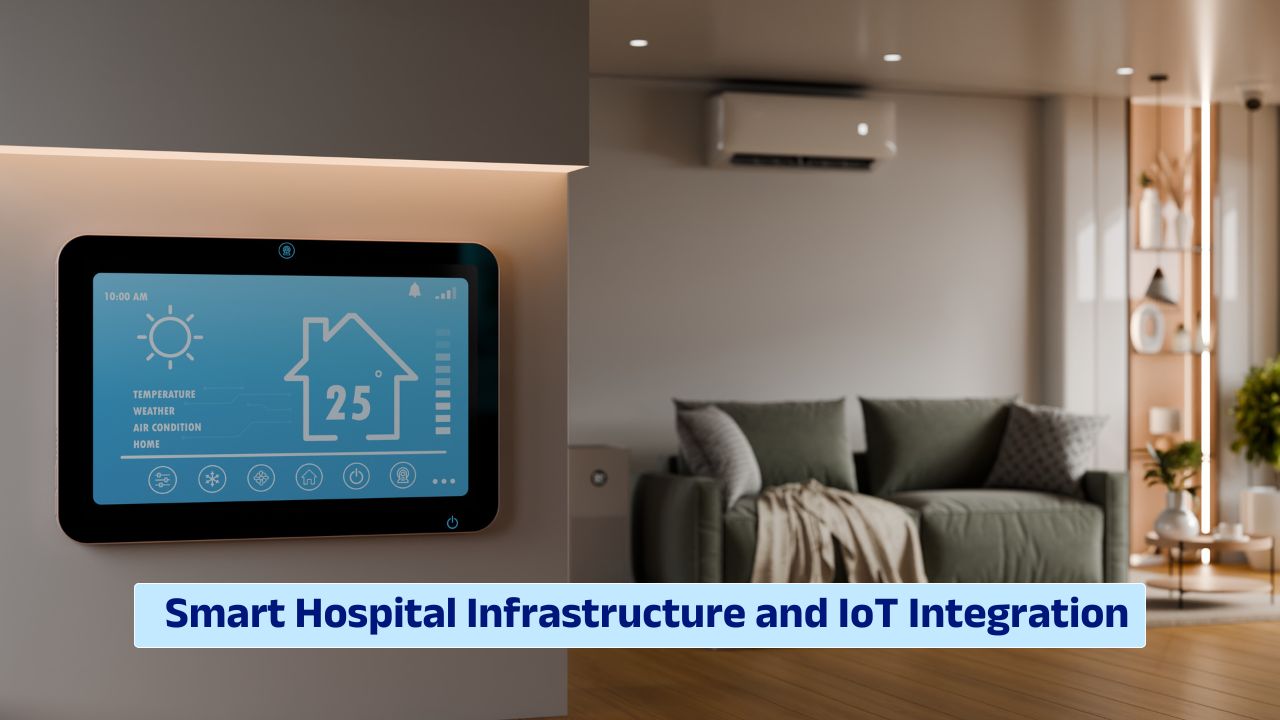
Smart hospital infrastructure is redefining healthcare delivery in the United States, driven by the integration of Internet of Things technologies across clinical, operational, and administrative systems.
By enabling real-time data exchange between devices, clinicians, and hospital networks, IoT-powered environments are improving patient outcomes while optimizing resource utilization.
As hospitals transition toward digitally connected ecosystems, federal agencies such as the FDA and HHS are increasingly involved in shaping standards for safety, interoperability, and cybersecurity.
| Key Point | Details |
|---|---|
| IoT Connectivity | Devices communicate through secure hospital networks for real-time monitoring |
| Regulatory Oversight | FDA governs connected medical devices and digital health systems |
| Clinical Efficiency | Automation reduces clinician workload and improves workflow coordination |
| Data Integration | Electronic health records linked with IoT platforms for decision support |
| Market Growth | Increasing investment in digital health infrastructure and hospital modernization |
Architecture
Smart hospital infrastructure relies on a layered architecture that integrates connected medical devices, network systems, and data analytics platforms.
At the device level, sensors and wearables continuously collect patient vitals, while backend systems process and transmit this data across secure networks.
Cloud computing and edge processing are increasingly used to ensure low latency and reliable performance in high-acuity settings.
Interoperability remains a critical requirement, particularly as hospitals adopt diverse vendor solutions. Standards such as HL7 and FHIR facilitate data exchange between systems, enabling seamless integration with electronic health records.
Federal initiatives led by the Office of the National Coordinator for Health Information Technology emphasize interoperability as a cornerstone of digital health transformation.
Applications
IoT integration is enabling a wide range of clinical applications, including remote patient monitoring, smart ICU systems, and automated medication management. Connected infusion pumps, for example, can adjust dosages based on real-time patient data, reducing the risk of human error.
Similarly, asset tracking systems help hospitals manage equipment utilization, minimizing delays in care delivery.
Predictive analytics is another key application, leveraging IoT-generated data to identify early signs of patient deterioration.
This capability supports proactive interventions, which can reduce hospital readmissions and improve overall care quality. Insights into digital health adoption trends can be observed through the HHS digital health initiatives.
Security
As hospitals become increasingly connected, cybersecurity has emerged as a major concern. IoT devices often present vulnerabilities due to their distributed nature and varying security standards.
Ensuring end-to-end encryption, device authentication, and network monitoring is essential to protect patient data and maintain system integrity.
The FDA has issued guidance on cybersecurity for medical devices, emphasizing risk management throughout the product lifecycle. Manufacturers and healthcare providers must collaborate to implement robust security frameworks.
Additional regulatory perspectives are outlined in the FDA cybersecurity guidance for devices, which highlights evolving compliance expectations.
Regulation
In the US, IoT-enabled hospital systems often fall under multiple regulatory categories, including medical devices, software as a medical device, and health IT systems.
The FDA evaluates connected devices based on intended use, risk classification, and integration with other systems. Hospitals must also comply with HIPAA requirements to ensure patient data privacy and security.
Reimbursement frameworks are evolving to support digital health adoption, particularly for remote monitoring services. The Centers for Medicare and Medicaid Services has introduced billing codes that incentivize the use of connected health technologies.
These policy shifts are accelerating the integration of IoT into mainstream healthcare delivery models.
Market
The market for smart hospital infrastructure is expanding as healthcare providers invest in modernization and digital transformation.
Large health systems are partnering with technology companies to deploy scalable IoT platforms that support clinical and operational efficiency. Venture capital and private equity investments are also fueling innovation in this space.
Despite strong growth potential, adoption challenges persist, including high implementation costs, integration complexity, and workforce training requirements. Vendors that can offer interoperable, secure, and cost-effective solutions are likely to gain a competitive advantage.
Strategic collaborations between healthcare providers, device manufacturers, and software developers will be critical to long-term success.
Looking ahead, smart hospital infrastructure will play a central role in the evolution of value-based care.
As IoT integration becomes more sophisticated, hospitals are expected to transition toward predictive, data-driven care models that prioritize efficiency, patient safety, and clinical outcomes across the healthcare continuum.
FAQs
What is smart hospital infrastructure?
It refers to digitally connected hospital systems that use IoT devices and data platforms to improve patient care and operational efficiency.
How does IoT improve hospital operations?
IoT enables real-time monitoring, automation, and predictive analytics, which enhance clinical workflows and resource management.
What are the regulatory considerations for IoT in healthcare
Regulation involves FDA oversight of connected devices, HIPAA compliance, and cybersecurity risk management.
What are the common applications of IoT in hospitals?
Applications include remote patient monitoring, smart ICUs, asset tracking, and automated medication systems.
What challenges affect smart hospital adoption
Challenges include high costs, integration complexity, cybersecurity risks, and the need for workforce training.