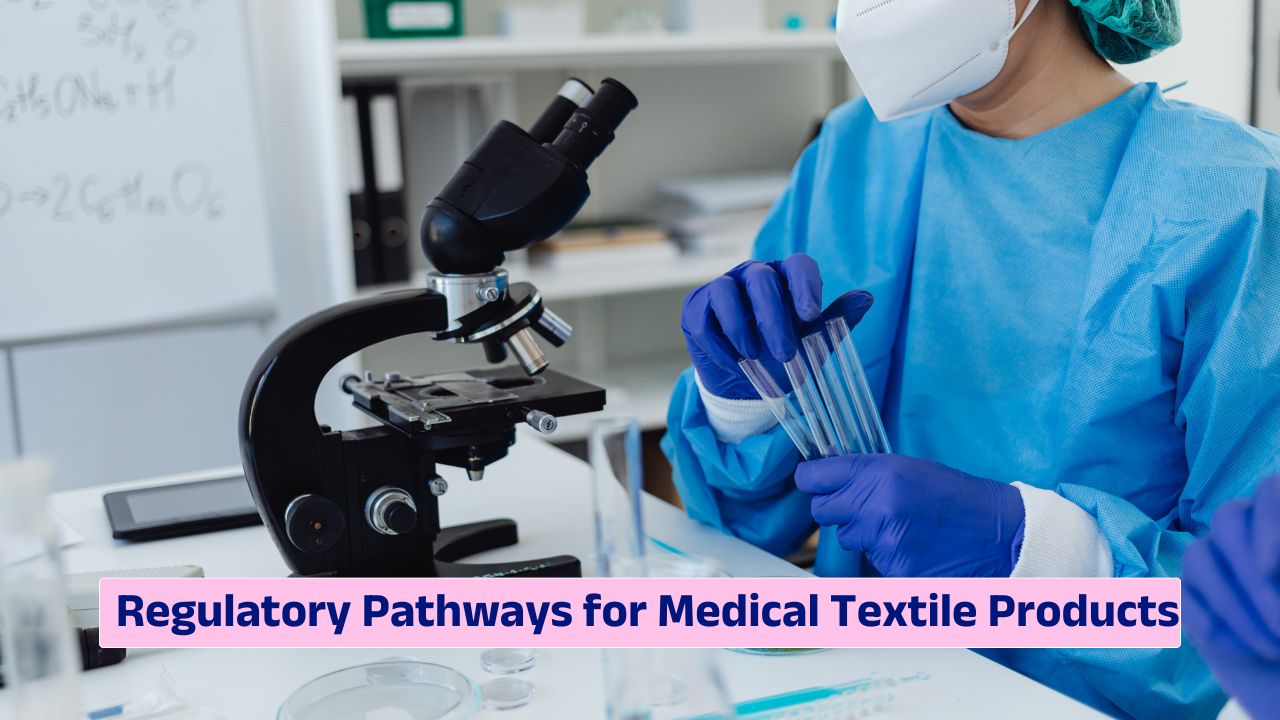
Regulatory pathways for medical textile products in the United States are shaped by product classification, intended use, and risk profile. From implantable meshes and vascular grafts to wound dressings and surgical gowns, medical textiles span a broad regulatory spectrum.
Manufacturers entering this space must align material science innovation with a structured compliance strategy to ensure timely market access.
| Common routes include 510(k) clearance or Premarket Approval for higher-risk implantables. | Details |
|---|---|
| Product Classification | Medical textiles may be regulated as Class I, II, or III devices depending on intended use and risk. |
| Regulatory Pathways | Common routes include 510(k) clearance or Premarket Approval for higher risk implantables. |
| Testing Requirements | Biocompatibility, sterility validation, and mechanical performance testing are core submission elements. |
| Quality Systems | Compliance with FDA Quality System Regulation and design controls is mandatory for most manufacturers. |
| Market Impact | Clear regulatory strategy reduces time to market and improves investor and partner confidence. |
Product Scope
Medical textile products include woven, knitted, braided, and nonwoven materials designed for clinical applications. Examples range from non-implantable barrier products, such as surgical drapes, to implantable devices like hernia meshes and ligament reconstruction scaffolds. The regulatory pathway depends primarily on intended medical use rather than textile composition alone.
Non-invasive and low-risk products, including certain wound dressings or compression garments, may qualify as Class I devices and be subject to general controls. In contrast, implantable textiles that remain in the body for extended periods typically fall into Class II or Class III categories due to higher risk profiles.
FDA Oversight
In the United States, medical textile products are regulated by the FDA medical device framework. Most Class II textile devices pursue the 510(k) premarket notification pathway, demonstrating substantial equivalence to a legally marketed predicate device.
For high-risk implantable textiles, such as certain vascular grafts or pelvic meshes, manufacturers may be required to submit a Premarket Approval application. This process involves more extensive clinical data, detailed manufacturing documentation, and long-term safety evaluation.
Early engagement with the FDA through pre-submission meetings is increasingly considered best practice. Such interaction clarifies expectations for testing protocols, clinical study design, and labeling claims, reducing the likelihood of costly review delays.
Testing Standards
Biocompatibility evaluation in accordance with ISO 10993 standards is foundational for textile devices that contact skin or internal tissues. Manufacturers must assess cytotoxicity, sensitization, irritation, and, in some cases, systemic toxicity depending on the duration of contact.
Sterilization validation is equally critical. Whether using ethylene oxide, gamma irradiation, or alternative methods, companies must demonstrate sterility assurance levels and packaging integrity over the product’s shelf life. For implantable textiles, mechanical performance testing under simulated physiological conditions is also required.
Products marketed with antimicrobial claims may trigger additional regulatory scrutiny. In certain cases, coordination with the Environmental Protection Agency may be necessary if the product incorporates pesticidal properties beyond device functionality.
Quality Compliance
Manufacturers of medical textile products must comply with the FDA Quality System Regulation, which outlines requirements for design controls, corrective and preventive actions, complaint handling, and supplier management.
Textile supply chains often involve multiple raw material providers, making traceability a central compliance concern.
The transition toward harmonized quality management under ISO 13485 standards has also influenced US manufacturers, particularly those seeking global market expansion. Alignment between FDA expectations and international standards can streamline cross-border commercialization strategies.
From a commercialization perspective, regulatory clarity directly impacts valuation and partnership discussions. Strategic investors and hospital procurement teams assess not only product performance but also the robustness of regulatory documentation and post market surveillance planning.
As innovation accelerates in bioactive and smart textile technologies, regulatory pathways for medical textile products will continue to evolve. Companies integrating sensors, drug-eluting fibers, or regenerative scaffolding into textile platforms must anticipate expanded data requirements.
Success in this market will depend on synchronizing material innovation with disciplined regulatory planning, ensuring both patient safety and scalable growth in a competitive US medical device landscape.
FAQs
What determines the regulatory classification of medical textile products?
Classification depends on intended use, duration of contact, and risk profile rather than textile composition alone.
Do most medical textile devices require FDA clearance?
Yes. Most Class II products require 510(k) clearance, while higher-risk implantables may require Premarket Approval.
What testing is required for implantable textile devices?
Testing typically includes biocompatibility under ISO 10993, sterilization validation, and mechanical performance evaluation.
Are antimicrobial textile claims regulated differently?
Yes. Products with pesticidal or antimicrobial claims may require additional regulatory review and possible EPA coordination.
Why is early FDA engagement important for medical textile companies?
Early interaction clarifies data expectations, reduces review risk, and supports efficient time to market and investor confidence.