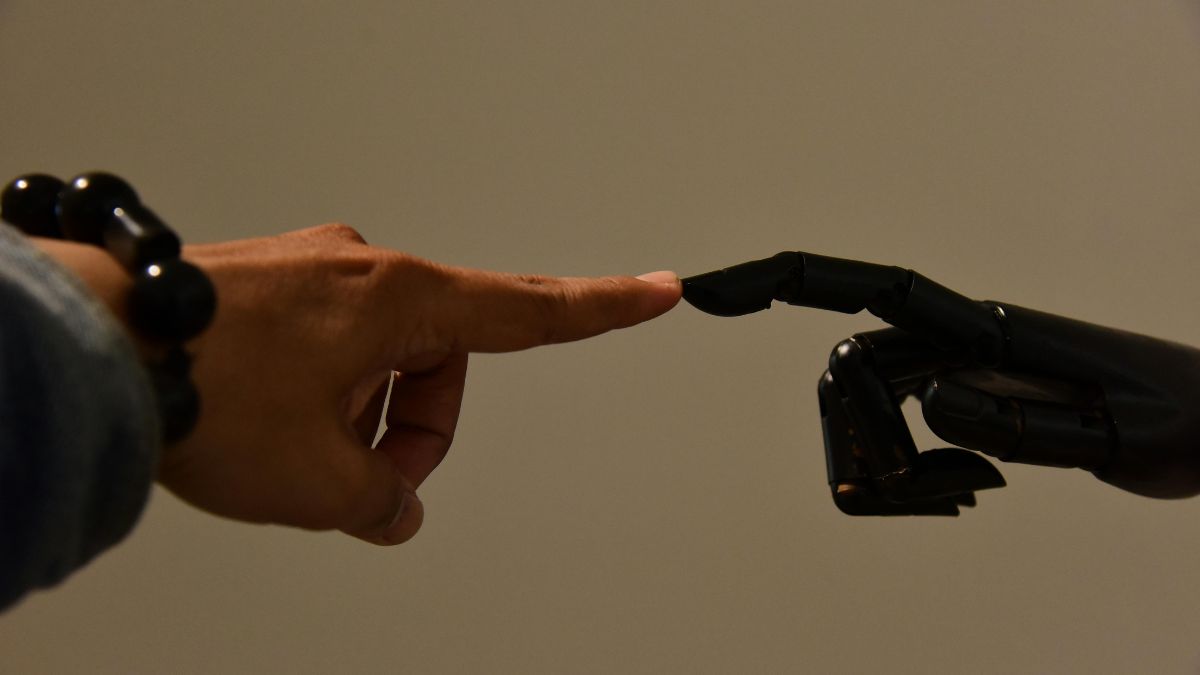
Artificial intelligence is increasingly being compared with human thinking, not because machines possess consciousness, but because they process information differently from people. For many psychologists and researchers, this comparison is becoming useful in understanding how human behavior actually works beneath the surface.
Large language models, or LLMs, do not think emotionally, seek social approval, or protect personal identities. Humans do all of those things constantly. As AI systems become more advanced, some psychologists believe they may function as mirrors that expose patterns in human thinking that people rarely notice about themselves.
The comparison is not about proving machines are superior to humans. Instead, it may help explain why people often struggle with bias, emotional reasoning, memory distortions, and decision-making.
Here are 10 psychological truths researchers and therapists believe AI may help make more visible in the years ahead.
Certainty
Human beings tend to feel uncomfortable with uncertainty. When information is incomplete, people often rush toward conclusions simply to reduce anxiety.
Psychologists have long observed that confidence is frequently mistaken for accuracy. This tendency can make individuals more vulnerable to misinformation, ideological influence, scams, and emotional persuasion.
AI systems operate differently. Large language models work through probabilities and multiple possible outcomes without emotional discomfort. They do not need immediate certainty to continue processing information.
This contrast may help psychology better understand how strongly human behavior is shaped by the emotional need for closure.
Negativity
Humans naturally pay more attention to threats than positive experiences. This is known as negativity bias.
From an evolutionary perspective, focusing on danger likely helped early humans survive. However, in modern life, the same bias can contribute to anxiety, catastrophizing, and chronic stress.
People often expect negative outcomes to be more severe than they actually become. Political conflict, financial anxiety, and social fears are frequently intensified by this tendency.
AI systems do not experience fear or emotional anticipation. They calculate likelihoods without instinctive panic responses. By comparing machine reasoning with human reactions, psychologists may gain clearer insight into how much anxiety is created internally rather than externally.
Gratification
Another common psychological pattern is short-term thinking.
Humans often prioritize immediate comfort over long-term benefit. This appears in areas such as health, money management, relationships, and productivity.
Behavioral scientists describe this as present bias or temporal discounting. Future rewards feel psychologically weaker than immediate gratification.
AI systems do not display impatience in the human sense. They can optimize decisions based on long-term outcomes without emotional frustration.
This comparison may help researchers better understand why many human problems persist despite people knowing what would benefit them in the future.
Memory
Psychological research has repeatedly shown that memory is not a perfect recording system.
Studies by researchers such as Elizabeth Loftus demonstrated that memories are reconstructive. People can unintentionally alter details, reshape emotional interpretations, or even remember events inaccurately.
Human memory often functions more like storytelling than archival storage.
AI systems retrieve stored information differently. While AI models can generate errors, they do not reconstruct memories through personal emotion or identity protection.
The comparison may reinforce the idea that human recollection is deeply influenced by meaning, emotion, and self-perception.
Identity
Psychologists increasingly question the idea that humans possess one stable and permanent identity.
Behavior often changes depending on social context, emotional state, environment, and cultural expectations. A person may think differently at work, at home, or within different social groups.
Some philosophical traditions, including Buddhism, have long argued that the self is partly a narrative construction rather than a fixed entity.
AI systems process prompts and produce responses without maintaining a personal identity in the human sense. Comparing this with human behavior may encourage deeper discussion about how identity is formed and maintained psychologically.
Dishonesty
Human beings frequently engage in self-deception.
People may justify harmful actions, reinterpret motives, or avoid uncomfortable truths to protect self-image. Psychological defense mechanisms often operate automatically rather than consciously.
Researchers suggest that honesty requires active effort because the brain naturally seeks emotional comfort and social acceptance.
AI systems do not possess personal motives, embarrassment, or reputation management. This difference may help psychology examine how much of human reasoning is shaped by self-protection rather than objective analysis.
Status
Philosopher Friedrich Nietzsche questioned whether humans genuinely seek truth or simply seek validation and status.
Modern psychology supports the idea that people often defend beliefs because those beliefs are tied to identity, social belonging, or power structures.
Arguments are not always attempts to discover truth. In many cases, they function as social positioning.
AI systems have no emotional investment in being correct or admired. As a result, comparisons between AI reasoning and human debate may reveal how strongly ego and social dynamics shape human thought.
Nature
The idea of a fixed “human nature” has been debated for centuries.
Psychologists increasingly recognize how flexible human behavior can be across cultures, environments, and historical periods.
Beliefs about morality, identity, success, and social roles often shift dramatically depending on time and place.
AI models trained on broad datasets may help reveal how many assumptions about human behavior are culturally constructed rather than universal truths.
Causality
Humans prefer simple explanations.
When events happen, people instinctively search for direct causes, even when reality is influenced by multiple overlapping factors.
Psychologists note that humans frequently create narratives first and then search for evidence supporting those narratives.
AI systems can process many variables simultaneously without needing emotionally satisfying explanations. This may help researchers better understand how often humans oversimplify complex situations.
Narrative
Human consciousness is strongly shaped by storytelling.
People organize experiences into narratives that connect past, present, and future into coherent meaning. These stories help individuals maintain stability and emotional continuity.
However, psychologists suggest that narrative coherence can sometimes distort reality. People may reshape events to fit personal beliefs or emotional needs.
AI systems process information without needing a personal life story. Comparing machine processing with human storytelling may reveal how deeply narrative shapes perception, memory, and identity.
Reflection
Psychologists do not suggest that humans should become emotionally detached like machines. Human creativity, empathy, art, music, and relationships remain deeply connected to emotion and subjective experience.
Instead, AI may serve as a tool for reflection.
By observing how differently machines process information, people may become more aware of their own biases, fears, motivations, and emotional habits.
Therapeutic approaches such as cognitive behavioral therapy, mindfulness, and psychoanalysis already focus on identifying automatic thought patterns. AI comparisons may simply make those patterns easier to recognize.
In the end, the value of AI may not come from replacing human thinking. Its value may come from helping people better understand the psychological systems that already guide much of everyday life.
FAQs
What are large language models?
AI systems trained to process and generate language.
Why compare humans with AI?
It helps reveal human thinking patterns and biases.
What is negativity bias?
The tendency to focus more on threats and problems.
Can AI help psychology research?
Yes, by offering new ways to study cognition.
Do AI systems think like humans?
No, they process information differently from people.