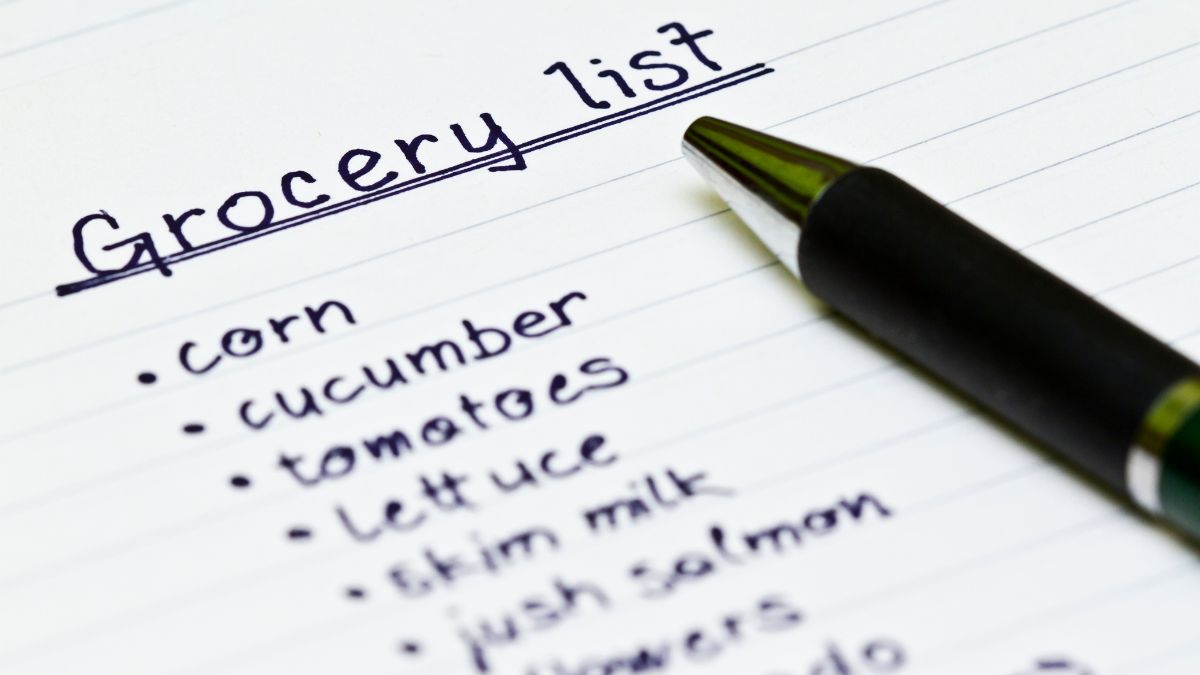
A handwritten grocery list may seem outdated in a world filled with shopping apps, smart reminders, and digital planners. But psychology research suggests that people who still rely on paper lists may actually be using their brains in a more engaged and structured way.
Recent studies show that writing information by hand activates memory and attention differently than typing on a smartphone or tablet. While digital tools offer convenience, researchers say the physical act of writing can strengthen mental processing, improve recall, and reduce distractions during everyday tasks.
For many shoppers, the simple paper grocery list may function as more than a reminder. It can also act as a mental map that helps organize decisions before the shopping trip even begins.
Memory
One of the most discussed findings comes from researchers at the University of Tokyo, who examined how people remember information written on paper compared with digital devices.
The study involved 48 participants between the ages of 18 and 29. Volunteers were asked to record fictional schedule information using either:
| Writing Method | Device Used |
|---|---|
| Handwriting | Paper notebook |
| Digital writing | Tablet |
| Typing | Smartphone |
After one hour, participants answered memory questions while researchers measured brain activity using functional MRI scans.
The results showed that participants who used paper completed the task faster and demonstrated stronger activity in brain regions connected to memory, language, and visual processing.
Researchers believe physical writing provides additional sensory details that help the brain organize information more effectively.
Mapping
Psychologists say paper creates what can be described as a spatial memory map.
When people write a grocery list by hand, they often remember where specific items appeared on the page. Someone may recall that bread was written at the top, while coffee was added near the bottom corner.
These physical details become memory anchors.
The brain uses location, movement, touch, and handwriting patterns to strengthen recall. Digital lists usually appear in uniform formats, which may provide fewer sensory cues during memory retrieval.
In practical terms, handwriting may help shoppers mentally rehearse the store trip before arriving.
Attention
Another advantage of paper involves focus.
A smartphone is rarely used for only one purpose. Notifications, social media alerts, messages, emails, and news updates constantly compete for attention.
A paper list does not create those interruptions.
In busy environments like grocery stores, reduced distraction may help people stay focused on planned purchases rather than impulse buying or multitasking.
Psychologists note that attention plays a major role in memory formation. When attention becomes fragmented, recall often becomes weaker as well.
A handwritten list encourages a simpler pattern:
- Look at the list
- Find the item
- Cross it off
- Move to the next task
That predictable rhythm may reduce mental overload during shopping.
Writing
Researchers also say handwriting itself activates the brain differently than typing.
A separate study from the Norwegian University of Science and Technology examined brain activity during handwriting and keyboard typing.
Using EEG brain monitoring, researchers found that handwriting created more complex connectivity patterns in the brain than typing on a keyboard.
The study suggested that forming letters by hand requires coordinated visual, motor, and sensory processing.
Typing, by comparison, involves more repetitive and uniform movements.
According to researchers, these additional brain connections may strengthen learning and information retention.
Completion
Many people also describe satisfaction when physically crossing items off a paper list.
While digital checklists can provide similar functions, paper introduces physical movement and visible changes on the page.
Crossing off an item creates a small sense of progress and completion.
Psychologists sometimes refer to this as feedback reinforcement. Small visual signals can increase feelings of control and organization, especially during repetitive tasks.
For some shoppers, the physical list simply feels easier to trust because it remains visible and tangible throughout the trip.
Planning
Handwritten grocery lists may also encourage more deliberate planning at home.
Before writing a list, people often:
- Check the refrigerator
- Review pantry supplies
- Think about upcoming meals
- Estimate quantities needed
This planning process can reduce unnecessary purchases and improve food management.
Government agencies have also highlighted the connection between meal planning and reduced food waste.
According to the U.S. Department of Agriculture, food waste remains a major issue in the United States. The USDA estimates that 30% to 40% of the food supply is lost or wasted.
The Environmental Protection Agency recommends checking existing food supplies before shopping and preparing lists based on realistic meal needs.
Balance
Researchers are not suggesting that digital grocery tools should be abandoned completely.
Digital lists can be especially useful for:
| Digital Advantage | Benefit |
|---|---|
| Shared family lists | Real-time updates |
| Accessibility tools | Easier visibility and reminders |
| Budget tracking | Price comparisons |
| Online shopping | Quick ordering |
For many households, digital tools provide flexibility that paper cannot match.
However, psychology research challenges the idea that paper lists are automatically less effective simply because they are traditional.
The evidence suggests the physical process of handwriting may engage memory, attention, and planning systems in ways digital tools sometimes reduce.
Perspective
At its core, the grocery list is a small organizational tool. But psychology research shows that even simple habits can influence how the brain processes information.
Writing by hand combines movement, attention, visual placement, and memory rehearsal into one activity. That combination may explain why many people continue using paper lists even when digital options are available.
The paper list is not necessarily a rejection of technology. For some people, it is simply a method that feels mentally clearer, easier to follow, and more connected to daily routines.
And in a grocery store filled with distractions, that extra mental structure may still have practical value.
FAQs
Why do paper lists help memory?
Handwriting creates stronger sensory and spatial memory cues.
What did the Tokyo study find?
Paper writing improved recall and brain activity.
Are digital grocery lists ineffective?
No, they can still be useful for many households.
Why is handwriting different from typing?
It activates more complex brain connectivity patterns.
Can grocery lists reduce food waste?
Yes, planning purchases may help avoid overbuying.