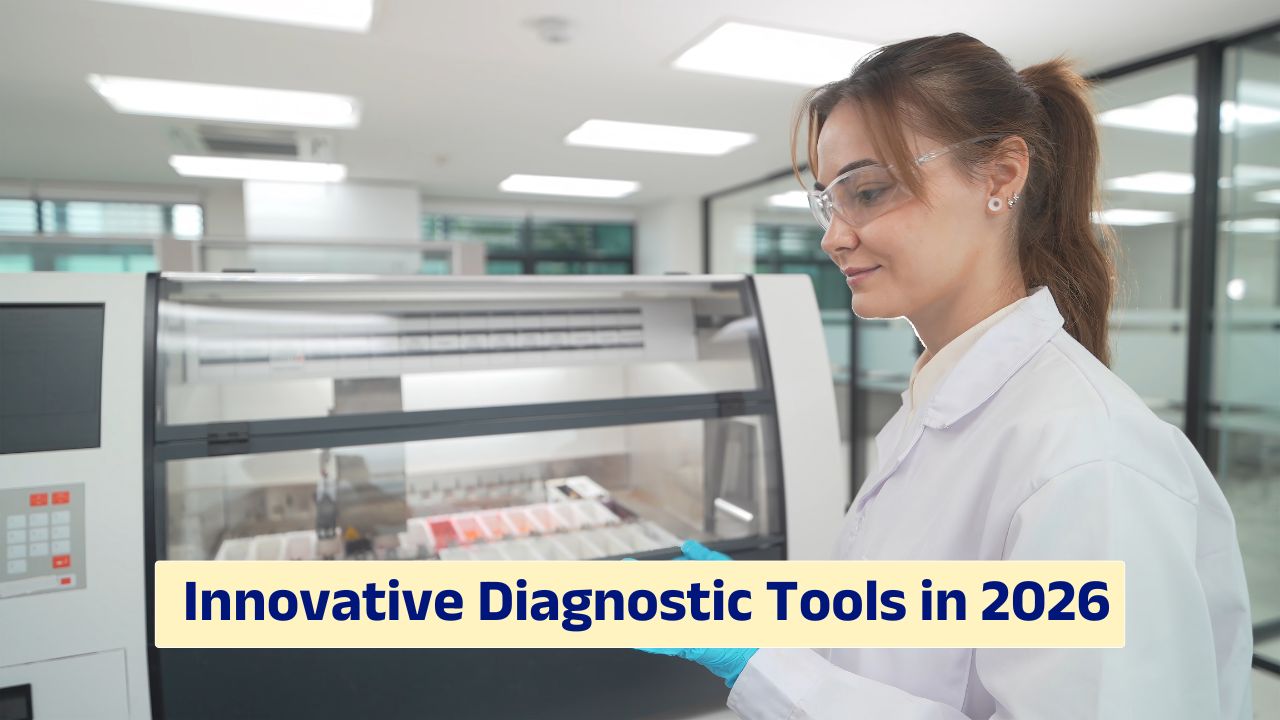
Innovative diagnostic tools are reshaping clinical decision-making in 2026 as biotechnology companies, health systems, and regulators push for faster, more precise disease detection.
Advances in molecular diagnostics, artificial intelligence enabled imaging, and decentralized testing platforms are expanding how clinicians identify disease earlier and monitor patients more effectively.
In the United States, diagnostic innovation increasingly intersects with regulatory frameworks, reimbursement pathways, and clinical adoption pressures. Companies developing next generation diagnostic technologies must demonstrate analytical validity, clinical relevance, and scalable manufacturing while navigating oversight from agencies such as the FDA and CMS.
| Key Point | Details |
|---|---|
| Technology shift | Diagnostics are evolving from single analyte tests toward multiomic and AI supported analytical platforms. |
| Clinical demand | Healthcare providers seek faster diagnostics that support earlier intervention and improved patient stratification. |
| Regulatory oversight | FDA frameworks guide the evaluation of analytical validity, clinical performance, and safety for diagnostic technologies. |
| Commercial strategy | Successful diagnostics combine regulatory readiness with reimbursement alignment and clinical integration. |
| Market outlook | Precision diagnostics and decentralized testing will continue driving the next phase of healthcare innovation. |
Genomics
Genomic diagnostics remain one of the most transformative categories in modern healthcare. Next generation sequencing technologies allow clinicians to detect disease associated genetic variations across oncology, rare diseases, and inherited disorders with unprecedented depth.
In oncology, genomic profiling is increasingly used to guide targeted therapy selection and identify actionable mutations. Molecular testing platforms now support tumor characterization and patient stratification, which helps clinicians match therapies with specific biological mechanisms.
Regulatory oversight continues to evolve alongside this progress. The US Food and Drug Administration provides guidance for genomic tests and companion diagnostics to ensure reliability and clinical validity, as outlined within its in vitro diagnostics regulatory framework.
AI
Artificial intelligence is rapidly becoming a core component of diagnostic innovation. AI algorithms are being deployed to analyze complex medical imaging datasets, identify subtle disease signals, and assist clinicians with diagnostic interpretation.
Radiology, pathology, and cardiology are among the specialties experiencing the most visible impact. Machine learning models can review imaging scans or pathology slides to highlight suspicious features, enabling physicians to prioritize high risk cases and reduce diagnostic delays.
Despite strong enthusiasm, regulatory review remains essential. AI-based diagnostic tools must demonstrate consistent performance across diverse patient populations and clinical settings before widespread deployment.
Transparency, algorithm validation, and real-world performance monitoring are now critical development priorities.
Point-of-care
Another major trend shaping diagnostics in 2026 is the expansion of point-of-care testing. Portable diagnostic devices allow clinicians to conduct laboratory quality testing closer to the patient, reducing turnaround time and enabling faster treatment decisions.
Point-of-care technologies are increasingly used in urgent care centers, emergency departments, and community clinics. Rapid molecular tests for infectious diseases, portable blood analyzers, and handheld imaging tools illustrate how diagnostics are becoming more decentralized.
Public health agencies continue to highlight the importance of accessible diagnostic testing. The CDC laboratory testing guidance emphasizes that timely diagnostics are essential for disease surveillance, outbreak response, and effective healthcare delivery.
Commercialization
Bringing innovative diagnostic tools to market requires more than technological innovation. Companies must address regulatory approval pathways, reimbursement frameworks, and clinical adoption barriers that can shape the commercial trajectory of new diagnostic platforms.
For many emerging diagnostics, payer acceptance and evidence generation are central challenges.
Demonstrating that a diagnostic tool improves patient outcomes, reduces healthcare costs, or enhances clinical efficiency is essential for securing coverage and widespread use.
Strategic partnerships are also playing an increasingly important role. Diagnostic developers frequently collaborate with pharmaceutical companies, research institutions, and hospital networks to validate technologies and expand clinical utility.
Looking ahead, the diagnostic landscape will likely continue shifting toward integrated platforms that combine molecular data, digital analytics, and real time monitoring.
These systems promise to transform disease detection from a reactive process into a proactive component of precision healthcare.
FAQs
What are innovative diagnostic tools in healthcare?
Innovative diagnostic tools include advanced technologies such as genomic testing, AI-powered imaging analysis, and portable point-of-care devices used to detect diseases earlier and more accurately.
How is artificial intelligence improving medical diagnostics?
Artificial intelligence can analyze large medical datasets, including imaging and pathology samples, to identify patterns that assist clinicians in diagnosing diseases more efficiently.
What role does genomic testing play in modern diagnostics?
Genomic testing helps identify genetic variations linked to diseases, enabling targeted therapies, early disease detection, and personalized treatment strategies.
Why are point-of-care diagnostics becoming more important?
Point of care diagnostics provide faster test results directly at clinical settings, helping physicians make quicker treatment decisions and improving patient care efficiency.
What challenges do new diagnostic technologies face in the US market?
Key challenges include regulatory approval, clinical validation, reimbursement alignment, and integration into existing healthcare systems.