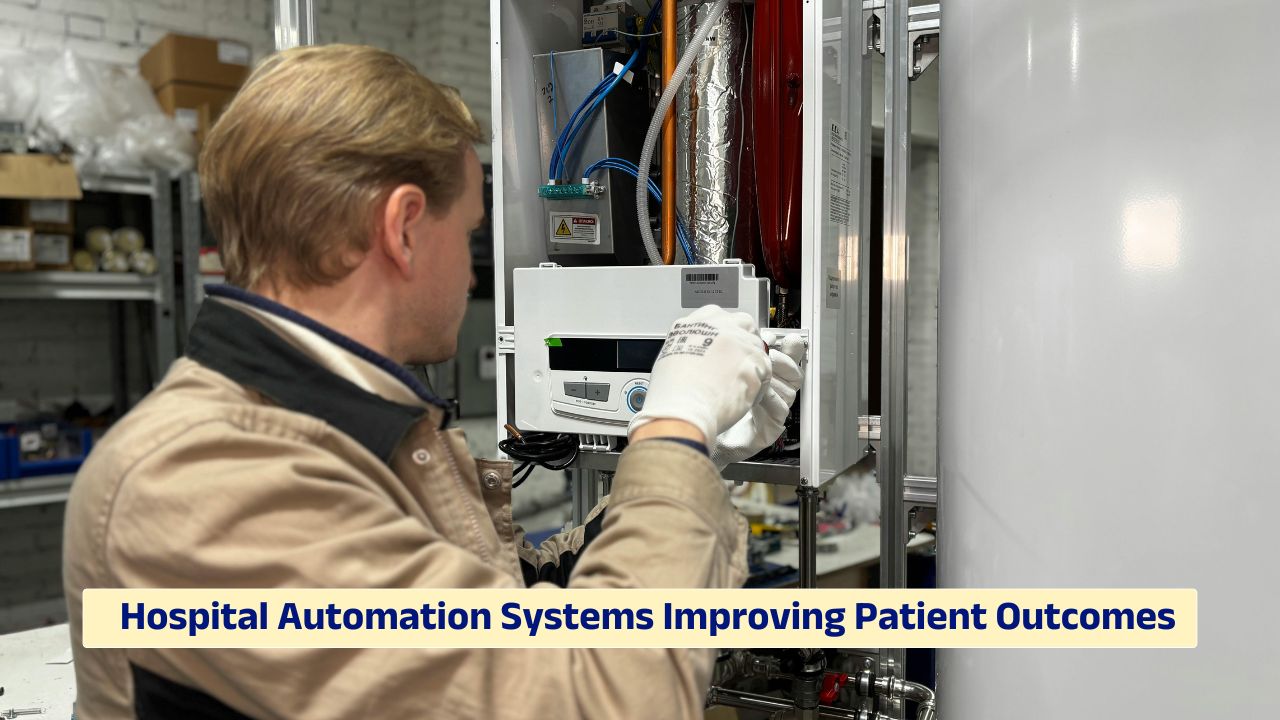
Hospital automation systems are becoming a foundational component of modern healthcare infrastructure in the United States.
As hospitals face increasing operational pressure, workforce shortages, and rising patient complexity, automation technologies are being deployed to improve efficiency, safety, and clinical outcomes.
Unlike basic digital record systems, hospital automation integrates software platforms, connected devices, robotics, and predictive analytics into core care processes.
When implemented strategically, these systems reduce administrative friction, minimize clinical error, and allow providers to focus more directly on patient care.
| Key Point | Details |
|---|---|
| Workflow automation | Automated patient scheduling, documentation, and care coordination reduce administrative burden across hospital systems. |
| Clinical decision support | AI enabled platforms analyze patient data in real time to support diagnosis, treatment planning, and monitoring. |
| Medication safety | Automated dispensing cabinets and barcode verification reduce medication errors in inpatient care environments. |
| Operational efficiency | Hospital resource automation improves bed management, staff allocation, and supply chain visibility. |
| Data integration | Interoperable systems connect electronic health records, monitoring devices, and analytics tools to enable continuous care insights. |
Infrastructure
Hospital automation begins with an integrated digital infrastructure. Modern systems link electronic health records, laboratory data platforms, imaging systems, and bedside monitoring technologies into unified clinical environments. This integration allows information to flow across departments without manual data transfer.
Automation reduces redundant documentation and improves data accessibility for clinicians. When patient information becomes available instantly across care teams, treatment decisions can be made faster and with greater accuracy. This has measurable implications for emergency response, surgical preparation, and inpatient monitoring.
Federal initiatives promoting health data interoperability have accelerated adoption. The Office of the National Coordinator for Health Information Technology interoperability programs encourages healthcare organizations to develop systems that support seamless information exchange.
Safety
One of the most significant benefits of hospital automation is improved patient safety. Automated medication management systems, barcode verification tools, and digital clinical alerts help prevent errors that may occur in high-pressure healthcare settings.
Medication dispensing cabinets connected to electronic prescription systems allow hospitals to track medication distribution precisely. Clinicians receive automated alerts when potential interactions, dosage inconsistencies, or patient-specific risks are detected.
Research supported by the Agency for Healthcare Research and Quality’s patient safety initiatives highlights the role of digital systems in reducing preventable adverse events and improving clinical reliability.
Efficiency
Operational efficiency is another major driver behind hospital automation investments. Administrative tasks such as patient intake, appointment scheduling, and insurance verification traditionally consume a large portion of hospital resources. Automation platforms streamline these processes while reducing human error.
Automated bed management systems track patient flow throughout hospital units and help administrators allocate resources more effectively.
By monitoring discharge timelines and admission demand in real time, hospitals can reduce overcrowding and improve capacity planning.
Automation also enhances supply chain oversight. Hospitals increasingly rely on automated inventory tracking to manage medical devices, pharmaceuticals, and surgical supplies. This reduces waste while ensuring that critical materials remain available during high-demand periods.
Analytics
Data analytics platforms are extending the value of hospital automation beyond simple operational improvements. By aggregating patient data from monitoring devices, laboratory results, and clinical records, automated systems can identify patterns that support early intervention.
Predictive models are increasingly used to detect patient deterioration, infection risk, or readmission probability. These insights allow clinicians to intervene earlier, often before complications become severe enough to require intensive treatment.
Healthcare organizations are also using automated analytics to evaluate care quality and operational performance. Metrics such as treatment response times, infection rates, and recovery outcomes help hospital leadership identify areas where process improvements are needed.
Adoption
Despite its advantages, hospital automation requires careful implementation. Technology alone does not guarantee improved outcomes unless workflows, training, and clinical governance structures evolve alongside the systems themselves.
Hospitals must evaluate cybersecurity safeguards, regulatory compliance requirements, and system interoperability before deploying automation platforms. Integration challenges can arise when legacy systems are incompatible with newer digital tools.
Healthcare leaders are therefore approaching automation as a long-term transformation strategy rather than a single technology investment. The focus increasingly centers on building resilient digital ecosystems that support both operational efficiency and patient centered care.
As US healthcare continues to modernize, hospital automation systems are likely to play an increasingly central role in shaping how care is delivered.
Institutions that align technology adoption with clinical workflow design and regulatory compliance will be best positioned to translate automation into measurable improvements in patient outcomes.
FAQs
What are hospital automation systems?
Hospital automation systems are integrated technologies that automate clinical, administrative, and operational tasks within healthcare facilities to improve efficiency and patient care.
How do hospital automation systems improve patient outcomes?
They reduce medical errors, improve clinical decision support, streamline workflows, and allow faster access to patient information, leading to more timely and accurate treatment.
Are hospital automation systems regulated in the United States?
Some components, particularly clinical decision software and connected medical devices, may fall under regulatory oversight from agencies such as the FDA, depending on their intended use.
What technologies are commonly used in hospital automation?
Common technologies include electronic health records, automated medication dispensing systems, AI-driven analytics platforms, robotics, and digital patient monitoring systems.
What challenges do hospitals face when implementing automation?
Key challenges include system interoperability, cybersecurity risks, staff training requirements, regulatory compliance, and integrating automation into existing clinical workflows.