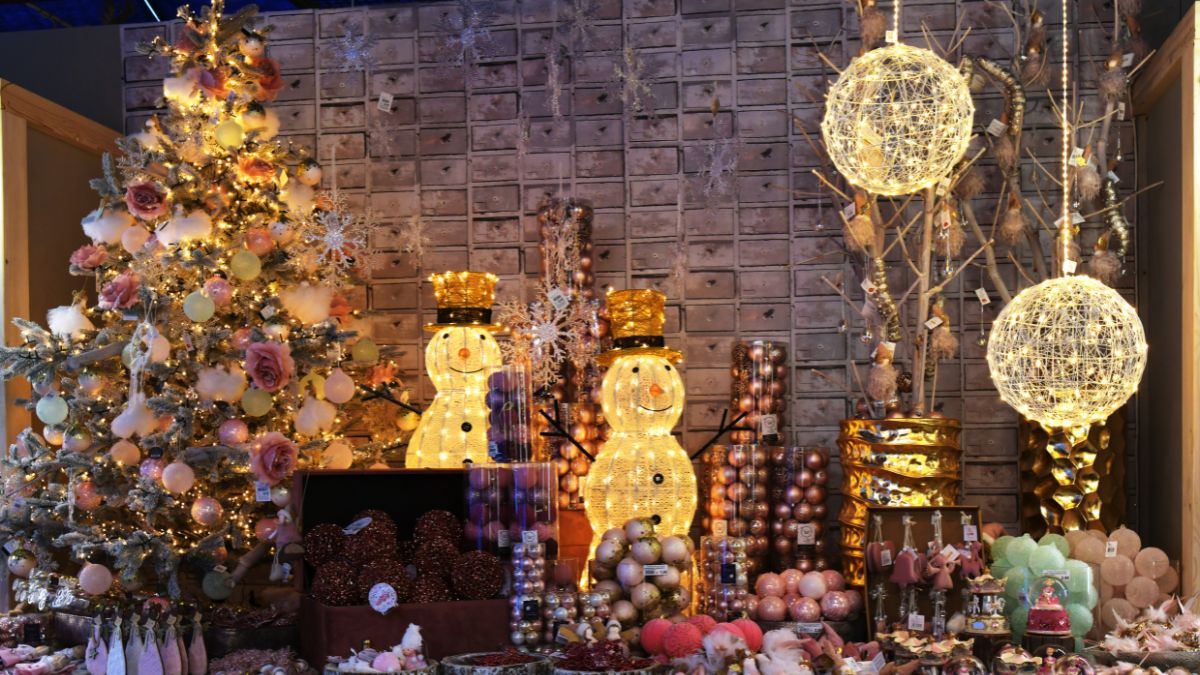
A home without holiday lights or decorations can stand out, especially during a season when visual displays are widely associated with celebration and community. From the outside, a dark porch in December may be interpreted as disinterest or distance. However, psychological research suggests that such interpretations often overlook more practical and value-driven explanations.
Rather than signaling a lack of warmth, the decision not to decorate is frequently tied to priorities such as autonomy, simplicity, time management, and emotional balance.
Perception
Visual cues play a strong role in how people form impressions. Research published in the Journal of Environmental Psychology found that individuals viewing images of decorated homes were more likely to perceive the residents as friendly and socially engaged.
These findings highlight how decorations function as social signals. They provide quick, visible indicators of participation in shared traditions. However, signals do not necessarily reflect underlying motivations. A lack of decoration may influence perception, but it does not reliably indicate personality traits or social preferences.
Autonomy
One of the most consistent explanations for opting out of holiday displays is personal choice. Psychological research on motivation distinguishes between autonomous and externally driven decisions.
A study in Frontiers in Psychology found that individuals who make choices aligned with their own values tend to report higher levels of financial understanding and well-being. When applied to holiday behavior, this suggests that people who choose not to decorate may simply be acting in line with their preferences rather than responding to social expectations.
Authenticity, in this context, refers to behavior that reflects internal beliefs rather than external pressure. Choosing not to decorate can therefore represent alignment rather than avoidance.
Simplicity
The physical environment also plays a role. Studies from UCLA’s Center on Everyday Lives of Families have shown that cluttered home environments are associated with increased stress levels, particularly in households managing multiple responsibilities.
While seasonal decorations are temporary, they add to the overall volume of items within a space. For individuals who prioritize order and simplicity, reducing additional objects can help maintain a calmer environment.
Minimalism research supports this perspective. Studies indicate that individuals who adopt minimalist practices often report lower levels of negative emotion and higher levels of well-being. In this context, skipping decorations may reflect a broader preference for reduced material load.
Time
Time constraints are another practical factor. The holiday season often includes increased social, professional, and family commitments. Decorating requires planning, setup, maintenance, and eventual removal.
Research from the University of British Columbia shows that individuals who allocate resources toward saving time tend to report higher life satisfaction. This suggests that decisions to avoid time-intensive activities, including decorating, may support overall well-being.
The trade-off is straightforward. Time spent on decoration is time not spent on other activities.
Experience
Consumer psychology research further explains this trade-off. Studies associated with Cornell University have found that experiences tend to provide more lasting satisfaction than material purchases.
For some households, this leads to a shift in how holidays are structured. Instead of investing in visible displays, resources may be directed toward shared activities.
| Option | Focus | Outcome |
|---|---|---|
| Decorations | Visual presentation | External signaling |
| Experiences | Shared activities | Lasting satisfaction |
| Time-saving choices | Efficiency | Reduced stress |
This does not diminish the value of decorations, but it highlights alternative ways of engaging with the season.
Environment
Environmental considerations also influence behavior. Minimalist and sustainability-focused lifestyles often involve reducing consumption, including seasonal purchases.
Research in sustainable consumption indicates that lower material use is associated with reduced environmental impact and, in some cases, improved emotional outcomes. Choosing not to decorate may therefore align with broader ecological values.
Balance
It is important to avoid oversimplification. Not all individuals who skip decorations share the same motivations. Some may be indifferent, others may be constrained by time or finances, and some may simply prefer different forms of celebration.
Similarly, decorating does not inherently indicate stronger community engagement or emotional warmth. Both choices exist along a spectrum of personal preference and circumstance.
Meaning
The absence of decorations is best understood as a neutral signal rather than a definitive statement. It reflects a decision shaped by priorities, not necessarily a rejection of tradition or connection.
Psychological research supports a broader interpretation. People often make choices that optimize for internal consistency, reduced stress, and meaningful use of time.
In that context, a home without lights may still reflect engagement with the holiday season, just expressed in less visible ways.
Ultimately, the distinction lies between appearance and intention. Decorations influence how a home is perceived, but they do not fully explain the values or experiences within it. A quieter exterior may simply indicate a different, more private approach to celebration.
FAQs
Do decorations reflect personality?
They influence perception but do not define personality.
Why do some people skip decorations?
Often due to time, simplicity, or personal values.
Is minimalism linked to well-being?
Yes, it is associated with lower stress levels.
Are experiences better than material items?
Research suggests they bring longer satisfaction.
Does not decorating mean less holiday spirit?
No, it may reflect a different form of celebration.