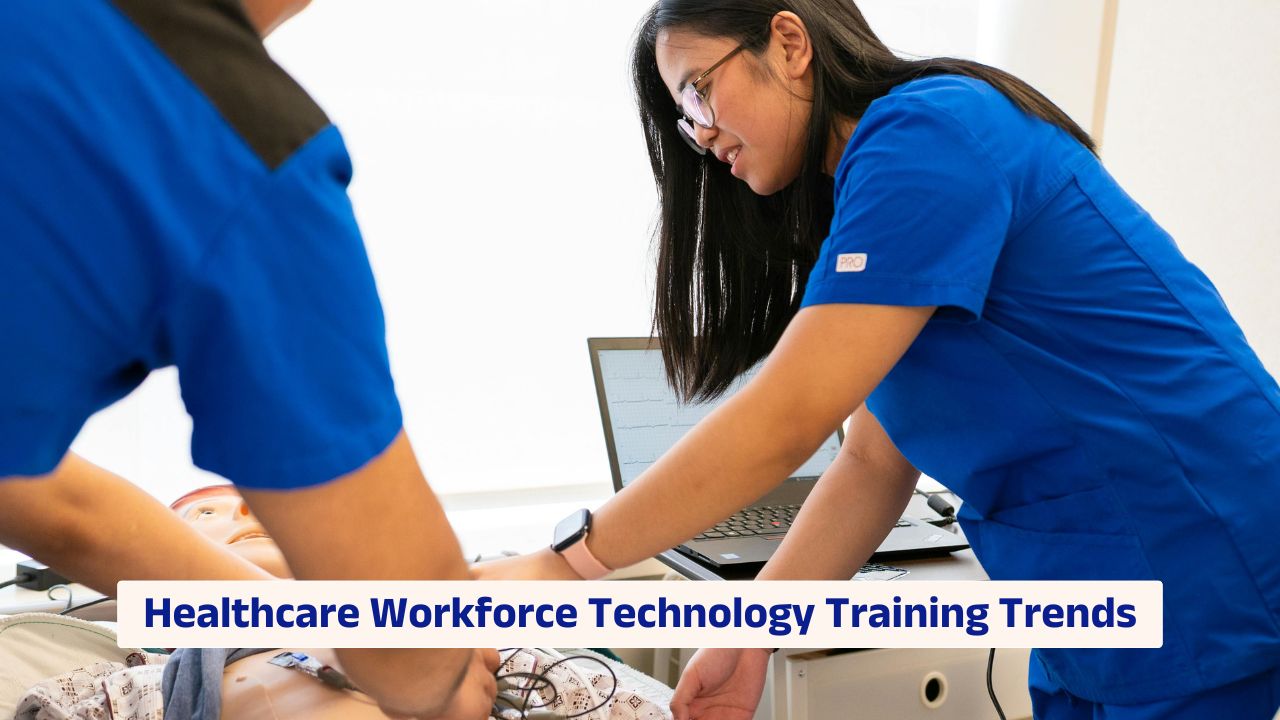
The modernization of healthcare delivery in the United States is increasingly tied to how effectively the workforce adapts to emerging technologies.
From electronic health records to AI-assisted diagnostics, healthcare organizations are investing heavily in workforce training to ensure clinicians, administrators, and support staff can operate within digitally enabled environments.
This shift is not optional, as regulatory expectations and reimbursement models are becoming tightly aligned with technology adoption and data-driven care.
| Key Point | Details |
|---|---|
| Digital Skill Demand | Rising need for EHR, AI, and data analytics proficiency among clinicians |
| Regulatory Alignment | Training linked to compliance with CMS, FDA digital health frameworks |
| Simulation-Based Learning | Use of VR and digital twins for clinical skill development |
| AI Integration | Upskilling workforce to interpret and validate AI-assisted outputs |
| Workforce Retention | Training investments linked to reduced burnout and improved retention |
| Public-Private Partnerships | Collaboration between hospitals, academia, and tech vendors |
Drivers
Several structural forces are accelerating healthcare workforce technology training. The expansion of value-based care models requires providers to demonstrate measurable outcomes, which depend heavily on data capture and analytics. This has made digital literacy a core competency across clinical and administrative roles.
Federal policy is also shaping training priorities. Agencies such as the Centers for Medicare and Medicaid Services increasingly tie reimbursement to quality reporting and interoperability standards.
Programs aligned with the CMS Innovation Center emphasize care coordination and digital reporting, which necessitate workforce readiness.
At the same time, workforce shortages are intensifying the need for efficiency. Technology is viewed as a force multiplier, but only if staff are adequately trained to use it. This creates a direct link between workforce development strategies and operational performance.
Technologies
Training programs are evolving alongside the technologies they support. Electronic health record systems remain foundational, but the focus has shifted toward advanced functionalities such as predictive analytics, clinical decision support, and interoperability across care settings.
Artificial intelligence is a major focal point. Clinicians are being trained not only to use AI tools but also to understand their limitations, biases, and validation requirements.
This is particularly relevant in diagnostic imaging and population health management, where algorithmic outputs must be interpreted within a clinical context.
Simulation technologies, including virtual reality and augmented reality, are gaining traction in clinical training. These platforms allow healthcare professionals to practice complex procedures in risk-free environments, improving both skill acquisition and patient safety outcomes.
Models
Healthcare organizations are adopting hybrid training models that combine online learning, in-person instruction, and simulation-based experiences. This approach reflects the need for flexibility in a workforce that operates across shifts and care settings.
Academic medical centers are increasingly partnering with technology companies to co-develop curricula. These collaborations ensure that training content remains aligned with real-world tools and workflows.
In some cases, vendors provide embedded training modules directly within their platforms, enabling continuous learning.
Federal funding and workforce development grants are also supporting training initiatives. Programs linked to the National Institutes of Health, including workforce development resources available through the NIH training programs, are helping to build capacity in data science and biomedical informatics.
Challenges
Despite significant progress, healthcare workforce technology training faces several barriers. One of the most persistent challenges is variability in digital proficiency across roles and generations. Training programs must accommodate both advanced users and those with limited technical experience.
Time constraints also limit training effectiveness. Clinicians often face heavy workloads, making it difficult to allocate time for skill development. Organizations are responding by integrating microlearning modules and on-demand training resources, but adoption remains uneven.
Another concern is the rapid pace of technological change. Training programs risk becoming outdated quickly, particularly in areas such as AI and digital therapeutics. This requires continuous updates and a shift toward lifelong learning models rather than one-time training interventions.
Outlook
The future of healthcare workforce training will be defined by its ability to integrate seamlessly with clinical workflows. Embedded learning systems, real-time decision support, and adaptive training platforms are expected to become standard components of healthcare operations.
Regulatory expectations will continue to evolve, particularly as digital health tools expand into areas such as remote monitoring and decentralized clinical trials.
Workforce training will need to align with these developments to ensure compliance and maintain care quality.
For healthcare organizations, the strategic imperative is clear. Investment in workforce technology training is no longer a support function but a core driver of clinical performance, regulatory compliance, and long-term competitiveness in a rapidly digitizing healthcare ecosystem.
FAQs
What is driving healthcare workforce technology training demand?
Demand is driven by digital health adoption, regulatory requirements, and the need for data-driven care delivery models in the US healthcare system.
How is AI impacting healthcare workforce training?
AI requires clinicians to develop new competencies in interpreting algorithmic outputs, validating results, and understanding model limitations.
What role do federal agencies play in workforce training?
Agencies like CMS and NIH influence training through reimbursement models, innovation programs, and workforce development funding initiatives.
What are the main challenges in training healthcare workers on technology?
Key challenges include time constraints, varying levels of digital literacy, and the rapid evolution of healthcare technologies.
What training models are most effective in healthcare today?
Hybrid models combining online learning, simulation, and on-the-job training are considered most effective for modern healthcare environments.