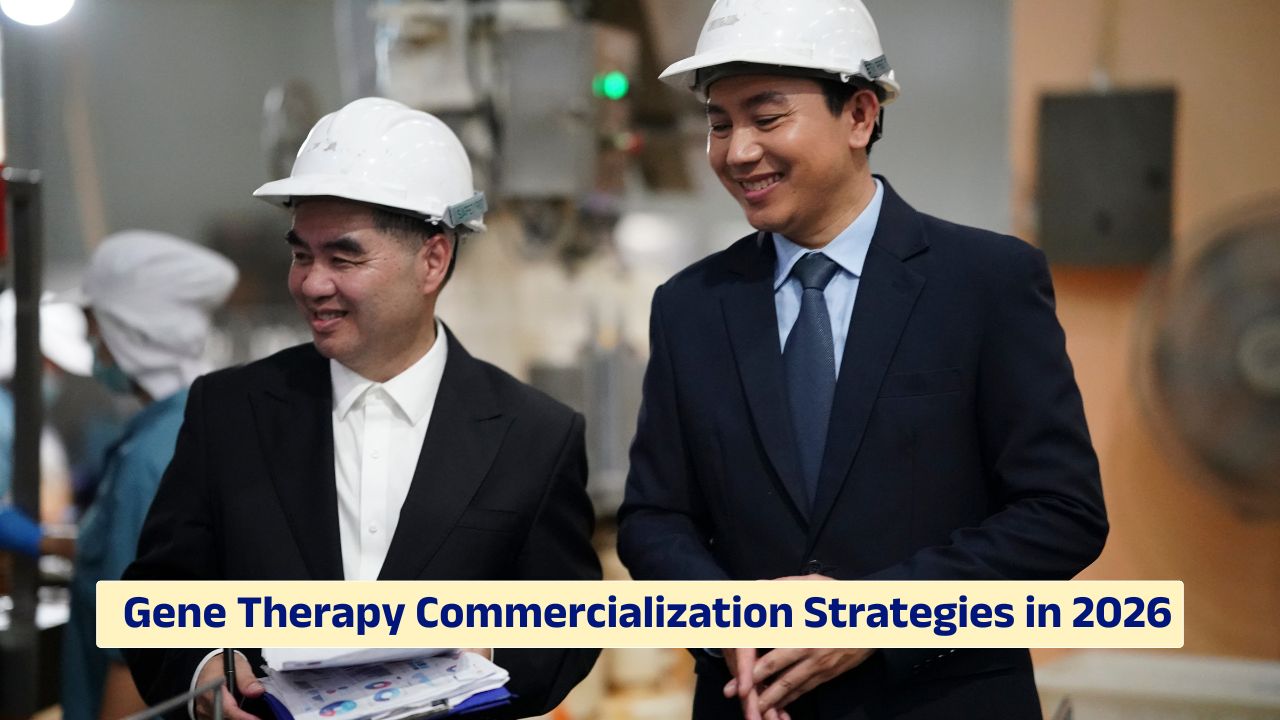
Gene therapy commercialization strategies in 2026 are entering a more disciplined phase as US biotech companies transition from scientific validation to scalable market execution.
Following a decade marked by breakthrough approvals and record venture inflows, the commercial environment now demands operational maturity, reimbursement clarity, and sustainable manufacturing economics.
Companies developing one-time, high-cost therapies must balance clinical innovation with payer scrutiny and capital market expectations.
As the Food and Drug Administration continues to refine regulatory guidance for cell and gene therapies, sponsors are aligning clinical development, manufacturing, and pricing models earlier in the product lifecycle.
The commercial strategy for gene therapy in 2026 is no longer an afterthought. It is a core component of pipeline design.
| Key Point | Details |
|---|---|
| Regulatory Alignment | Early engagement with FDA through RMAT and accelerated pathways to streamline approval timelines |
| Manufacturing Scale | Investment in vector production capacity and quality systems to meet commercial demand |
| Reimbursement Models | Outcomes-based agreements and annuity-style payments with commercial and public payers |
| Market Access | Integrated evidence generation to support CMS and private insurer coverage decisions |
| Capital Strategy | Strategic partnerships, milestone financing, and selective IPO readiness planning |
Regulatory
In 2026, regulatory positioning remains foundational to gene therapy commercialization strategies. Sponsors increasingly leverage early meetings with the FDA Center for Biologics Evaluation and Research to clarify Chemistry, Manufacturing, and Controls expectations.
Programs seeking Regenerative Medicine Advanced Therapy designation aim to accelerate review while maintaining rigorous post-market commitments.
Commercial planning now incorporates confirmatory trial requirements and long-term follow-up obligations for durability and safety.
These post-approval commitments directly influence pricing models, revenue forecasting, and investor communications. Regulatory risk management has become inseparable from commercial viability.
Manufacturing
Vector manufacturing capacity remains a strategic bottleneck. Adeno-associated virus platforms, lentiviral systems, and emerging non-viral delivery technologies require robust process controls and validated scale-up pathways.
Companies are investing in in-house facilities or partnering with contract development and manufacturing organizations to reduce supply chain volatility.
Commercial readiness demands consistent batch quality and cost discipline. Process innovation, including suspension cell systems and improved purification technologies, is central to margin preservation.
Without manufacturing efficiency, even clinically successful gene therapies may struggle to achieve sustainable profitability.
Reimbursement
High upfront pricing continues to challenge traditional reimbursement frameworks. Gene therapy commercialization strategies in 2026 increasingly incorporate outcomes-based contracts and staged payment models.
Collaboration with the Centers for Medicare and Medicaid Services and private insurers begins during late-stage development rather than post-approval.
Real-world evidence collection is embedded into launch planning to validate long-term efficacy claims. Sponsors are building data infrastructure that supports value demonstration across multi-year horizons. Payers expect transparent durability data before committing to broad coverage policies.
Market
Market segmentation strategies are becoming more precise. Rare disease indications with well-defined patient populations remain attractive due to expedited regulatory pathways and concentrated specialist networks.
However, expansion into more prevalent indications requires scalable distribution logistics and payer alignment.
Commercial teams are investing in treatment center certification programs to ensure proper handling and administration. This approach reduces variability and mitigates reputational risk. It also strengthens relationships with academic medical centers that serve as early adopters and evidence generators.
Capital
Public and private capital markets in 2026 are rewarding disciplined execution over speculative pipeline expansion. Gene therapy companies listed on US exchanges face heightened scrutiny around cash runway, manufacturing milestones, and reimbursement traction.
Strategic partnerships with larger biopharma organizations provide risk-sharing mechanisms and commercialization infrastructure.
Milestone-driven licensing agreements are increasingly structured to align clinical progress with manufacturing scale and payer acceptance. Investors are prioritizing programs with integrated commercialization blueprints rather than purely scientific narratives.
Looking ahead, gene therapy commercialization strategies in 2026 reflect a maturation of the sector. Success will depend on synchronized regulatory planning, scalable manufacturing, payer-aligned pricing, and capital discipline.
For biotech executives and healthcare investors, the competitive edge lies in operational execution as much as in therapeutic innovation.
Companies that embed commercialization strategy into early development will be best positioned to convert transformative science into durable market impact within the US healthcare system.
FAQs
What defines gene therapy commercialization strategies in 2026?
They integrate regulatory planning, manufacturing scale-up, reimbursement alignment, and capital strategy early in product development to ensure sustainable market entry.
How does FDA engagement influence commercialization?
Early FDA engagement clarifies CMC and clinical requirements, reduces regulatory uncertainty, and supports more accurate revenue and launch forecasting.
Why are outcomes-based payment models important for gene therapies?
Because many gene therapies are high-cost and one-time treatments, payers prefer reimbursement models tied to long-term patient outcomes.
What manufacturing challenges affect commercialization?
Vector production scale, quality control, cost of goods, and supply chain reliability are critical constraints that influence pricing and margins.
How are capital markets shaping gene therapy strategy?
Investors are emphasizing operational discipline, reimbursement traction, and scalable manufacturing over early-stage pipeline expansion.