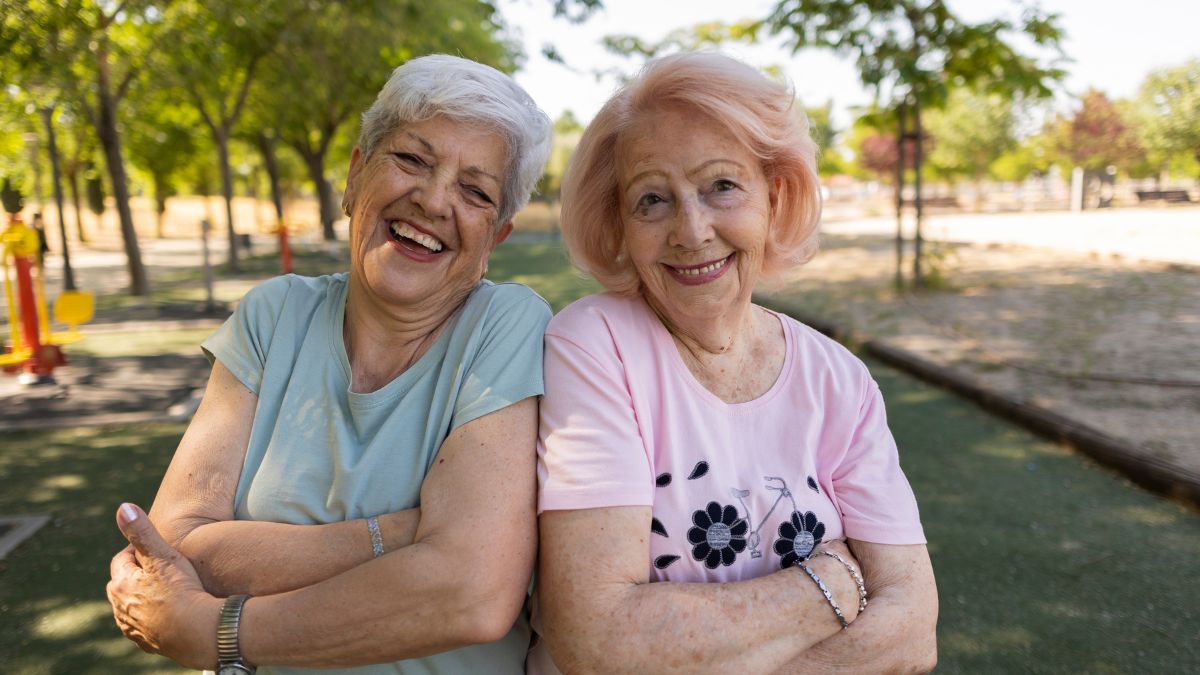
Many people assume that loneliness in adulthood comes primarily from being physically alone. Fewer social gatherings, less frequent contact, and quieter routines are often seen as the defining features.
However, a different and less visible form of loneliness often emerges with age. It is the experience of remaining connected to people from the past while recognizing that the shared understanding that once defined the relationship has changed.
This form of disconnection does not usually involve conflict or a clear ending. Instead, it develops gradually, often without acknowledgment, making it more difficult to process.
Shift
As individuals move through different stages of life, their priorities, values, and identities tend to evolve. These changes are not always synchronized with those of long-standing friends. Over time, this can lead to a subtle misalignment.
In earlier years, friendships are often formed through proximity, shared routines, or similar life circumstances. School, work environments, or social circles create natural opportunities for connection. In adulthood, these conditions change. Relationships increasingly depend on shared values, mutual effort, and emotional compatibility.
When those elements shift, the connection may weaken, even if the history remains intact.
Distance
Unlike more defined forms of loss, such as relocation or conflict, the gradual distancing of a friendship can feel ambiguous. There is often no specific moment that marks the change. Communication becomes less frequent, interactions feel more surface-level, and the ease that once existed may no longer be present.
This ambiguity can make the experience more difficult to interpret. Without a clear cause, it is common to question whether something went wrong or whether the relationship could have been maintained differently.
In many cases, neither person has acted incorrectly. The change reflects diverging paths rather than a failure of effort.
Patterns
Psychological research provides context for these experiences. Studies indicate that social networks tend to narrow with age, not only due to external factors such as time constraints, but also because of intentional prioritization.
Socioemotional selectivity theory suggests that as people become more aware of time and emotional investment, they focus more on relationships that provide meaning and stability. This often leads to a reduction in the number of active connections.
The following table summarizes common shifts in friendships across life stages:
| Life Stage | Basis of Friendship | Common Outcome |
|---|---|---|
| Early adulthood | Proximity, shared routine | Broad social networks |
| Mid adulthood | Values, compatibility | Selective, smaller circles |
| Later adulthood | Emotional meaning | Focused, stable bonds |
This narrowing is not inherently negative. It reflects a transition from quantity to quality in social relationships.
Grief
Despite its normalcy, the experience of growing apart from friends can involve a form of grief. Unlike more visible losses, this type of grief is often unacknowledged.
The difficulty lies in the lack of closure. The friendship may not have ended formally, but its role has changed. A person who was once central to daily life may become peripheral, with no clear transition point.
This can raise complex questions about the nature of the relationship. It may lead individuals to reconsider whether the connection was temporary or whether it has simply evolved into a different form.
In many cases, both interpretations may hold some truth. A friendship can be meaningful and still limited to a particular period of life.
Growth
Personal development is often a contributing factor in these changes. As individuals reassess their beliefs, habits, or goals, they may find that certain relationships no longer align with their current direction.
This does not imply that earlier versions of those relationships were less valid. Rather, it reflects the reality that growth can alter compatibility.
In some instances, one person’s changes may create discomfort for the other, particularly if those changes highlight differences in perspective or priorities. This dynamic can further contribute to distance, even without explicit disagreement.
Perspective
Philosophical perspectives, such as the concept of impermanence, offer a useful framework for knowing these transitions. The idea that all experiences, including relationships, are subject to change can help contextualize the temporary nature of some connections.
Viewing friendships as evolving rather than fixed allows for a different interpretation of their endings. Instead of being seen solely as losses, they can also be understood as complete experiences that served a purpose during a specific period.
This perspective does not remove the emotional impact, but it can make it more manageable.
Response
Responding to this type of change involves both acknowledgment and adjustment. Ignoring the shift can prolong confusion, while overanalyzing it may increase distress.
Several practical approaches can help:
- Recognizing the value the friendship once had
- Allowing space for the emotional response without minimizing it
- Maintaining openness to new connections
It is also important to avoid becoming overly restrictive in forming new relationships. While selectivity increases with age, excessive withdrawal can contribute to isolation.
Continuity
At the same time, some friendships do persist through change. These relationships often adapt alongside individual growth, maintaining relevance even as circumstances evolve.
Focusing attention on these enduring connections can provide stability. They tend to be characterized by flexibility, mutual understanding, and a willingness to accommodate change.
Such relationships are less dependent on shared circumstances and more grounded in consistent mutual regard.
Renewal
Forming new friendships later in life is both possible and valuable. In some cases, these relationships may develop with greater depth, as individuals bring more self-awareness and clarity to their interactions.
Although initiating new connections may require effort, it also creates opportunities for alignment that reflects current values and priorities.
In summary, the loneliness associated with aging is not always about physical isolation. It often relates to the recognition that some relationships were tied to specific phases of life. This realization can be difficult, particularly in the absence of clear endings.
However, knowing the underlying patterns can provide clarity. Friendships may change, narrow, or conclude, but these shifts are part of broader developmental processes rather than signs of failure. Recognizing this allows for a more balanced perspective on both past and future connections.
FAQs
Why do friendships fade with age?
Due to changing values and priorities.
Is it normal to outgrow friends?
Yes, it is part of personal development.
What is socioemotional selectivity?
Focusing on meaningful relationships over time.
Can old friendships be maintained?
Yes, if both people adapt and stay engaged.
Is making new friends later harder?
It can be, but it is still possible.