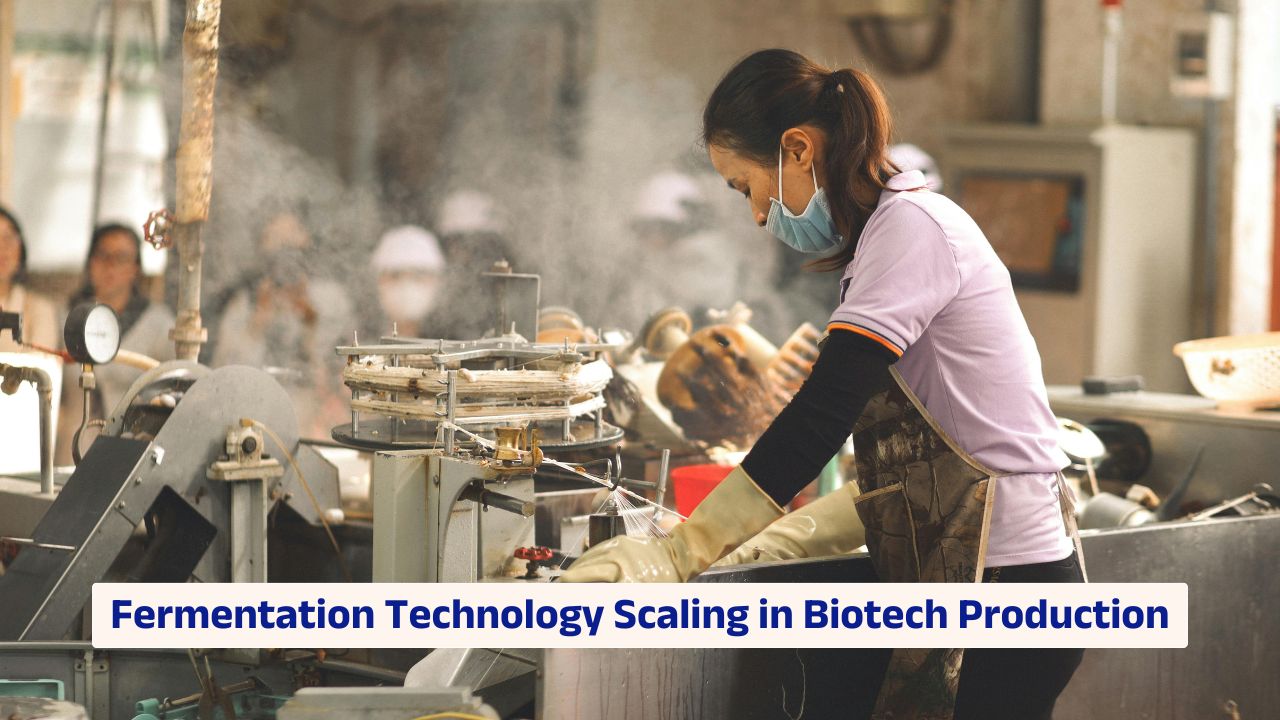
Fermentation technology has become a central manufacturing platform across modern biotechnology, supporting the production of biologics, enzymes, vaccines, and emerging synthetic biology products.
While laboratory-scale fermentation is relatively straightforward, scaling these systems to commercial manufacturing volumes presents a complex engineering and regulatory challenge.
Process stability, contamination control, and reproducibility become critical as fermentation volumes expand from liters to thousands of liters in industrial bioreactors.
Biotech companies must navigate not only technical scaling barriers but also strict regulatory expectations for process control and product consistency. In the United States, fermentation-based biomanufacturing is closely monitored under current Good Manufacturing Practice standards.
Agencies such as the FDA require clear documentation of scale-up strategies, validation of fermentation parameters, and detailed control of microbial or cell culture performance across production batches.
| Key Point | Details |
|---|---|
| Scale Transition | Biotech processes must transition from laboratory fermentation to pilot and commercial bioreactor systems. |
| Process Control | Critical parameters include oxygen transfer rate, agitation, pH stability, and nutrient feed optimization. |
| Regulatory Oversight | US regulators require validated manufacturing processes under current Good Manufacturing Practice standards. |
| Commercialization Impact | Efficient scaling directly influences production cost, supply reliability, and biotech market competitiveness. |
| Technology Innovation | Advanced sensors, automation, and digital process monitoring improve fermentation reproducibility. |
Scaling
The first major hurdle in fermentation scaling involves maintaining biological performance while increasing reactor volume. Microbial and cell-based systems behave differently in large tanks compared with laboratory flasks. Mixing efficiency, oxygen availability, and nutrient gradients change significantly as reactor size increases.
Engineers often use stepwise scale progression to address these variables. Pilot-scale fermenters, typically ranging from 50 to 500 liters, allow researchers to identify metabolic shifts and process limitations before moving to full production systems.
This approach reduces risk and improves predictability during commercial manufacturing deployment.
Control
Process control becomes significantly more demanding at the industrial fermentation scale. Oxygen transfer rate is often the most critical factor because microbial metabolism depends on sufficient aeration. Industrial bioreactors must therefore balance agitation intensity with cell viability and shear sensitivity.
Advanced process analytics now allow real-time monitoring of fermentation conditions. Sensors track dissolved oxygen, pH fluctuations, biomass concentration, and metabolite accumulation.
These data streams allow automated control systems to adjust nutrient feeds and aeration profiles, helping maintain consistent product yield.
Regulatory agencies increasingly encourage the use of process analytical technology frameworks to support manufacturing control strategies. Guidance from the FDA process analytical technology program emphasizes continuous monitoring as a tool for improving quality assurance in biopharmaceutical production.
Manufacturing
Fermentation scaling also affects facility design and infrastructure planning. Commercial biomanufacturing sites require large stainless steel or single-use bioreactor systems, upstream media preparation capacity, and robust sterilization capabilities. Cleanroom classification and contamination prevention become critical elements of facility architecture.
Many biotechnology companies are increasingly adopting modular manufacturing facilities to accelerate fermentation scale deployment. Modular systems allow companies to expand capacity without building entirely new facilities.
This strategy has gained traction among emerging biotech firms that must rapidly scale production following clinical success.
Federal investment in domestic biomanufacturing infrastructure has also accelerated innovation in fermentation technologies.
Programs supported through agencies such as the National Institutes of Health biotechnology training initiatives aim to strengthen workforce expertise and support scalable production platforms across the US biotechnology sector.
Innovation
Digitalization is transforming how fermentation scaling challenges are addressed. Computational modeling now allows engineers to simulate fluid dynamics and oxygen transfer behavior before a reactor is physically built. These predictive tools reduce development timelines and improve scale-up reliability.
Artificial intelligence-driven process optimization is also emerging as a powerful tool in fermentation manufacturing. Machine learning models analyze large fermentation datasets to identify optimal feeding strategies and detect early signs of metabolic stress.
Such approaches are increasingly relevant for complex biologics and synthetic biology-derived products.
Continuous fermentation systems are another area of active innovation. Unlike traditional batch processes, continuous systems maintain steady microbial growth and product formation over extended periods.
While regulatory acceptance remains evolving, these systems could significantly improve manufacturing efficiency for certain biologic products.
As the biotechnology industry expands into new modalities, including cell therapies, engineered microbes, and industrial enzymes, scalable fermentation platforms will remain foundational.
Companies that successfully integrate engineering discipline, digital monitoring, and regulatory readiness will be best positioned to deliver reliable biomanufacturing capacity in an increasingly competitive global biotech market.
FAQs
What is fermentation technology in biotechnology production
Fermentation technology uses microorganisms or engineered cells in controlled bioreactors to produce biologics, enzymes, vaccines, and other biotechnology products at an industrial scale.
Why is scaling fermentation processes difficult
Scaling introduces changes in oxygen transfer, mixing efficiency, and nutrient gradients that can affect microbial growth and product yield, making process control more complex.
How do biotech companies validate fermentation scale-up
Companies perform pilot-scale testing, process validation studies, and detailed monitoring of critical parameters to ensure consistent product quality across manufacturing batches.
What role does the FDA play in fermentation manufacturing
The FDA oversees fermentation-based drug production under current Good Manufacturing Practice requirements and expects validated processes that ensure product safety, identity, and consistency.
What technologies are improving the fermentation scale-up
Advanced sensors, digital monitoring platforms, computational modeling, and machine learning based process optimization are helping biotech manufacturers improve fermentation performance at scale.