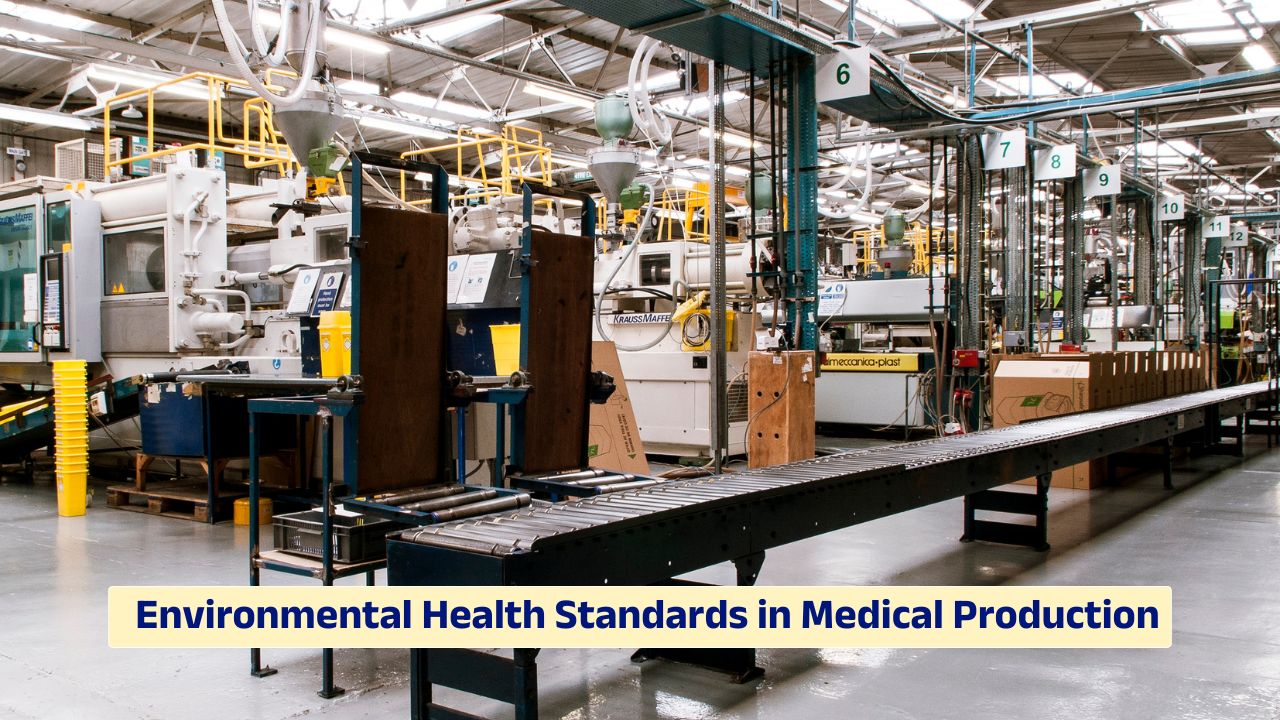
Environmental health standards in medical production have become a critical focus within the United States as regulators, manufacturers, and healthcare systems align on sustainability, safety, and compliance.
Increasing scrutiny from federal agencies and growing investor expectations are pushing life sciences companies to integrate environmentally responsible practices across the manufacturing lifecycle without compromising product quality or regulatory integrity.
| Investors and healthcare systems demand a reduced environmental footprint | Details |
|---|---|
| Regulatory Oversight | EPA and FDA frameworks govern emissions, waste handling, and facility standards |
| Manufacturing Impact | Cleanroom operations and sterile production require controlled environmental inputs |
| Sustainability Pressure | Investors and healthcare systems demand reduced environmental footprint |
| Supply Chain Compliance | Vendors must meet environmental and safety benchmarks to remain qualified |
| Technology Integration | Automation and monitoring systems improve environmental control and reporting |
Frameworks
Environmental health standards in medical production are shaped by a combination of federal and state regulations.
The Environmental Protection Agency establishes guidelines for air emissions, hazardous waste management, and water discharge, while the Food and Drug Administration ensures that manufacturing environments meet strict quality and sterility requirements.
These overlapping frameworks require manufacturers to maintain facilities that not only produce safe and effective medical products but also minimize environmental impact.
Compliance is particularly complex for biologics and sterile injectables, where environmental conditions directly influence product stability and safety.
Detailed regulatory expectations can be reviewed through the EPA environmental health resources, which outline federal priorities for managing environmental risks across industrial sectors.
Manufacturing
Medical production environments, especially those involving pharmaceuticals and medical devices, rely heavily on controlled cleanroom systems. These facilities regulate air quality, temperature, humidity, and particulate levels to ensure both product integrity and worker safety.
However, cleanroom operations are energy-intensive and generate significant waste, including single-use plastics and chemical byproducts.
Manufacturers are increasingly adopting energy-efficient HVAC systems, waste minimization protocols, and closed-loop water systems to address these challenges.
Balancing sterility requirements with environmental sustainability is a persistent challenge. Companies must ensure that any changes to production processes do not introduce contamination risks or compromise compliance with current Good Manufacturing Practices.
Compliance
Environmental compliance in medical production extends beyond facility operations to include documentation, reporting, and audit readiness.
Manufacturers must maintain detailed records of emissions, waste disposal, and resource usage, often subject to inspection by multiple regulatory bodies.
In addition, environmental risk assessments are increasingly integrated into quality management systems.
This convergence reflects a broader regulatory trend toward holistic oversight, where environmental performance is linked to product safety and operational reliability.
Guidance on quality and manufacturing standards can be accessed through the FDA pharmaceutical quality resources, which highlight expectations for maintaining compliant and controlled production environments.
Innovation
Technological innovation is playing a central role in advancing environmental health standards. Digital monitoring systems enable real-time tracking of air quality, emissions, and energy consumption, allowing manufacturers to identify inefficiencies and respond proactively.
Automation and advanced analytics are also improving process efficiency, reducing waste, and enhancing consistency in production.
These technologies support both regulatory compliance and sustainability goals, creating a dual value proposition for manufacturers.
Moreover, the adoption of green chemistry principles and sustainable materials is gaining traction.
By redesigning processes to reduce hazardous inputs and waste generation, companies can align environmental performance with long-term cost efficiency.
Market
Environmental health standards are increasingly influencing market dynamics within the life sciences sector.
Healthcare providers, payers, and procurement organizations are incorporating sustainability criteria into purchasing decisions, creating competitive pressure for manufacturers to demonstrate environmental responsibility.
Investors are also prioritizing environmental, social, and governance metrics when evaluating biotech and medical device companies.
Firms that proactively address environmental risks and integrate sustainable practices are better positioned to attract capital and secure long-term growth.
As regulatory expectations continue to evolve, companies that embed environmental health standards into their operational strategies will likely gain a strategic advantage.
This shift reflects a broader transformation in the industry, where environmental performance is becoming a core component of value creation.
Looking ahead, environmental health standards will remain a defining factor in medical production strategy. The convergence of regulatory oversight, technological innovation, and market expectations is driving a more integrated approach to sustainability.
Manufacturers that can align compliance with operational efficiency will be best positioned to navigate this evolving landscape.
FAQs
What are the environmental health standards in medical production?
They are regulations and practices that ensure medical manufacturing processes minimize environmental impact while maintaining product safety and quality.
Which US agencies regulate environmental standards in medical production?
The EPA oversees environmental protection, while the FDA regulates manufacturing quality and safety standards in medical production.
Why are cleanrooms important for environmental health?
Cleanrooms control contamination and environmental conditions, ensuring product integrity and protecting both patients and workers.
How are manufacturers improving sustainability?
Companies are adopting energy-efficient systems, reducing waste, implementing green chemistry, and using digital monitoring technologies.
How do environmental standards impact the medical market?
They influence procurement decisions, investor evaluations, and regulatory compliance, shaping competitiveness and long-term growth in the industry.