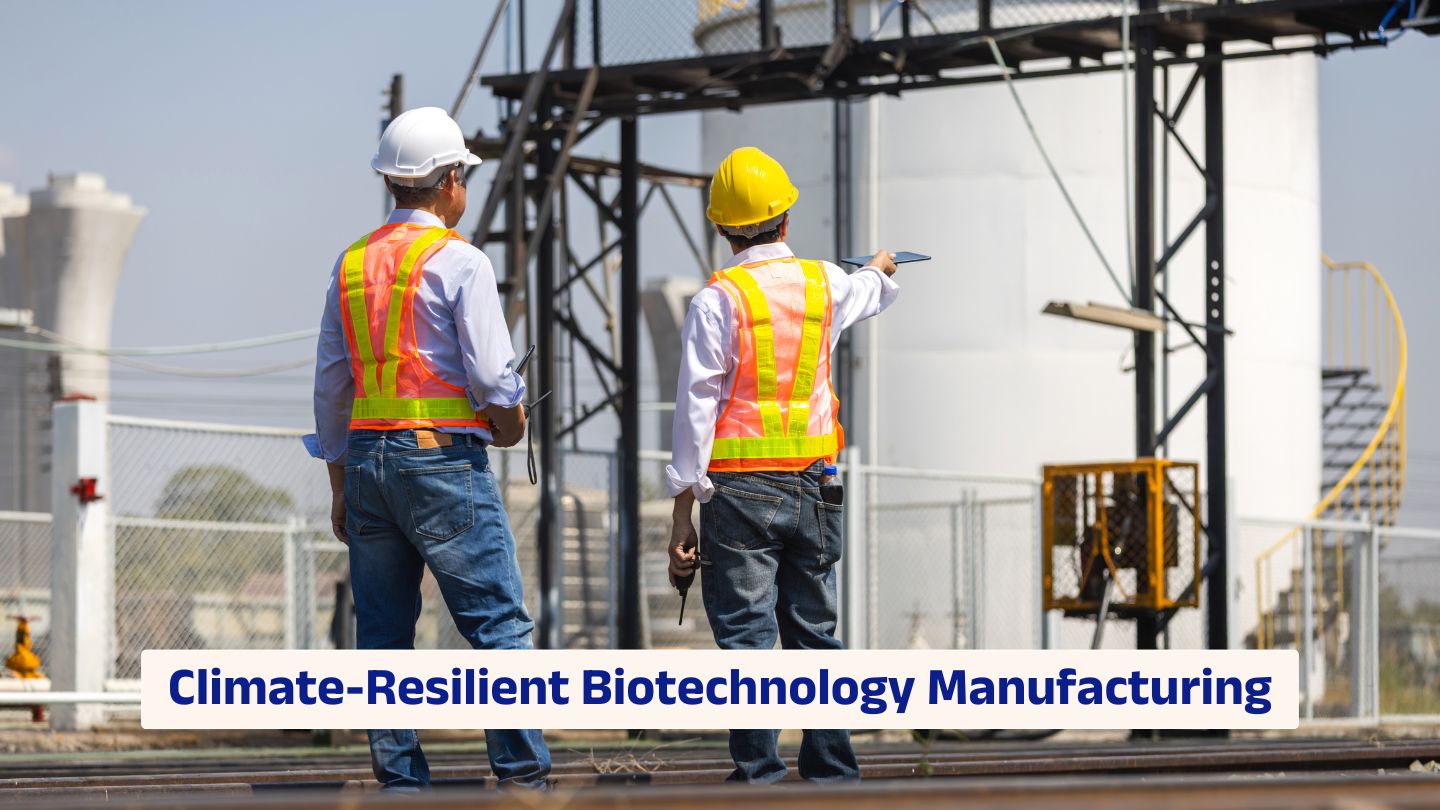
Climate volatility is increasingly influencing how biotechnology manufacturing is designed, located, and regulated in the United States. Extreme weather events, water stress, and energy grid instability are forcing life sciences companies to rethink production infrastructure.
Climate-resilient biotechnology manufacturing is emerging as a strategic priority across the pharmaceutical, biologics, and advanced therapy supply chain.
Biotech production facilities rely on energy-intensive processes, temperature-controlled environments, and highly stable supply chains. Climate disruptions threaten each of these dependencies.
As a result, industry leaders are integrating resilience planning directly into facility design, regulatory compliance strategies, and long-term manufacturing investment decisions.
| Manufacturers are expanding geographic production networks to reduce climate-related disruption risk. | Details |
|---|---|
| Infrastructure resilience | Facilities are being designed to withstand extreme weather events and grid disruptions. |
| Water management | Biomanufacturing requires large volumes of purified water, making drought risk a growing operational factor. |
| Energy strategy | Renewable integration and microgrid systems are being deployed to stabilize energy supply. |
| Regulatory alignment | US regulators increasingly encourage resilient manufacturing systems to protect drug supply continuity. |
| Supply chain diversification | Manufacturers are expanding geographic production networks to reduce climate related disruption risk. |
Risks
Biotechnology manufacturing facilities face a unique risk profile when climate conditions become unstable. Bioreactors, cell culture systems, and purification equipment require precise temperature control and uninterrupted utilities.
Even short disruptions to electricity, cooling infrastructure, or water purification systems can halt production and compromise biologic products.
Hurricanes, flooding, wildfires, and heat waves have already disrupted pharmaceutical manufacturing clusters in several regions.
These disruptions have raised concerns about national drug supply resilience, particularly for complex biologics and sterile injectable products that cannot be rapidly relocated to alternative facilities.
Design
Modern biotech facilities are increasingly being designed with climate resilience as a core engineering principle. Site selection now incorporates flood mapping, wildfire exposure, water availability, and long-term climate projections.
These assessments influence where large-scale biologics plants and cell therapy manufacturing hubs are constructed.
Facility architecture is also evolving. Elevated infrastructure, reinforced utility systems, and advanced environmental controls are becoming standard in new manufacturing projects.
Companies are integrating redundant power systems and resilient HVAC engineering to ensure stable cleanroom operations during regional infrastructure stress.
Energy
Biotechnology manufacturing is energy-intensive, particularly for fermentation, cold chain storage, and sterile processing.
Climate resilient facilities are therefore integrating distributed energy resources such as on-site solar generation, battery storage, and microgrid systems. These systems help stabilize operations during regional grid disruptions.
Federal policy is reinforcing this transition. Initiatives from the US Department of Energy highlight the importance of resilient biomanufacturing infrastructure for national supply chains.
Programs supporting sustainable industrial biotechnology are outlined through the US Department of Energy’s industrial biomanufacturing initiatives, which emphasize infrastructure modernization.
Water
Water availability is becoming a major consideration in biotechnology manufacturing. Biologics production requires significant volumes of purified water for cell culture media preparation, cleaning processes, and sterile operations.
Facilities located in drought-prone regions face rising operational risk and regulatory scrutiny around water use.
To address this challenge, manufacturers are deploying advanced water recycling systems and closed-loop purification technologies.
These innovations reduce total water consumption while maintaining strict quality standards required for pharmaceutical manufacturing under current good manufacturing practice guidelines.
Regulation
US regulators are increasingly aware that climate-related disruptions can threaten drug supply continuity. The US Food and Drug Administration has emphasized the importance of resilient manufacturing infrastructure as part of broader supply chain security discussions.
Guidance related to pharmaceutical quality systems can be explored through the FDA’s pharmaceutical quality resources.
For biotechnology firms, climate resilience is becoming intertwined with regulatory risk management. Companies must demonstrate robust contingency planning, infrastructure redundancy, and operational continuity measures to ensure uninterrupted production of critical therapies.
Investors and policymakers are also paying closer attention to climate-related manufacturing risk. As biologics, gene therapies, and advanced medicines represent a growing share of pharmaceutical pipelines, resilient production capacity is increasingly viewed as essential healthcare infrastructure in the United States.
Looking ahead, climate resilient biotechnology manufacturing will likely become a defining competitive factor for large-scale biologics producers.
Companies that integrate environmental risk modeling, resilient infrastructure, and sustainable resource management into manufacturing strategy will be better positioned to maintain stable production in an increasingly volatile climate landscape.
FAQs
What is climate resilient biotechnology manufacturing
Climate-resilient biotechnology manufacturing refers to facility design, infrastructure planning, and operational strategies that allow biotech production systems to withstand extreme weather, energy disruptions, and environmental stress while maintaining drug quality and supply continuity.
Why is climate resilience important for biologics manufacturing
Biologics production requires tightly controlled environments and uninterrupted utilities. Climate disruptions such as power outages or water shortages can halt production and affect product integrity, making resilience planning essential.
How are biotech facilities adapting to climate risks
Companies are investing in resilient facility architecture, distributed energy systems, advanced water recycling technologies, and geographically diversified manufacturing networks to reduce environmental risk exposure.
Do regulators consider climate risks in pharmaceutical manufacturing
US regulators increasingly recognize climate-related risks as part of supply chain resilience discussions, encouraging manufacturers to strengthen infrastructure reliability and operational continuity planning.
What technologies support climate resilient biomanufacturing
Key technologies include microgrid energy systems, advanced HVAC infrastructure, closed-loop water purification systems, digital facility monitoring, and predictive risk modeling tools for manufacturing operations.