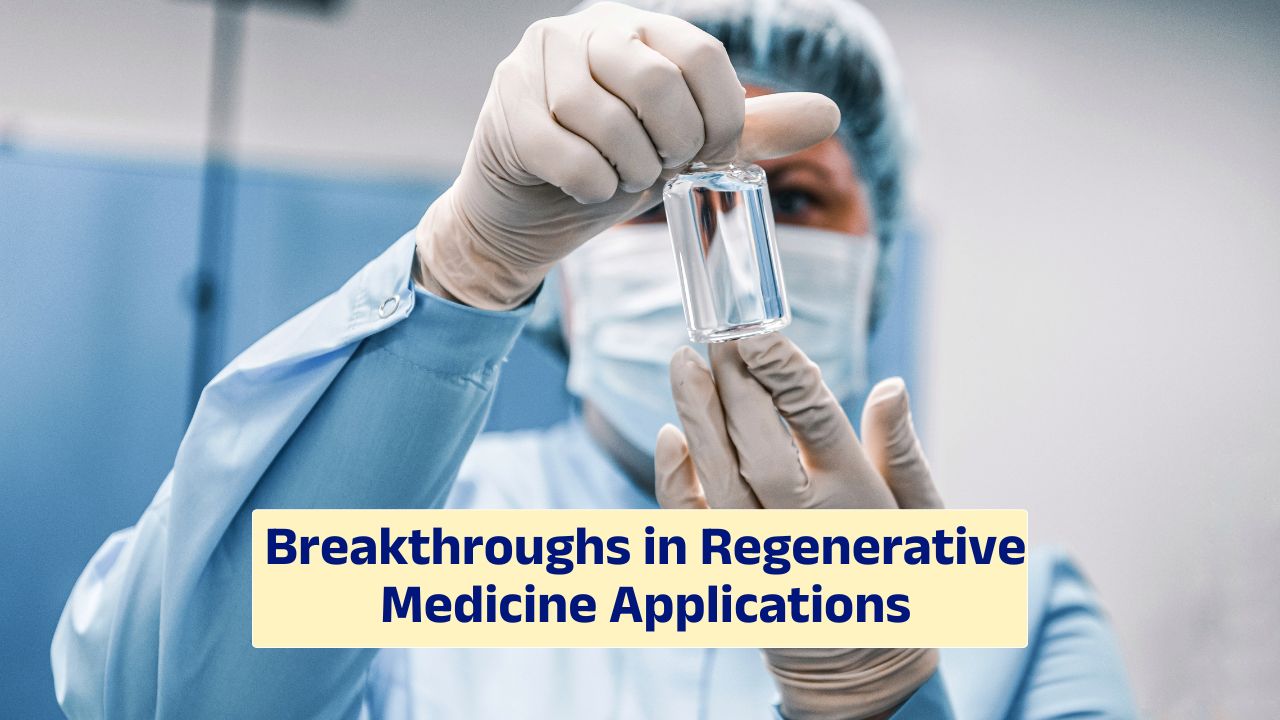
Breakthroughs in regenerative medicine applications are redefining the therapeutic landscape across multiple high-burden disease categories in the United States.
From cell-based therapies to bioengineered tissues, the field is advancing beyond experimental promise toward clinically validated interventions with regulatory and commercial traction.
As academic innovation converges with venture-backed biotechnology platforms, regenerative medicine is increasingly positioned within structured FDA pathways and scalable manufacturing strategies.
The result is a more disciplined innovation cycle that aligns scientific progress with reimbursement, compliance, and capital market expectations.
| Bioengineered scaffolds and organoid systems are improving functional restoration | Details |
|---|---|
| Cell Therapies | Advances in autologous and allogeneic platforms targeting oncology and rare diseases |
| Tissue Engineering | Bioengineered scaffolds and organoid systems improving functional restoration |
| Regulatory Framework | FDA regenerative medicine advanced therapy designation supports expedited review |
| Manufacturing Scale | Investment in GMP facilities and supply chain resilience is accelerating |
| Reimbursement Strategy | CMS engagement critical for high-cost curative therapies |
Cell Therapies
Among the most visible breakthroughs in regenerative medicine applications are next-generation cell therapies. Building on earlier CAR-T oncology platforms, developers are expanding into autoimmune disorders, neurodegenerative conditions, and cardiovascular repair.
Allogeneic approaches aim to address scalability and cost barriers associated with autologous models. By leveraging standardized donor-derived cells, companies are attempting to streamline manufacturing and reduce vein-to-vein timelines while maintaining safety and efficacy benchmarks.
Gene Editing
Gene editing technologies are further accelerating regenerative medicine applications. Precise genomic modification enables correction of disease-causing mutations in hematologic and inherited metabolic disorders, potentially offering durable or curative outcomes.
Regulatory oversight by the FDA Center for Biologics Evaluation and Research ensures that safety, durability, and off-target effects are rigorously assessed. Developers pursuing biologics license applications must demonstrate robust clinical data and validated manufacturing controls.
Tissue Engineering
Tissue engineering represents another area of rapid advancement. Bioengineered scaffolds, stem cell–derived constructs, and organoid platforms are being evaluated for musculoskeletal repair, dermatologic reconstruction, and organ support systems.
Academic medical centers, often supported by grants from the National Institutes of Health, continue to generate foundational data that is later translated into venture-backed development programs. This public–private continuum reinforces the United States as a global leader in regenerative science.
Regulation
Breakthroughs in regenerative medicine applications are closely tied to regulatory strategy. The Regenerative Medicine Advanced Therapy designation offers sponsors the potential for accelerated development timelines, intensive FDA guidance, and priority review considerations.
However, expedited pathways do not reduce evidentiary standards. Clinical endpoints must demonstrate meaningful functional improvement, and post-marketing commitments may include long-term follow-up to monitor durability and safety outcomes.
Commercialization
Commercial viability remains a defining challenge. Many regenerative therapies involve complex manufacturing processes, cold-chain logistics, and individualized administration protocols that increase the cost of goods and operational complexity.
Engagement with the Centers for Medicare and Medicaid Services is essential to establish coverage pathways for high-cost interventions with potential long-term benefits. Value-based payment models and outcomes-based reimbursement frameworks are under active discussion to balance innovation with budget impact.
Capital markets are responding cautiously but constructively. Public investors increasingly demand clear visibility into manufacturing scalability, payer alignment, and competitive positioning before assigning premium valuations to regenerative medicine companies.
As clinical validation expands and regulatory frameworks mature, breakthroughs in regenerative medicine applications are transitioning from experimental therapies to structured healthcare assets.
Companies that integrate scientific rigor with operational discipline and reimbursement foresight are likely to define the next phase of sustainable growth in this sector.
FAQs
What are regenerative medicine applications?
Regenerative medicine applications involve therapies designed to repair, replace, or regenerate damaged cells, tissues, or organs using cell therapy, gene editing, or tissue engineering technologies.
How does the FDA regulate regenerative therapies?
The FDA regulates regenerative therapies through biologics and cellular therapy pathways, including the Regenerative Medicine Advanced Therapy designation for eligible products.
Why are regenerative therapies expensive to commercialize?
Complex manufacturing, individualized treatment protocols, and long-term monitoring requirements contribute to higher development and commercialization costs.
What role does NIH funding play in regenerative medicine?
NIH funding supports foundational research and translational studies that often underpin later-stage biotech development in regenerative medicine.
Are regenerative medicine companies attractive to investors?
Investor interest depends on clinical data strength, regulatory clarity, manufacturing scalability, and reimbursement strategy alignment within the US healthcare system.