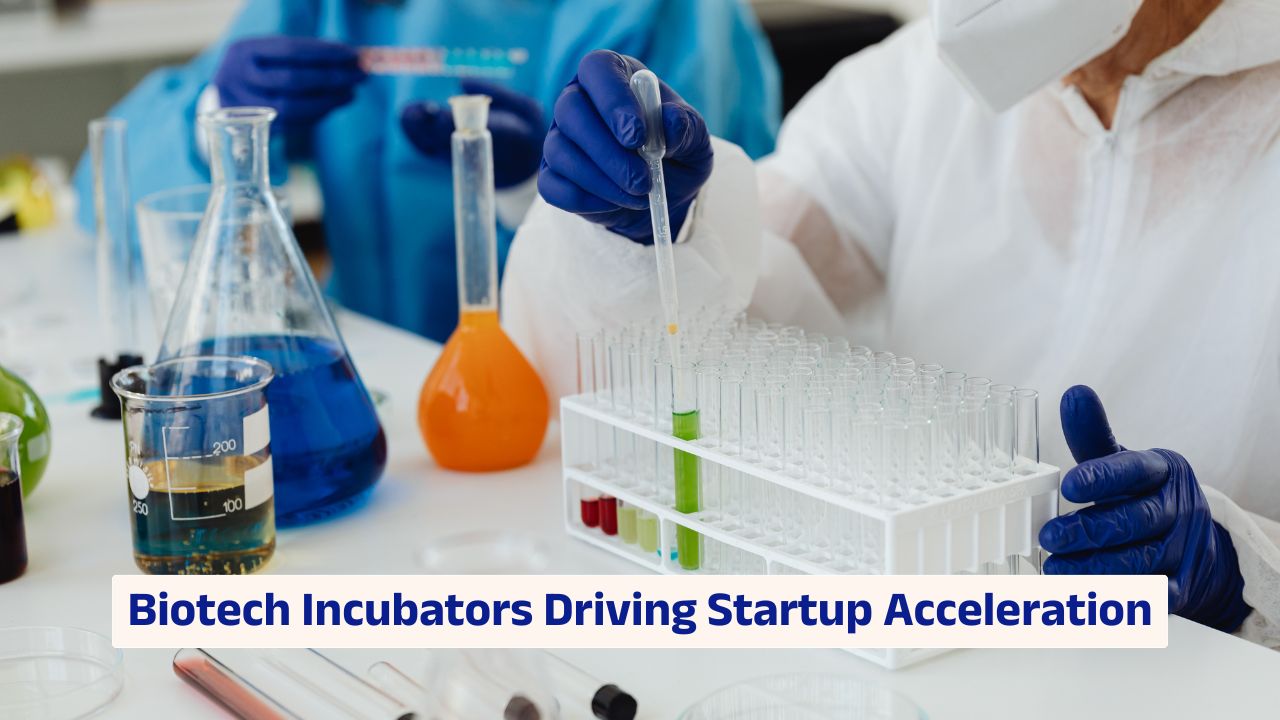
Biotechnology incubators have emerged as a critical infrastructure layer supporting early-stage life science innovation in the United States.
These incubators provide laboratory space, technical resources, mentorship, and investor access that help early biotech companies move from scientific discovery to commercial development.
As the biotechnology sector becomes increasingly capital-intensive and technically complex, incubators are playing a central role in accelerating startup formation and growth.
For many biotech entrepreneurs, the transition from academic research to a venture-backed startup can be difficult without access to specialized facilities and regulatory expertise.
Incubators address this challenge by creating environments where startups can develop technologies, validate scientific concepts, and engage with industry partners while managing the high operational costs associated with laboratory-based research.
| Key Point | Details |
|---|---|
| Infrastructure Access | Incubators provide laboratory space, specialized equipment, and research support for early biotech startups. |
| Mentorship Networks | Industry experts and scientific advisors guide startups through technical and business development challenges. |
| Funding Pathways | Incubators connect startups with venture capital investors and strategic partners. |
| Regulatory Preparation | Early guidance helps startups navigate FDA expectations and clinical development strategies. |
| Innovation Clusters | Biotech incubators often operate within regional ecosystems that include universities and research institutions. |
Ecosystems
Many biotechnology incubators operate within broader innovation ecosystems that include research universities, academic medical centers, and pharmaceutical companies.
These ecosystems create a collaborative environment where startups can access both scientific expertise and industry experience.
Regions such as Boston, the San Francisco Bay Area, and San Diego have developed strong biotechnology clusters partly because of the presence of incubators and accelerators that nurture early-stage companies.
Startups located within these environments often benefit from proximity to experienced researchers, venture investors, and potential strategic partners.
Federal research institutions also contribute to these ecosystems by supporting translational research programs.
The National Center for Advancing Translational Sciences within the National Institutes of Health promotes initiatives that help transform laboratory observations into clinical applications.
Resources
One of the most valuable aspects of biotechnology incubators is access to specialized research infrastructure. Unlike software startups, biotechnology companies require sophisticated laboratory equipment, biosafety facilities, and technical staff to conduct experimental research.
Incubators often provide shared laboratory space, enabling multiple startups to conduct research without individually investing in costly infrastructure. This shared model significantly reduces the financial barriers associated with launching a biotechnology company.
In addition to laboratory access, incubators frequently provide operational support services such as regulatory consulting, intellectual property guidance, and business development mentorship.
These resources help founders navigate the complex commercialization pathways associated with biotechnology innovation.
Funding
Biotechnology incubators also play an important role in connecting startups with capital. Early-stage biotech companies often require substantial funding to support research, preclinical studies, and early clinical development programs.
Many incubators maintain strong relationships with venture capital firms and corporate venture groups that specialize in life science investments. These investors frequently monitor incubator programs to identify promising new technologies and emerging startups.
Government funding initiatives also contribute to early-stage biotech financing. Programs such as the Small Business Innovation Research initiative provide grants that support technology development within early-stage biotechnology companies.
Additional information about this funding pathway can be found through the Small Business Innovation Research program.
Acceleration
Beyond providing infrastructure and funding access, incubators accelerate startup development by guiding companies through critical early milestones. These milestones may include proof of concept validation, intellectual property protection, and initial regulatory planning.
Structured accelerator programs often accompany incubator environments, offering mentorship sessions, investor introductions, and strategic guidance on commercialization pathways. This structured support helps startups refine business models and prepare for larger investment rounds.
Biotechnology incubators are therefore becoming an increasingly influential component of the US life science innovation landscape.
By combining scientific resources, regulatory expertise, and investment networks, these organizations help transform early observations into companies capable of advancing new therapies, diagnostics, and healthcare technologies.
As biotechnology research continues to generate new therapeutic opportunities, incubators are likely to remain essential drivers of startup acceleration.
Their role in bridging the gap between academic discovery and commercial development positions them as foundational elements of the modern biotechnology ecosystem.
FAQs
What is a biotech incubator?
A biotech incubator is an organization that provides laboratory space, resources, mentorship, and funding connections to help early-stage biotechnology startups grow.
Why are incubators important for biotech startups?
Biotech startups require specialized laboratories, regulatory expertise, and large amounts of funding. Incubators help provide these resources early in development.
Do biotech incubators provide funding?
Most incubators do not directly fund startups but connect them with venture capital firms, government grants, and strategic investors.
Where are major biotech incubator hubs located in the US?
Major biotechnology incubator ecosystems exist in regions such as Boston, San Francisco, and San Diego.
How do biotech incubators accelerate startup growth?
They provide laboratory infrastructure, business mentorship, regulatory guidance, and investor networks that help startups move from observe to commercialization.