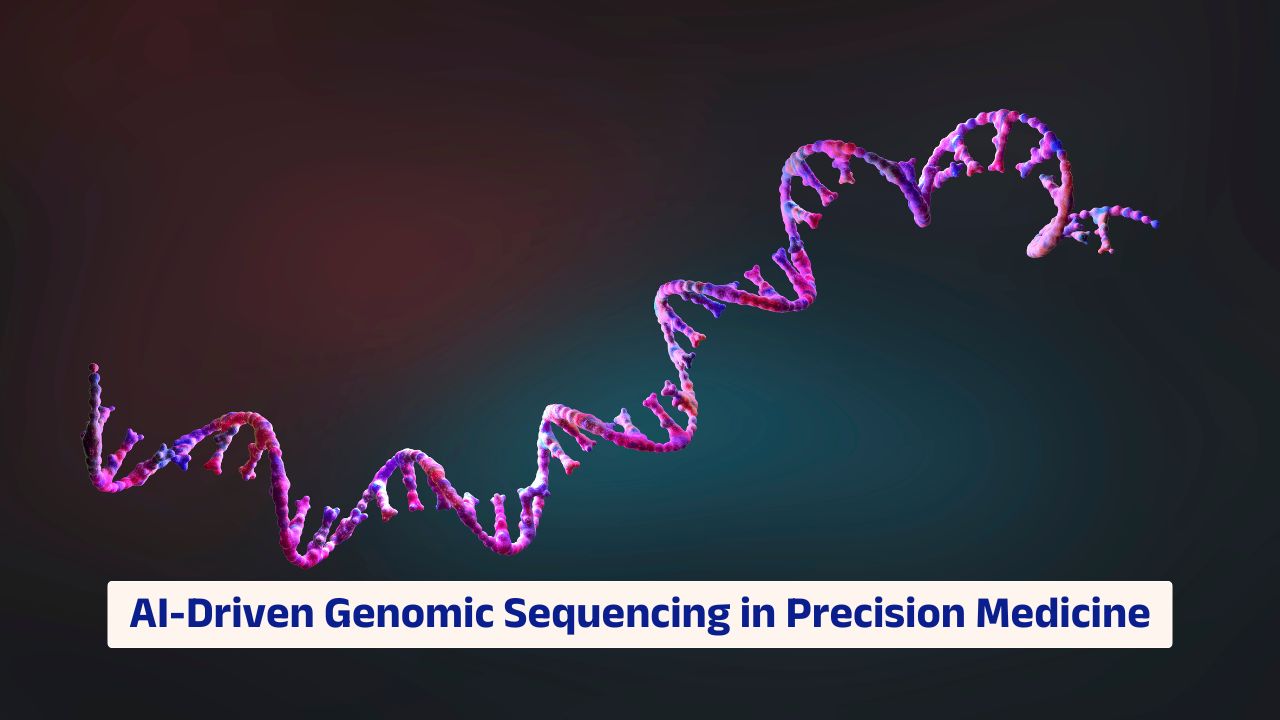
Artificial intelligence is rapidly transforming genomic sequencing, reshaping how clinicians and biotechnology companies approach precision medicine. Advances in machine learning now enable the rapid interpretation of massive genomic datasets, turning raw sequencing outputs into clinically actionable insights.
As sequencing costs decline and computational power expands, AI-driven genomic analysis is becoming central to diagnostics, drug development, and personalized treatment strategies.
In the United States, regulatory agencies, academic institutions, and biotechnology firms are increasingly integrating AI into sequencing workflows to improve disease detection and therapeutic targeting.
These technologies help interpret complex genomic variants that traditional analytical pipelines often struggle to classify. The result is a more scalable framework for precision medicine that aligns with evolving regulatory and reimbursement models.
| US regulators increasingly evaluate AI-enabled genomic tools as software-driven medical technologies. | Details |
|---|---|
| AI interpretation | Machine learning models analyze large genomic datasets to identify clinically relevant variants. |
| Sequencing efficiency | AI reduces analysis time for next generation sequencing pipelines and improves diagnostic turnaround. |
| Clinical applications | Used in oncology, rare disease diagnosis, pharmacogenomics, and population health genomics. |
| Regulatory oversight | US regulators increasingly evaluate AI enabled genomic tools as software driven medical technologies. |
| Commercial strategy | Biotech companies are building AI enabled sequencing platforms to differentiate diagnostics offerings. |
Technology
Modern genomic sequencing generates enormous volumes of data. A single whole genome sequence can contain billions of base pairs, with millions of potential variants.
Traditional bioinformatics pipelines rely on rule-based filtering systems that can struggle to identify subtle genomic patterns linked to disease risk or therapeutic response.
AI models, particularly deep learning algorithms, are capable of identifying complex correlations within genomic datasets. By training on large annotated genomic databases, these systems can distinguish pathogenic variants from benign mutations with higher efficiency.
This computational approach allows laboratories to process sequencing data faster while improving diagnostic precision.
Clinical laboratories are increasingly pairing next-generation sequencing instruments with AI-powered interpretation software. These integrated platforms enable automated variant classification, reducing the time required for clinical reporting.
In oncology, such tools are particularly valuable for identifying actionable mutations that guide targeted therapy selection.
Regulation
The regulatory landscape for AI-enabled genomic diagnostics is still evolving. In the United States, genomic sequencing platforms used for clinical decision-making may fall under oversight from the FDA under the software as a medical device framework. \
This framework addresses software systems that influence clinical outcomes, including AI-driven diagnostic tools.
Regulators are focused on transparency, algorithm validation, and real-world performance monitoring. Because AI models can evolve through retraining and data updates, regulators must evaluate how software updates affect clinical reliability.
This has prompted discussions around adaptive regulatory pathways for continuously learning algorithms.
Federal research institutions also play a major role in advancing genomic AI. Programs supported by the National Human Genome Research Institute are helping expand genomic databases and computational tools used for variant interpretation.
These public research investments strengthen the infrastructure required for clinical implementation of precision medicine.
Applications
One of the most significant applications of AI-driven sequencing is in oncology. Tumor genomes often contain complex combinations of mutations that influence treatment response.
AI tools can analyze tumor sequencing data to identify patterns linked to targeted therapies or immunotherapy response, improving treatment selection for cancer patients.
Rare disease diagnosis represents another major opportunity. Many rare genetic conditions involve previously uncharacterized variants that are difficult to interpret using conventional analysis methods.
AI models trained on large genomic datasets can detect subtle patterns that suggest disease relevance, helping clinicians reach diagnoses that would otherwise remain unresolved.
Pharmacogenomics also benefits from AI-enhanced sequencing. By analyzing patient-specific genetic variants related to drug metabolism, AI platforms can help predict adverse drug reactions or therapeutic efficacy.
This capability aligns closely with precision medicine initiatives seeking to tailor treatments based on individual genomic profiles.
Markets
Biotechnology companies are rapidly incorporating AI into genomic sequencing platforms as part of broader commercialization strategies. Firms developing integrated sequencing and analytics systems can provide end-to-end solutions for hospitals, clinical laboratories, and pharmaceutical partners.
This model supports recurring revenue streams through data analysis services and clinical reporting platforms.
Strategic partnerships between sequencing companies, AI developers, and pharmaceutical firms are also expanding. Drug developers increasingly rely on genomic insights to identify therapeutic targets and stratify patients for clinical trials.
AI-driven sequencing platforms can accelerate biomarker discovery and support precision clinical trial design.
As reimbursement frameworks evolve and clinical evidence grows, AI-enabled genomic diagnostics may become a foundational component of healthcare infrastructure.
The convergence of sequencing technology, machine learning, and regulatory adaptation is positioning genomic data as a central driver of next-generation therapeutic innovation.
For biotechnology executives and healthcare strategists, the strategic implication is clear. AI-driven genomic sequencing is not only improving diagnostic accuracy but also reshaping commercialization models across precision medicine.
Organizations that successfully integrate data science, regulatory compliance, and clinical evidence generation are likely to lead the next phase of genomic healthcare innovation.
FAQs
What is AI-driven genomic sequencing?
AI-driven genomic sequencing combines next-generation sequencing technologies with machine learning algorithms that interpret complex genomic data to identify clinically relevant genetic variants.
How does AI improve precision medicine?
AI can analyze large genomic datasets to detect disease-associated mutations and treatment response patterns, allowing clinicians to tailor therapies based on individual genetic profiles.
Is AI genomic analysis regulated in the United States
Yes. Many AI-enabled genomic diagnostic tools may fall under FDA oversight as software-based medical technologies, particularly when they influence clinical decision-making.
Which diseases benefit most from genomic sequencing
Genomic sequencing is widely used in oncology, rare disease diagnosis, and pharmacogenomics, where genetic variation plays a critical role in disease development or treatment response.
Why are biotech companies investing in AI genomics
AI enables faster genomic analysis, supports biomarker observation, and improves clinical trial targeting, making it valuable for both diagnostics commercialization and drug development strategies.