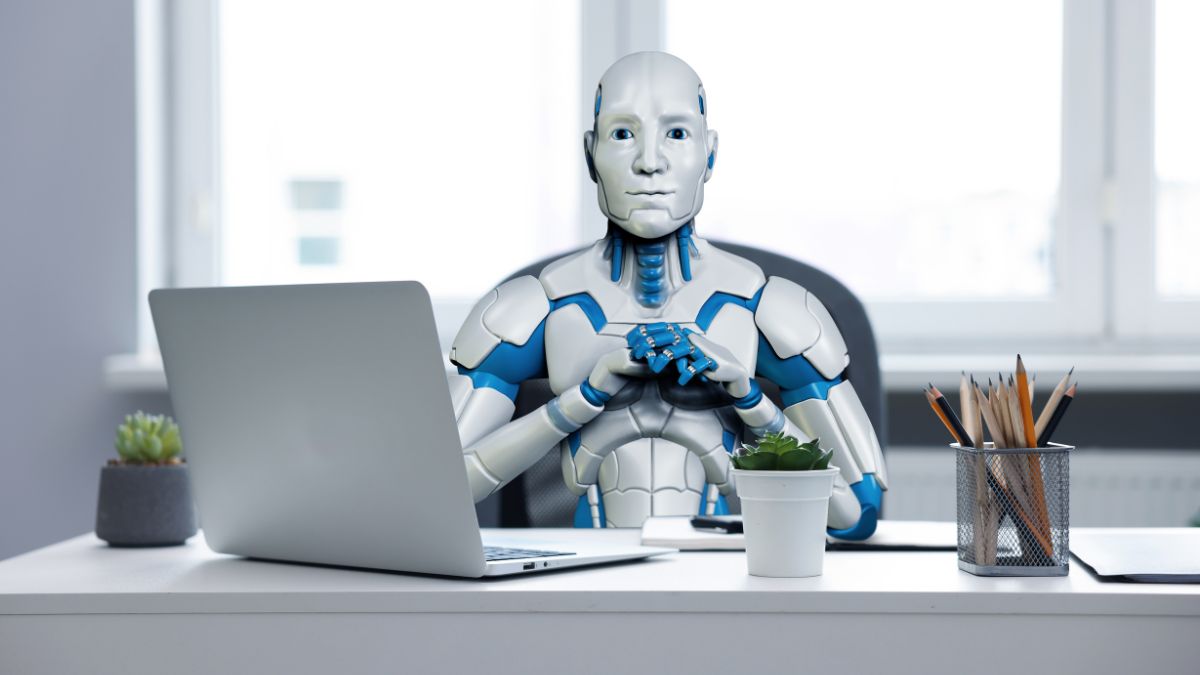
For a long time, I assumed artificial intelligence would mostly function as a productivity tool.
The idea seemed straightforward. AI would help people work faster, automate repetitive tasks, and reduce the time spent on administrative work. Emails could be drafted in seconds. Reports could be summarized instantly. Presentations could be assembled in minutes rather than hours.
The expectation was simple: the same work, completed more efficiently.
But after watching how these tools are actually being used, I have started to think something else is happening as well.
AI is not only accelerating work. In many cases, it is exposing how much of modern professional life was never especially meaningful to begin with.
Automation
The tasks AI handles most effectively are revealing in themselves.
Drafting routine emails. Summarizing meetings. Creating standard presentations. Producing briefing documents. Writing introductions, conclusions, and generic strategy summaries.
The systems perform these tasks well because the structure behind them is highly predictable.
Most corporate communication follows familiar patterns. Reports often repeat standard language. Slide decks frequently follow identical formats regardless of the company or industry involved.
That does not mean the people doing this work lacked skill or effort. Many professionals became highly competent at producing polished versions of these materials.
But AI’s speed reveals something important: much of this work was procedural rather than deeply original.
The value often came less from the intellectual difficulty of the task and more from the time required to complete it.
Visibility
This is why AI increasingly feels less like a productivity revolution and more like a diagnostic tool.
It exposes how much of the modern workday involves producing evidence of activity rather than activity itself.
A presentation demonstrates preparation. A strategy document signals alignment. A meeting summary creates the appearance of progress.
Sometimes these outputs are genuinely useful. Often they are partially symbolic – documents created because organizations expect visible artifacts of work.
For years, the labor involved in producing those materials helped justify their importance. When a tool suddenly generates them almost instantly, the underlying value becomes easier to question.
The process loses some of its perceived weight because the effort attached to it disappears.
Identity
That shift is uncomfortable partly because many people built professional identities around being good at this kind of work.
Competence in corporate environments has often meant the ability to organize information clearly, prepare polished presentations, communicate strategically, and produce deliverables reliably under pressure.
There is real craftsmanship involved in doing those things well.
But when AI can replicate large portions of that output quickly, it creates uncertainty around what exactly was being valued all along – the insight itself, or simply the labor required to package it professionally.
For many workers, especially in knowledge industries, that distinction feels increasingly difficult to ignore.
Filler
A large portion of office work has always involved maintaining systems of coordination, reporting, and communication.
Some of that is essential. Large organizations require structure to function.
At the same time, modern workplaces also generate significant amounts of procedural work that exist mainly because the system expects them to exist. Reports get written because reports are expected. Meetings occur because recurring meetings already exist on calendars.
AI is especially effective at handling this layer of professional life because much of it depends on patterns rather than deep originality.
That realization can feel destabilizing because it forces a reassessment of how much time was spent creating material that may not have substantially changed outcomes.
Judgment
What remains difficult to automate is often less visible but more important.
AI can generate answers quickly, but it does not reliably determine which questions are worth asking. It can produce options, but it cannot fully evaluate which tradeoffs matter most in a particular human situation.
Judgment remains difficult to scale.
So does taste. Knowing which draft communicates something clearly. Knowing what should be removed rather than added. Recognizing when writing feels emotionally flat even if it is technically correct.
These are not simply technical skills. They involve interpretation, context, and human sensitivity.
The same is true for decision-making itself.
A model can help analyze data or summarize possibilities, but deciding whether to move forward with a strategy, how to handle conflict inside a team, or when to change direction entirely still depends heavily on human responsibility.
Relationships
There is also a category of work that becomes more valuable precisely because it cannot be automated easily.
Difficult conversations. Trust-building. Mentorship. Negotiation. Leadership under uncertainty. Supporting someone through a hard moment at work.
These interactions are often slower, emotionally demanding, and difficult to measure, which is partly why many organizations historically rewarded visible outputs more consistently than relational labor.
Yet as automation handles more procedural tasks, the human parts of work become more obvious by contrast.
Not because they are new, but because they are among the few things left that cannot be replicated through pattern prediction alone.
Meaning
The broader issue may not ultimately be about AI replacing jobs entirely.
It may instead force people to examine which parts of their work actually felt meaningful independent of the effort involved.
For many professionals, effort itself became intertwined with value. Long hours, complicated workflows, and labor-intensive production created a sense of seriousness around tasks.
When technology removes large portions of that friction, it becomes harder to avoid asking whether the underlying activity mattered as much as assumed.
That question can feel deeply personal because work is rarely just economic. It is also tied to identity, competence, status, and self-worth.
Shift
What seems increasingly clear is that AI rewards a different set of strengths than many people expected.
Not endless output, but discernment.
Not simply producing more material, but understanding what deserves attention in the first place.
The people who remain most valuable are unlikely to be those who can generate the highest volume of standardized work manually. Increasingly, value appears tied to judgment, emotional intelligence, creativity, context awareness, and the ability to make difficult decisions under uncertainty.
Those qualities are slower and harder to measure than traditional productivity metrics.
But they may also reflect the parts of work that were meaningful all along.
AI did not suddenly create emptiness inside modern work. In many cases, it simply made existing patterns more visible.
And once visible, they become harder to ignore.
FAQs
What work does AI automate best?
Routine and pattern-based tasks.
Why does AI feel disruptive at work?
It exposes low-value repetitive work.
Can AI replace human judgment?
Not fully. Judgment still matters.
What skills remain valuable with AI?
Creativity, taste, and decision-making.
Is AI changing workplace meaning?
Yes, many people are reassessing work.