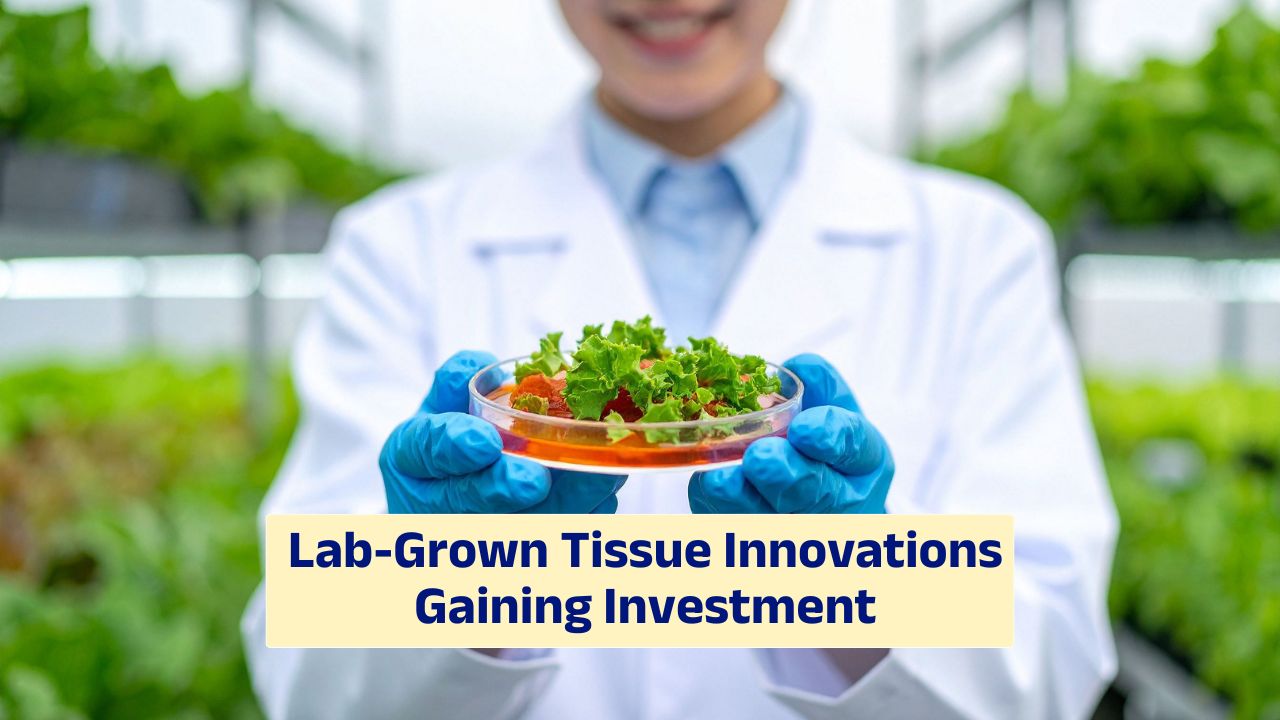
Lab-grown tissue innovations are gaining investment momentum across the United States as regenerative medicine moves from experimental science toward structured commercialization.
Venture capital firms, strategic pharmaceutical partners, and public funding agencies are increasingly backing companies developing engineered tissues for therapeutic transplantation, drug testing, and disease modeling.
This capital influx reflects confidence in platform scalability, regulatory clarity, and long-term clinical value.
| 3D bioprinting, stem cell-derived tissues, and scaffold-based regenerative constructs. | Details |
|---|---|
| Investment Drivers | Unmet organ demand, chronic disease burden, and drug development efficiency needs. |
| Regulatory Oversight | FDA regulates engineered tissues under biologics and human cell and tissue frameworks. |
| Technology Platforms | 3D bioprinting, stem cell derived tissues, and scaffold based regenerative constructs. |
| Commercial Models | Therapeutic implantation, contract research services, and pharma partnerships. |
| Capital Strategy | Milestone based venture funding aligned with preclinical and early clinical validation. |
Scientific Platforms
Lab-grown tissue innovations encompass a spectrum of technologies, including stem cell differentiation, biomaterial scaffolds, and 3D bioprinting systems. Companies are engineering functional tissues such as skin grafts, cartilage constructs, and liver microtissues designed to mimic native physiology.
Advances in induced pluripotent stem cell technology have expanded the ability to generate patient-specific tissue models.
Bioreactor design and vascularization strategies remain central technical challenges. Sustaining cell viability and achieving nutrient diffusion in thicker tissues are prerequisites for therapeutic-scale applications. Investors increasingly evaluate whether companies have solved these engineering bottlenecks before committing late-stage capital.
Regulatory Framework
In the United States, lab-grown tissue products are regulated by the FDA Center for Biologics Evaluation and Research when classified as human cells, tissues, and cellular and tissue-based products. Depending on the degree of manipulation and intended use, products may require a Biologics License Application supported by clinical data.
Clear regulatory categorization is a critical inflection point for investment. Products that qualify for expedited programs, such as the Regenerative Medicine Advanced Therapy designation,n may achieve accelerated review timelines. Early interaction with FDA reviewers reduces uncertainty and strengthens investor confidence in development milestones.
Manufacturing compliance under current Good Manufacturing Practice standards adds another layer of complexity. Investors assess facility design, scalability of cell culture processes, and quality control systems as part of due diligence before advancing significant funding rounds.
Investment Trends
Venture capital interest in lab-grown tissue innovations reflects broader enthusiasm for regenerative medicine. Early stage financing often supports proof of concept and translational studies, while later rounds fund clinical trials and manufacturing build out. Strategic pharmaceutical companies are also entering co-development partnerships to secure pipeline access.
Beyond therapeutic implantation, engineered tissues are increasingly used in preclinical drug screening. Pharmaceutical companies leverage organoid and microtissue platforms to improve predictive toxicology and reduce late-stage clinical failures.
This service-based revenue model diversifies risk and appeals to investors seeking near term cash flow potential.
Public funding from agencies such as the National Institutes of Health continues to de-risk foundational research. Non-dilutive grants often precede venture financing, creating a blended capital structure that supports sustained platform development.
Commercial Outlook
Commercialization strategies vary depending on the indication. Autologous tissue therapies may command premium pricing but require complex logistics. Off-the-shelf allogeneic constructs offer scalability advantages but face immunogenicity and durability considerations.
Reimbursement discussions with the Centers for Medicare and Medicaid Services are increasingly part of early strategic planning. Demonstrating durable clinical benefit and cost effectiveness will be essential for broad payer adoption once products reach market authorization.
Intellectual property portfolios are another focal point for investors. Strong patent coverage around cell lines, scaffold compositions, and manufacturing processes can create defensible competitive positions in a rapidly evolving field.
Lab-grown tissue innovations gaining investment reflect a maturing convergence of biology, engineering, and capital markets. While scientific hurdles remain, disciplined regulatory strategy, scalable manufacturing, and diversified revenue models are positioning this segment for sustained growth.
For biotech executives and investors alike, regenerative tissue platforms represent both high complexity and high strategic potential within the evolving US life sciences ecosystem.
FAQs
What are lab-grown tissue innovations?
They are engineered tissues created using stem cells, biomaterials, and bioprinting technologies for therapeutic or research applications.
How are lab-grown tissue products regulated in the US?
They are regulated by the FDA, often through the Center for Biologics Evaluation and Research, and may require a Biologics License Application.
Why are investors interested in regenerative tissue platforms?
They address unmet medical needs, support drug development efficiency, and offer scalable commercialization opportunities.
What challenges affect commercialization?
Manufacturing scalability, vascularization, regulatory approval, and reimbursement alignment remain key hurdles.
Do lab-grown tissues generate revenue before full approval?
Some companies generate early revenue through drug screening partnerships and contract research services while advancing therapeutic programs.