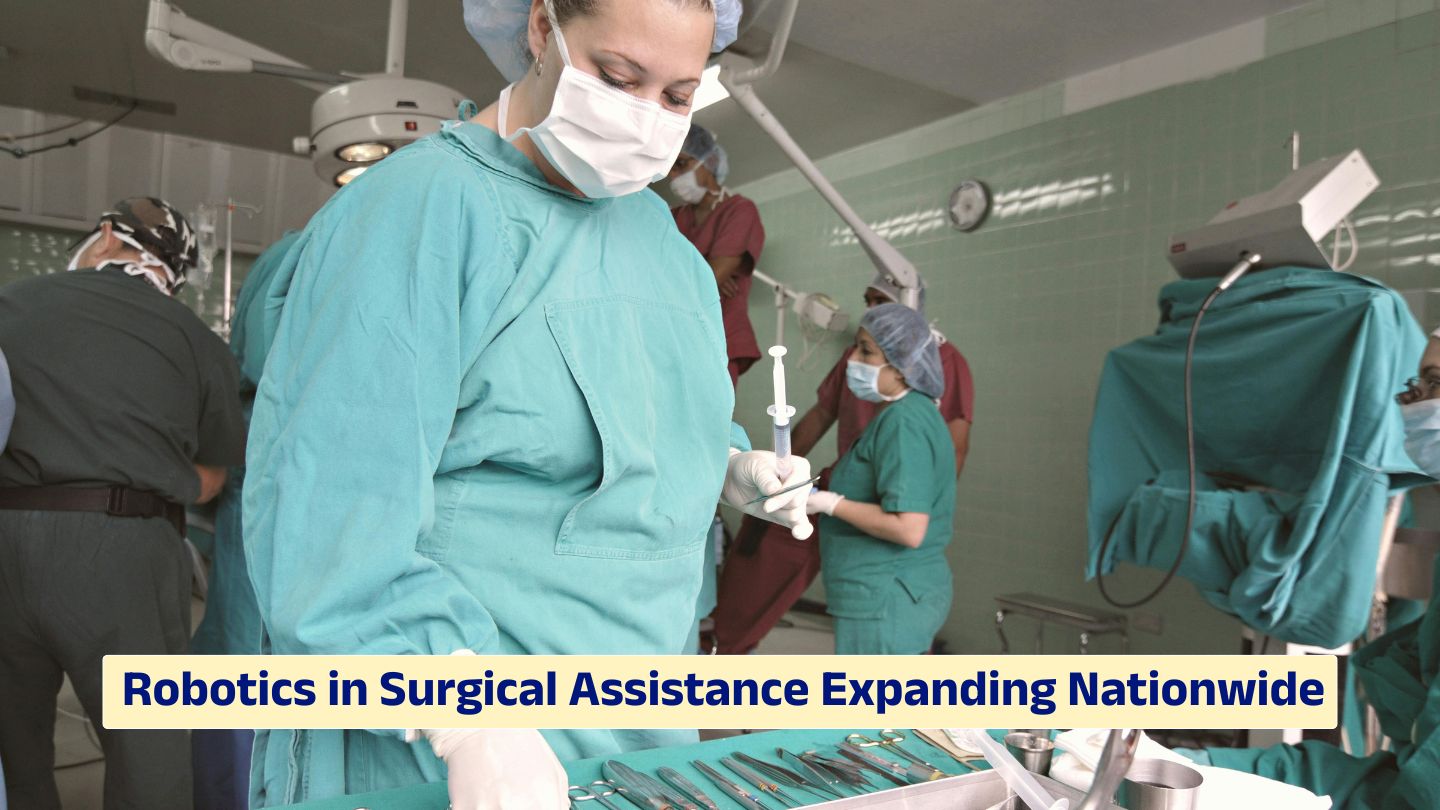
Robotic surgical systems are rapidly expanding across hospitals in the United States as healthcare providers pursue greater procedural precision, improved patient outcomes, and scalable surgical capacity. Robotics in surgical assistance is no longer limited to large academic medical centers.
Community hospitals and regional health networks are increasingly integrating robotic platforms into operating rooms as part of broader digital transformation strategies.
The expansion reflects a convergence of clinical demand, surgeon training, and technology maturation.
Robotic platforms now support a growing range of procedures, including urology, gynecology, cardiothoracic surgery, colorectal interventions, and minimally invasive orthopedic operations.
As adoption spreads nationwide, robotic assistance is reshaping surgical workflows and redefining the infrastructure requirements of modern operating suites.
| Key Point | Details |
|---|---|
| National adoption | Robotic surgical platforms are expanding from major academic centers to regional hospitals and community systems. |
| Procedure growth | Robotics now supports multiple specialties including urology, gynecology, colorectal surgery, and thoracic procedures. |
| Technology evolution | New systems incorporate enhanced imaging, improved instrument articulation, and integrated digital guidance. |
| Regulatory oversight | Robotic surgical platforms must meet US FDA medical device approval standards and postmarket safety monitoring. |
| Market expansion | New entrants in robotic surgery technology are increasing competition in the surgical robotics market. |
Adoption
The adoption of robotic surgical systems in the United States has accelerated significantly over the past decade. Hospitals view robotic technology as a way to support minimally invasive procedures while attracting surgeons and patients seeking advanced treatment options.
Many healthcare systems now consider robotic surgery capabilities a competitive requirement in regional healthcare markets.
Training programs have also expanded to support this shift. Surgical residents and fellows are increasingly exposed to robotic platforms during clinical education, helping create a workforce comfortable with robotic-assisted procedures.
As surgeon familiarity grows, procedural adoption tends to expand across multiple specialties within the same hospital system.
Technology
Robotic surgical systems combine high definition visualization, articulated instruments, and computer-assisted motion control.
These features allow surgeons to perform complex procedures through small incisions while maintaining enhanced dexterity and precision compared with conventional laparoscopic tools.
Recent platform upgrades are introducing advanced imaging integration, real-time data visualization, and digital workflow management.
These improvements aim to assist surgeons in identifying anatomical structures more clearly while improving surgical planning and intraoperative decision-making.
Regulation
Robotic surgical systems in the United States are regulated as medical devices and must meet safety and effectiveness standards established by the US Food and Drug Administration. Manufacturers must demonstrate device performance, clinical safety, and reliability before systems can be marketed for clinical use.
The FDA also maintains postmarket monitoring frameworks to track device performance and safety signals once robotic platforms are deployed in hospitals. Detailed information about device oversight can be reviewed through the FDA medical devices regulatory program.
Economics
Robotic surgical platforms represent significant capital investments for hospitals, often requiring dedicated operating room infrastructure and specialized training programs.
Despite these costs, healthcare systems frequently justify adoption through long-term strategic benefits, including procedural efficiency, patient demand, and surgeon recruitment advantages.
Reimbursement policies also influence adoption patterns. The US Centers for Medicare and Medicaid Services evaluates reimbursement pathways for surgical procedures performed using robotic assistance under broader payment frameworks.
Information about federal reimbursement policy development is available through the Centers for Medicare and Medicaid Services.
Competition
The surgical robotics market is evolving as new technology developers enter the field with alternative platform designs. Historically dominated by a limited number of systems, the sector is now seeing increased innovation in robotic arms, modular surgical tools, and AI-supported navigation technologies.
This competitive environment is expected to accelerate product development while potentially reducing long-term system costs.
For healthcare providers, a broader vendor landscape may expand access to robotic surgery platforms, particularly for mid-sized hospitals seeking cost-effective solutions.
As robotic surgical assistance expands nationwide, hospitals are likely to integrate robotics into broader digital surgery ecosystems that include imaging analytics, data-driven surgical planning, and advanced operating room connectivity.
The evolution of robotic surgery, therefore, represents not only a technological shift but also a structural transformation of surgical care delivery across the United States.
FAQs
What is robotic surgical assistance?
Robotic surgical assistance refers to the use of robotic systems that allow surgeons to perform procedures using computer-controlled instruments and high-resolution visualization while maintaining direct control of the operation.
Why are hospitals adopting robotic surgery systems
Hospitals adopt robotic systems to support minimally invasive procedures, improve surgical precision, enhance patient outcomes, and attract surgeons and patients seeking advanced treatment technologies.
Are robotic surgeries fully automated?
Robotic surgeries are not automated. Surgeons remain in full control of the robotic instruments and guide all movements through specialized control systems and imaging interfaces.
How are robotic surgical systems regulated in the United States
Robotic surgical platforms are regulated by the US Food and Drug Administration as medical devices. Manufacturers must demonstrate safety and effectiveness before systems are approved for clinical use.
Which surgical specialties commonly use robotic systems
Robotic surgical systems are commonly used in urology, gynecology, colorectal surgery, thoracic surgery, and certain orthopedic and general surgical procedures.