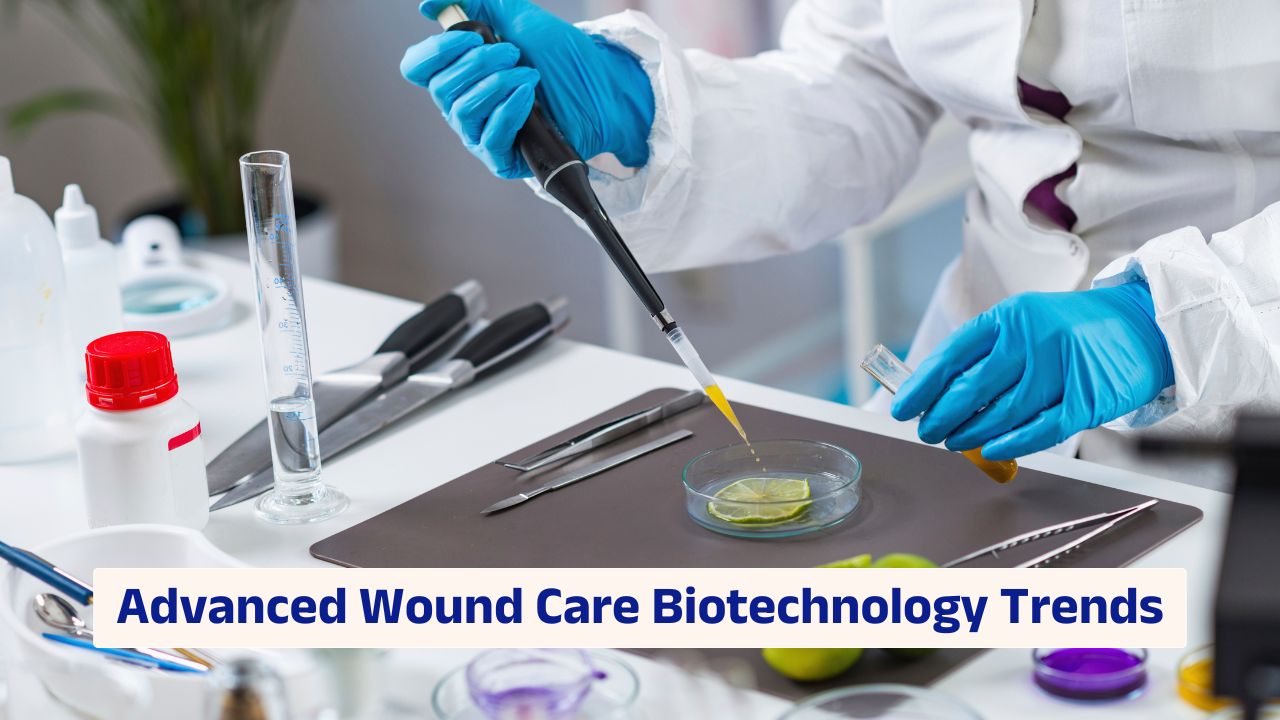
Advanced wound care biotechnology trends are reshaping how U.S. healthcare systems manage chronic and complex wounds, particularly diabetic foot ulcers, pressure injuries, and venous leg ulcers.
As clinical demand grows alongside an aging population and rising diabetes prevalence, biotechnology-driven therapies are moving beyond traditional dressings toward regenerative and bioactive solutions.
Unlike conventional wound care products that primarily provide moisture balance and protection, advanced platforms integrate biologics, engineered scaffolds, and cell-based constructs designed to actively promote tissue regeneration.
For developers and investors, the convergence of regulatory oversight, reimbursement policy, and real-world evidence requirements now defines the commercial trajectory of this segment.
| Combination product or biologics review through the FDA, depending on composition and claims. | Details |
|---|---|
| Biologic Scaffolds | Human and animal derived extracellular matrix products supporting tissue regeneration. |
| Cell Based Therapies | Living cell constructs designed to accelerate healing in chronic wounds. |
| Regulatory Pathways | Combination product or biologics review through FDA depending on composition and claims. |
| Reimbursement Scrutiny | CMS coverage policies influence adoption and utilization patterns. |
| Value Based Care | Growing emphasis on reducing hospital readmissions and amputation rates. |
Biologics
Biologic scaffolds derived from human or porcine extracellular matrix have become central to advanced wound care biotechnology trends. These products aim to provide structural support while signaling pathways that encourage cellular migration and angiogenesis.
Manufacturers must carefully characterize sourcing, processing methods, and sterility controls to meet regulatory standards.
In the United States, regulatory classification may fall under the FDA human cells, tissues, and cellular and tissue-based products framework or require biologics license applications, depending on the level of manipulation and intended use. The distinction has significant implications for development timelines and capital requirements.
Cell Therapy
Living cell constructs represent a more complex category within advanced wound care biotechnology trends. These therapies incorporate viable cells seeded onto matrices to enhance healing in refractory wounds.
Clinical development requires demonstration of safety, potency, and manufacturing consistency, often under oversight from the FDA Center for Biologics Evaluation and Research.
Manufacturing scalability remains a key barrier. Autologous approaches introduce logistical challenges, while allogeneic platforms must address immunogenicity and long-term stability. Investors and strategic partners closely evaluate chemistry, manufacturing, and controls data before committing capital.
Digital Integration
Digital health tools are increasingly integrated with advanced wound care products. Remote wound monitoring platforms, artificial intelligence-assisted imaging, and electronic documentation systems enable earlier intervention and outcome tracking. These technologies may qualify as software as a medical device and require separate regulatory review.
Integration of data analytics strengthens value propositions under risk-based reimbursement models. Demonstrating measurable reductions in healing time or hospitalization rates can influence coverage determinations by the Centers for Medicare and Medicaid Services and commercial payers.
Reimbursement
Reimbursement policy plays a decisive role in market sustainability. Advanced wound care biotechnology products often carry higher per-unit costs compared with standard dressings. CMS coverage decisions, local coverage determinations, and coding frameworks determine utilization patterns in outpatient and home health settings.
Recent scrutiny around utilization management has prompted greater demand for clinical evidence demonstrating superiority over conventional therapy. Randomized controlled trials and real-world data analyses are increasingly necessary to support continued reimbursement.
Commercialization
Strategic partnerships between biotechnology developers and established wound care distributors are shaping commercialization pathways. Access to hospital systems and ambulatory surgery centers often depends on relationships with group purchasing organizations and integrated delivery networks.
Capital markets remain selective, favoring companies that align robust clinical data with scalable manufacturing and clear reimbursement pathways.
As healthcare shifts toward value-based models focused on reducing complications and limb loss, advanced wound care biotechnology trends will likely emphasize integrated solutions rather than standalone products.
Sustainable growth in this sector depends on disciplined regulatory execution, transparent evidence generation, and alignment with payer and provider economics.
FAQs
What defines advanced wound care biotechnology?
It refers to biologic, cellular, or engineered products designed to actively promote tissue regeneration beyond traditional protective dressings.
How are advanced wound care products regulated in the US?
Regulation depends on composition and claims, ranging from medical device pathways to biologics oversight under FDA frameworks.
Why is reimbursement critical for market adoption?
Higher product costs require clear CMS and payer coverage policies supported by clinical evidence of improved outcomes.
What role does digital health play in wound care?
Digital tools enable remote monitoring and data analytics, supporting outcome tracking and value-based care models.
What challenges do companies face in commercialization?
Key challenges include regulatory classification, manufacturing scalability, clinical evidence generation, and securing distribution partnerships.