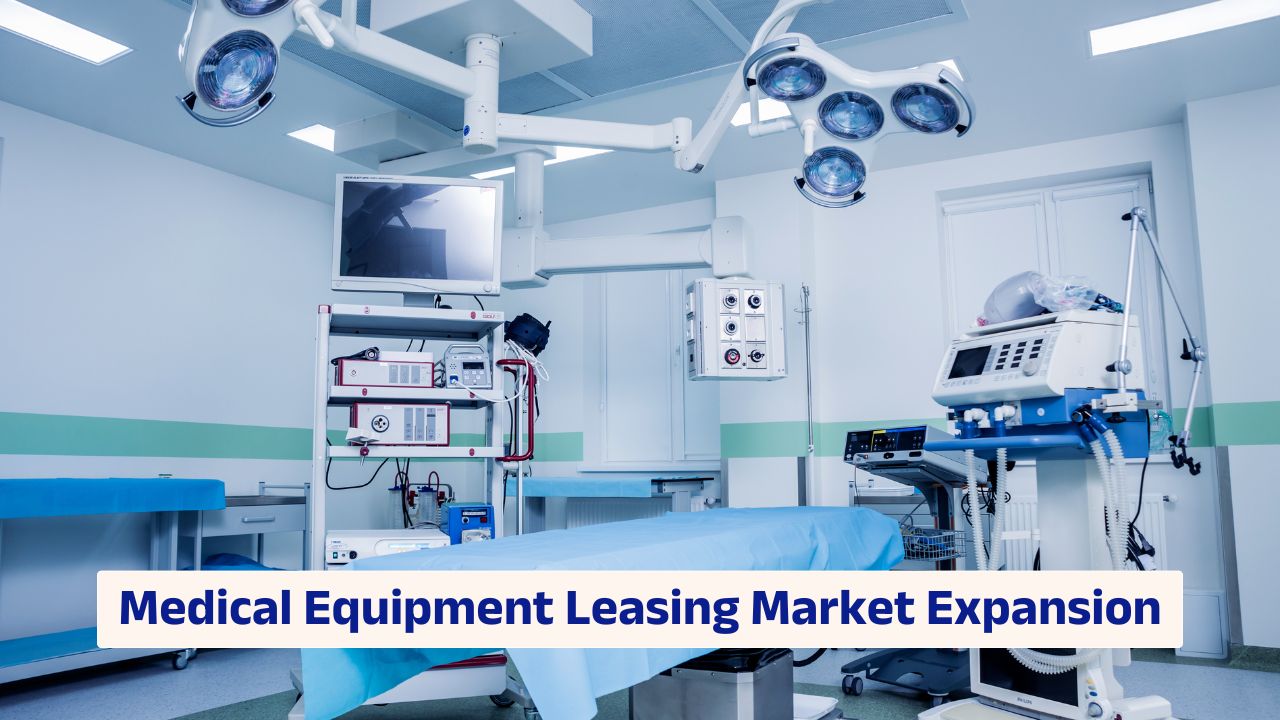
The medical equipment leasing market is gaining strategic importance across the United States as healthcare providers seek capital-efficient ways to modernize infrastructure without incurring high upfront costs.
With rising pressure from value-based care models and ongoing reimbursement constraints, leasing is emerging as a viable financial strategy for hospitals, ambulatory centers, and specialty clinics aiming to maintain technological competitiveness.
| Key Point | Details |
|---|---|
| Capital Efficiency | Leasing reduces upfront capital expenditure and preserves liquidity for healthcare providers |
| Technology Access | Facilitates faster adoption of advanced diagnostic and therapeutic equipment |
| Regulatory Alignment | Supports compliance with evolving FDA and CMS technology standards |
| Operational Flexibility | Allows upgrades and replacements without long-term asset depreciation risks |
| Market Growth Drivers | Driven by outpatient expansion, aging population, and digital health integration |
Drivers
The shift toward outpatient care delivery is one of the primary catalysts for leasing growth. Ambulatory surgical centers and physician-owned practices often lack the capital reserves required for high-cost imaging systems or surgical robotics. Leasing models provide access to advanced tools without compromising operational budgets.
Additionally, healthcare providers are navigating reimbursement pressures from the Centers for Medicare and Medicaid Services.
Payment reforms tied to outcomes and efficiency are forcing institutions to optimize resource allocation. Leasing aligns with these goals by converting large capital expenditures into predictable operating expenses.
The increasing pace of technological obsolescence further strengthens the leasing proposition. Equipment such as MRI scanners, CT systems, and digital pathology platforms evolves rapidly.
Leasing enables providers to upgrade more frequently, ensuring compliance with clinical and regulatory expectations.
Regulation
Regulatory frameworks in the United States indirectly support the expansion of equipment leasing.
The Food and Drug Administration continues to tighten requirements for safety, performance, and post-market surveillance of medical devices. Providers must ensure that their equipment meets current standards, which can necessitate frequent upgrades.
Leasing arrangements help institutions remain compliant without absorbing the full financial burden of replacing outdated systems.
Furthermore, accounting standards under the Financial Accounting Standards Board have reshaped how leases are reported, increasing transparency but also encouraging structured financial planning.
Healthcare organizations are also leveraging guidance from agencies such as the National Institutes of Health, particularly when adopting research-grade or precision medicine technologies.
More details on regulatory expectations can be explored through the FDA medical devices framework, which outlines compliance pathways for device usage and lifecycle management.
Technology
The integration of digital health technologies is reshaping leasing demand. Equipment embedded with artificial intelligence capabilities, cloud connectivity, and real-time analytics is becoming standard in diagnostics and patient monitoring.
Leasing providers are increasingly bundling software, maintenance, and data services into comprehensive agreements.
This evolution is particularly relevant in radiology and cardiology, where advanced imaging systems require continuous software updates and cybersecurity compliance.
Leasing structures allow healthcare providers to access these capabilities while mitigating risks associated with rapid technological change.
Moreover, interoperability requirements driven by federal initiatives are influencing procurement decisions.
Providers must ensure that leased equipment integrates seamlessly with electronic health record systems and data exchange platforms, reinforcing the importance of flexible and service-oriented leasing models.
Market
The U.S. medical equipment leasing market is characterized by participation from financial institutions, specialized leasing firms, and original equipment manufacturers offering in-house financing solutions.
Competitive dynamics are shifting toward value-added services, including predictive maintenance, lifecycle management, and performance analytics.
Private equity interest in healthcare infrastructure is also contributing to market expansion. Investors are supporting leasing platforms that cater to mid-sized providers and outpatient networks, segments that are experiencing rapid growth but often face capital constraints.
In parallel, hospital systems are increasingly adopting asset-light strategies. Rather than owning depreciating equipment, they are reallocating capital toward strategic initiatives such as digital transformation, clinical research, and patient engagement technologies.
Insights into healthcare spending trends and infrastructure investments can be further reviewed through the CMS healthcare expenditure data portal, which highlights broader economic drivers influencing procurement decisions.
Outlook
Looking ahead, the medical equipment leasing market is expected to play a central role in enabling healthcare modernization across the United States.
As providers balance financial sustainability with the need for technological advancement, leasing offers a scalable and adaptable solution.
The convergence of regulatory requirements, technological innovation, and evolving care delivery models will continue to shape leasing strategies.
Stakeholders that can integrate financing with service delivery and digital capabilities are likely to capture significant market share.
Ultimately, leasing is transitioning from a tactical financial tool to a strategic enabler of healthcare transformation. Its role in supporting access to advanced medical technologies positions it as a critical component of the industry’s long-term growth trajectory.
FAQs
What is medical equipment leasing in healthcare?
Medical equipment leasing allows healthcare providers to use advanced medical devices through periodic payments instead of purchasing them outright, preserving capital and improving financial flexibility.
Why is leasing becoming popular among US healthcare providers?
Leasing is growing due to rising equipment costs, rapid technological advancements, and reimbursement pressures that make capital conservation essential for providers.
How does leasing support regulatory compliance?
Leasing enables providers to upgrade equipment more frequently, ensuring compliance with FDA standards and evolving safety and performance requirements.
What types of equipment are commonly leased?
Commonly leased equipment includes MRI machines, CT scanners, ultrasound systems, surgical devices, and digital health platforms with integrated software.
What are the risks associated with equipment leasing?
Potential risks include long-term contractual obligations, total cost exceeding purchase price, and dependency on leasing providers for maintenance and upgrades.