Mergers and acquisitions in medical manufacturing have accelerated as companies seek scale, technological capability, and regulatory alignment in an increasingly complex healthcare landscape.
The sector, spanning medical devices, diagnostics, and contract manufacturing organizations, is experiencing sustained consolidation driven by cost pressures, innovation demands, and global supply chain restructuring.
| Key Point | Details |
|---|---|
| Strategic Consolidation | Companies acquire capabilities in advanced manufacturing and product design |
| Regulatory Drivers | FDA compliance complexity incentivizes scale and expertise |
| Supply Chain Resilience | Nearshoring and vertical integration reshape deal activity |
| Private Equity Involvement | Financial sponsors target high-margin contract manufacturers |
| Technology Integration | Focus on automation, digital manufacturing, and precision engineering |
Drivers
Medical manufacturing companies are navigating a landscape shaped by rising regulatory complexity, pricing pressures, and increasing demand for innovation.
Consolidation through mergers and acquisitions offers a pathway to achieve operational efficiencies while expanding technological capabilities.
Larger platforms can better absorb compliance costs associated with evolving requirements from the US Food and Drug Administration.
Strategic buyers are particularly focused on acquiring niche manufacturers with specialized capabilities such as minimally invasive device production or advanced materials processing.
These targeted acquisitions allow acquirers to accelerate product development timelines and strengthen their competitive positioning in high-growth therapeutic areas.
Technology
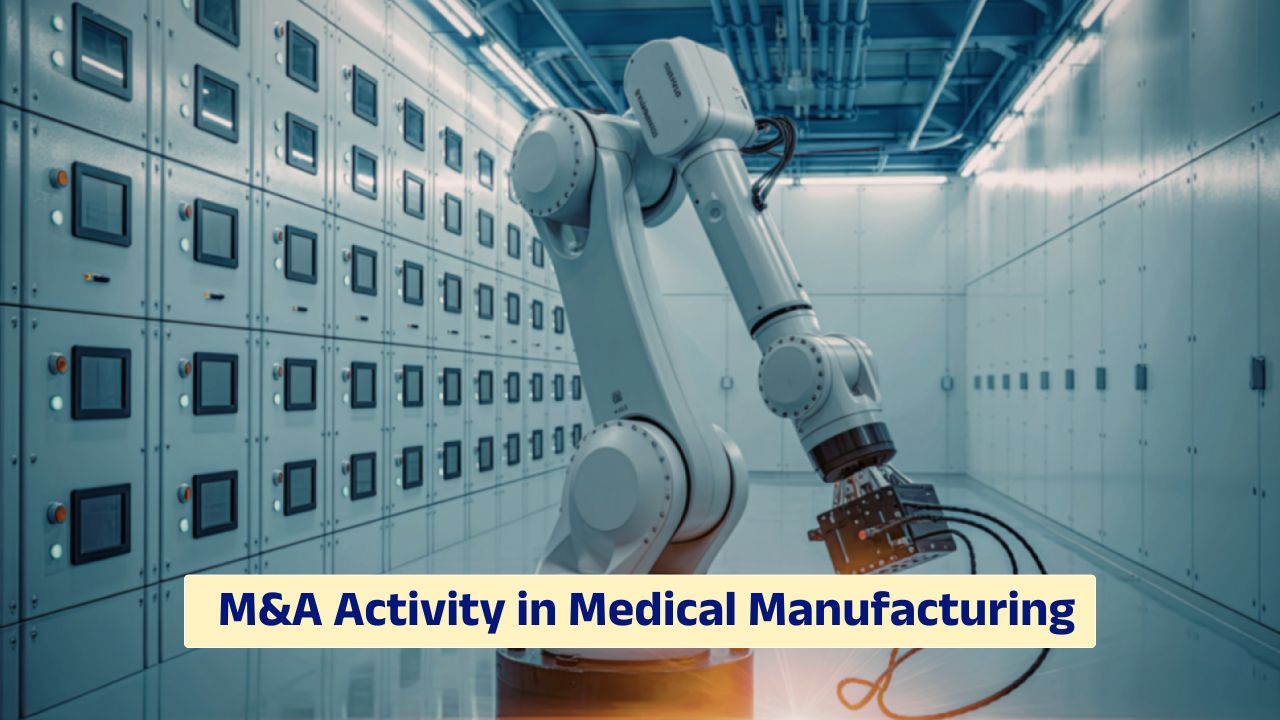
Technology integration is a central theme in M&A activity. Companies are pursuing acquisitions that enhance their digital manufacturing capabilities, including automation, robotics, and data-driven quality systems.
These capabilities are increasingly critical for meeting precision requirements and maintaining consistency across complex production processes.
The adoption of smart manufacturing technologies also supports regulatory compliance by improving traceability and documentation. Digital systems enable manufacturers to generate audit-ready records, reducing risk during inspections and facilitating faster product approvals.
In addition, acquisitions are enabling companies to integrate end-to-end solutions, from design and prototyping to full-scale production.
This vertical integration enhances control over quality and timelines, which is particularly valuable in a market where speed to market can influence clinical and commercial success.
Regulation
Regulatory considerations play a decisive role in shaping deal strategy. Compliance with quality system regulations and evolving guidance from the US Food and Drug Administration requires significant investment in infrastructure and expertise.
Larger organizations are better positioned to manage these demands, making consolidation an attractive strategy.
Post-acquisition integration often focuses on harmonizing quality systems and ensuring alignment with FDA standards.
Failure to integrate effectively can expose companies to compliance risks, including warning letters or product recalls. As a result, due diligence increasingly emphasizes regulatory history and quality performance.
Additionally, global regulatory harmonization efforts influence cross-border transactions. Companies seeking to expand internationally must navigate varying regulatory frameworks, further incentivizing acquisitions of firms with established compliance infrastructure.
Capital
Private equity firms are playing an increasingly prominent role in medical manufacturing M&A. These investors are attracted to the sector’s stable demand, recurring revenue models, and opportunities for operational improvement. Platform investments followed by bolt-on acquisitions have become a common strategy.
Financial sponsors are particularly focused on contract manufacturing organizations that serve multiple original equipment manufacturers.
These businesses offer diversified revenue streams and scalability, making them attractive targets for consolidation and value creation.
Capital availability remains strong, although rising interest rates and macroeconomic uncertainty are influencing deal structures.
Earnouts and performance-based incentives are increasingly used to align buyer and seller expectations in a more cautious investment environment.
Outlook
The outlook for M&A in medical manufacturing remains robust, supported by ongoing demand for healthcare innovation and infrastructure modernization.
Insights from organizations such as the MedTech Dive highlight continued deal momentum, particularly in segments aligned with minimally invasive procedures and digital health integration.
Strategic acquirers are expected to continue prioritizing assets that enhance technological differentiation and regulatory readiness.
At the same time, private equity firms will likely remain active, leveraging consolidation strategies to build scaled platforms capable of competing in a global market.
As the industry evolves, M&A will remain a critical mechanism for aligning manufacturing capabilities with the demands of modern healthcare systems.
Companies that successfully integrate acquisitions while maintaining regulatory compliance and operational excellence will be best positioned to capture long-term value in this dynamic sector.
FAQs
What is driving M&A activity in medical manufacturing
M&A activity is driven by the need for scale, regulatory compliance, advanced manufacturing capabilities, and supply chain resilience.
How does regulation influence medical manufacturing deals
Regulatory requirements from the FDA increase compliance costs, encouraging consolidation and careful due diligence during acquisitions.
Why are private equity firms investing in this sector
Private equity firms are attracted to stable demand, recurring revenue, and opportunities for operational improvements in contract manufacturing.
What technologies are shaping M&A strategies
Automation, robotics, and digital manufacturing systems are key technologies influencing acquisition decisions.
What is the future outlook for medical manufacturing M&A
The sector is expected to see continued consolidation driven by innovation, regulatory complexity, and global market expansion.