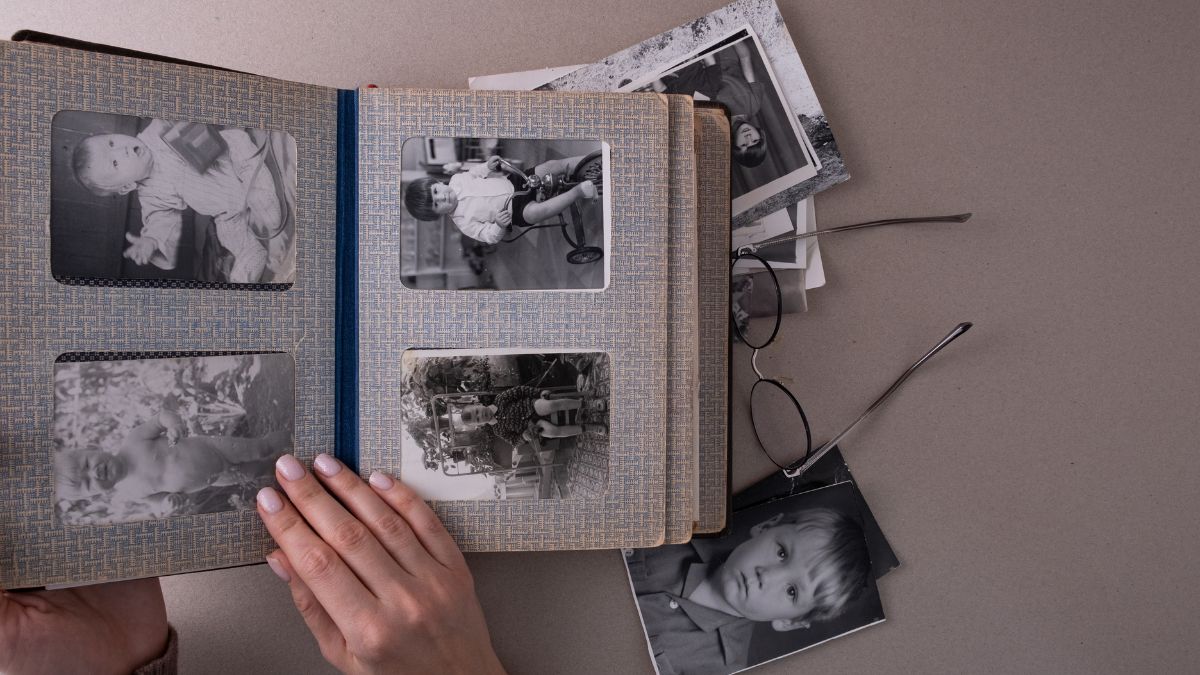
In many households, drawers and boxes still hold printed photographs, even as smartphones and cloud platforms store thousands of digital images. At first glance, this practice may appear outdated. Digital photographs are easier to store, organize, and access. Yet psychologists suggest that keeping printed photos is not a rejection of technology. Instead, it reflects how human memory functions and why physical images continue to play a role in remembering personal experiences.
Research in cognitive psychology shows that memory depends heavily on cues. Printed photographs, because of their physical and visual properties, often serve as especially effective triggers for autobiographical recall. Their continued presence in homes may be less about nostalgia and more about how the brain connects past experiences to the present.
Memory
Human memory does not operate as a precise recording system. Experiences are not stored and retrieved in exact form. Instead, memories are reconstructed using fragments of information. This process depends on cues that resemble the original event. Autobiographical memory research consistently shows that visual cues improve both the amount and clarity of recalled information.
Printed photographs are closely tied to the moments they represent. A study published in the journal Memory found that older adults, including individuals with Alzheimer’s disease, recalled more personal experiences when photographs were used during memory tasks. The findings suggest that images help guide memory retrieval by providing perceptually rich information. Faces, settings, and objects in a photograph assist the brain in locating stored experiences.
These findings are particularly relevant because many memories are not easily accessed through deliberate thought alone. External prompts are often required, and photographs provide a direct link to past experiences.
Cues
Memory retrieval relies on the presence of effective cues. While verbal descriptions can activate memory, visual cues tend to be more precise. A printed photograph presents a fixed image from a specific time and place. This allows the brain to associate the image with related details, such as emotions, people, and context.
Psychologists describe photographs as memory anchors. Rather than reconstructing an event from partial information, the brain uses the image as a reference point. This reduces cognitive effort and improves accuracy. The photograph acts as a bridge between the present moment and the past experience.
This process helps explain why individuals often report immediate and detailed recollections when viewing old photographs. Facial expressions, clothing, lighting, and surroundings are recalled quickly because the image provides direct visual input that mirrors the original experience.
Concreteness
Printed photographs also benefit memory because of their concreteness. A review in Current Directions in Psychological Science noted that specific and unique cues are more effective than general or abstract ones. Printed photos meet these criteria. Each image captures a single moment with a defined visual composition.
Digital photo collections, by contrast, often involve scrolling through large numbers of images. Thumbnails and rapid viewing may reduce the level of attention given to any one photograph. Printed photos encourage focused viewing. The physical act of holding a photograph and examining it closely can support deeper cognitive processing.
In this way, printed photos eliminate the need for the brain to construct a cue. The image already contains the necessary details to support memory retrieval, including spatial layout, visual texture, and contextual elements.
Vision
Visual information plays a central role in memory. Psychologists refer to the picture superiority effect to describe the tendency for images to be remembered more easily than words. Image-based memories are often reported as clearer and more emotionally detailed.
Photographs engage multiple aspects of memory at once. They can prompt recollections of people, locations, emotions, and sensory details. Research on multi-modal memory retrieval shows that while sounds and objects can also serve as cues, visual stimuli often produce stronger and more consistent responses.
This effect helps explain why photographs can evoke strong emotional reactions. The image does not trigger a single memory but activates a network of associated experiences, all connected to the original event.
Physicality
The physical nature of printed photographs also contributes to their impact. Unlike digital images, printed photos exist in physical space. They can be touched, stored, and rediscovered. This physical presence adds an additional layer to memory processing.
Studies on autobiographical priming suggest that objects in one’s environment can repeatedly activate personal memories. A photograph placed in a drawer or box may not be visible every day, but encountering it can prompt an intentional moment of reflection. This contrasts with digital images, which are often viewed briefly and then replaced by newer content.
The decision to keep printed photos, even after digitizing them, may reflect this difference. The physical photograph represents more than stored information. It serves as a symbolic reminder of a specific experience.
Meaning
From a psychological perspective, printed photographs carry meaning beyond their visual content. They function as reminders rather than simple records. Their presence signals that the events they depict remain relevant to personal identity.
Keeping photographs in drawers is therefore not necessarily about resisting modern technology. It reflects how people organize and access their memories. Printed photos support slower, more deliberate engagement with the past. They provide stable cues that help the brain reconstruct personal history.
As digital storage continues to expand, printed photographs remain meaningful because they align with fundamental aspects of human memory. Their continued use highlights the role of physical and visual cues in recalling and understanding lived experience.
FAQs
Why do printed photos support memory recall?
They provide concrete visual cues linked to past experiences.
What is the picture superiority effect?
Images are generally remembered more easily than words.
Are digital photos less useful for memory?
They are useful, but may lack physical and contextual cues.
Why are photos helpful for older adults?
They assist memory retrieval through detailed visual information.
Do physical photos have psychological value?
Yes, their physical presence can strengthen memory connections.