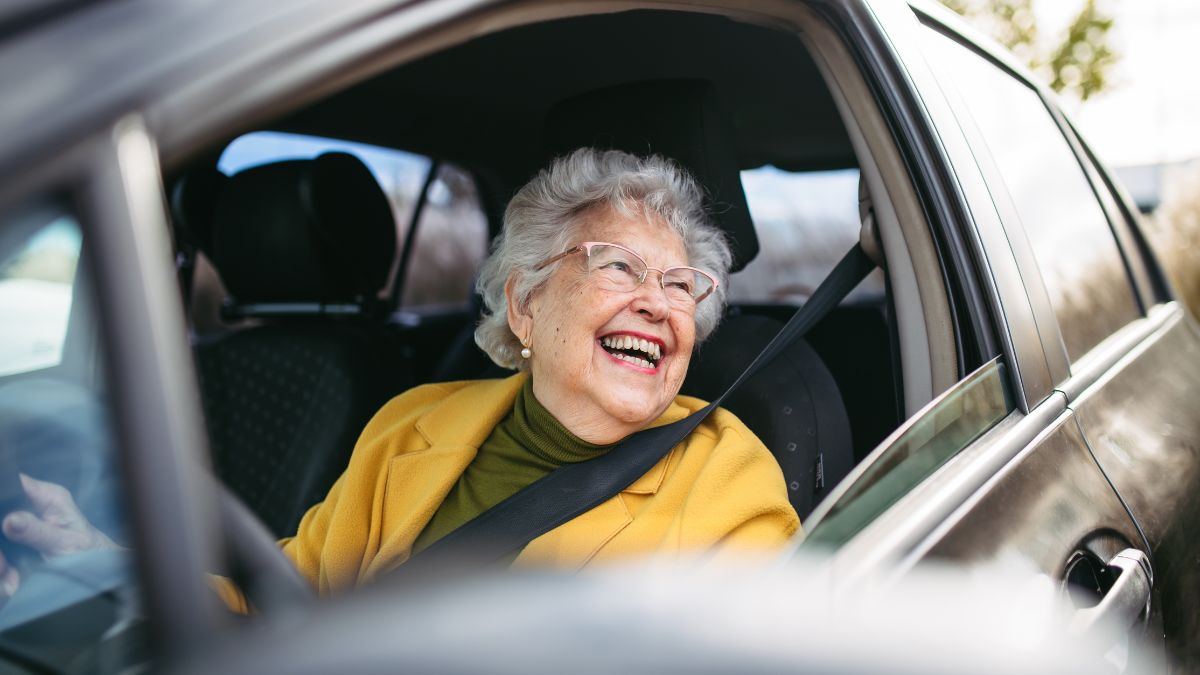
She arrives in her own car. She usually does. The driveway is crowded, and she parks far enough away that leaving later will not require anyone to move their vehicle. Inside, someone casually offers her a ride home at the end of the evening. She thanks them, lifts her keys slightly, and says she is already sorted.
To most people, the behavior appears ordinary. Some might interpret it as independence. Others may see it as routine or personality – someone who simply prefers driving themselves.
But for certain adults, the habit can carry a deeper emotional function. Driving separately is not always about convenience. Sometimes it reflects a long-standing need to maintain control over when and how they leave a situation.
The car itself is often secondary. What matters is the ability to exit without negotiation.
Control
In some households, emotional stability depended heavily on the moods of adults. A child learned quickly that the atmosphere in a room – or in a car – could change without warning. A parent might become irritated, withdrawn, angry, or intoxicated during an outing or on the drive home.
Children in those environments rarely develop formal language for what they are experiencing. Instead, they become attentive to logistics. Who is driving. Who decides when to leave. Whether the driver is already frustrated. Whether the return trip is likely to feel tense.
Over time, these observations can shape behavior long into adulthood.
A person who insists on driving themselves may not consciously connect the habit to earlier experiences. The behavior simply feels necessary. They feel calmer knowing they can leave when they choose, without depending on another person’s mood, schedule, or patience.
From the outside, this can resemble strong independence. Internally, however, the experience may feel closer to emotional preparedness.
Autonomy
Psychologists Edward Deci and Richard Ryan, through self-determination theory, describe autonomy as one of the core human psychological needs. In this context, autonomy refers to feeling that actions are voluntary and self-directed.
That distinction is important because there is a difference between choosing independence and feeling unable to tolerate dependence.
Some people genuinely enjoy driving alone. They like listening to music privately, controlling the route, or having quiet time before and after social events. None of those preferences are inherently defensive.
At the same time, there are situations where the refusal of help becomes automatic and emotionally charged. In those cases, the issue may not be transportation at all. It may reflect an older belief that relying on other people can quickly become uncomfortable or emotionally risky.
Dependence
Accepting a ride means accepting a small set of social conditions that many people barely notice.
The passenger leaves when the driver leaves. The passenger waits during extra stops. The passenger shares the emotional tone of the ride home.
For someone raised in an unpredictable emotional environment, those conditions can feel unusually significant.
If the driver becomes irritated after dinner, the passenger remains inside that mood until the ride ends. If plans change unexpectedly, the passenger adapts. What appears minor to one person may feel deeply uncomfortable to another because it resembles an earlier loss of control.
As a result, many adults quietly structure their lives around self-sufficiency.
| Situation | Emotional Meaning |
|---|---|
| Driving separately | Maintaining personal control |
| Accepting a lift | Depending on another person’s timing |
| Having own transport | Keeping an immediate exit available |
| Sharing rides | Managing another person’s mood or schedule |
The gathering itself may feel easier to enjoy once the exit strategy has already been secured.
Patterns
This type of behavior rarely exists in isolation.
People who strongly prefer driving themselves may also resist accepting help in other areas of life. They may decline assistance during stressful periods, avoid asking for favors, or insist on handling difficult situations alone even when support is available.
In some cases, they become highly reliable helpers for others while remaining uncomfortable receiving help themselves.
The underlying logic can be simple: if nothing is needed from others, nothing can later be held against them.
That mindset often develops in environments where support felt conditional. A request for help may have carried emotional consequences such as criticism, resentment, or guilt.
Over time, avoiding dependence begins to feel safer than risking those reactions again.
Cost
The emotional cost of constant self-reliance is not always immediately visible.
A person who appears highly capable and organized may also experience quiet isolation. Independence can become so practiced that accepting ordinary care from others starts to feel unfamiliar or even uncomfortable.
Psychologists sometimes describe this as a protective adaptation – a strategy that once helped someone feel emotionally safe but continues operating long after the original environment has changed.
That does not mean the behavior is irrational. In many cases, it developed for understandable reasons.
Research on adverse childhood experiences has shown that early instability, conflict, neglect, or unpredictable caregiving can influence how safe dependence feels later in life. Not every adult habit should be traced directly to childhood, but earlier experiences can shape expectations about trust, control, and emotional security.
Rules
There is also a risk in over-interpreting every personal habit as evidence of hidden trauma.
Some people simply prefer driving themselves. Others dislike coordinating schedules or waiting after events. Practical preferences should not automatically be pathologized.
The more important question is whether the behavior functions as a flexible preference or as a rigid rule.
A flexible preference allows adjustment when circumstances change. A rigid rule often produces immediate tension when alternatives are suggested.
For example, if someone becomes visibly uncomfortable at the idea of accepting a short ride from a trusted friend despite no practical concern, the reaction may be tied to something deeper than transportation.
The body can respond before the mind fully explains why.
Safety
Cars represent more than transportation. They are enclosed spaces where control becomes concrete and visible.
The driver controls the route, the timing, the temperature, the music, and the decision to leave. For someone who once felt trapped in emotional situations they could not escape, that level of control can feel stabilizing.
In adulthood, the habit may continue automatically. The keys stay in the pocket. The car remains nearby. The person appears calm because they know they can leave at any moment without explanation.
The behavior is often quiet and socially acceptable, which makes it easy to overlook the emotional reasoning underneath it.
Reflection
Unlearning these patterns does not require forcing dependence or rejecting independence. The goal is not to make everyone accept rides they do not want.
Instead, the process often begins with noticing the emotional reaction attached to the situation.
When someone offers a ride, what appears internally? Is the refusal casual and practical, or immediate and emotionally loaded? Does the body tense before the mind evaluates the offer?
Sometimes the reaction reflects present reality. Sometimes it reflects an older lesson continuing to operate automatically.
Over time, constant self-protection can begin to resemble permanent self-containment. A person may look highly independent from the outside while quietly carrying the belief that relying on others is fundamentally unsafe.
That belief is not always dramatic. Often it is subtle, built from years of small experiences involving unpredictability, criticism, tension, or emotional volatility.
The adult who insists on driving themselves is not necessarily avoiding people. They may simply want reassurance that, if the emotional atmosphere changes, they still control the ride home.
FAQs
Why do some people always drive themselves?
It can provide emotional comfort and personal control.
Is refusing rides always trauma-related?
No, many people simply prefer independence.
What is guarded independence?
Independence driven by emotional self-protection.
Can childhood experiences affect adult habits?
Yes, early environments can shape emotional responses.
Why does control feel important to some adults?
Control can create a stronger sense of safety.