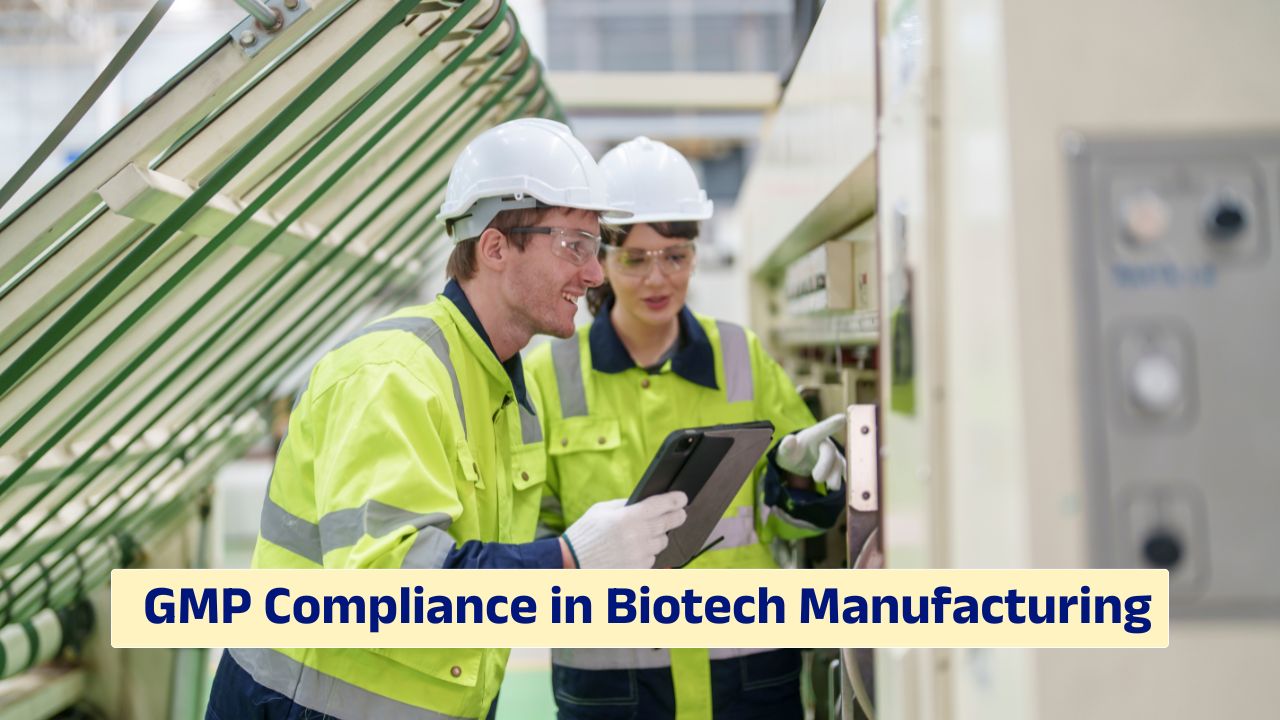
Good Manufacturing Practice, GMP, remains a foundational requirement for biotech manufacturing in the United States, governing how biologics, cell therapies, and advanced therapeutics are produced at scale.
As pipelines shift toward complex modalities, regulatory expectations from the U.S. Food and Drug Administration are becoming more stringent, particularly in areas such as process control, data integrity, and quality assurance systems.
For emerging biotech firms, GMP is no longer a late-stage consideration but a strategic capability that influences valuation, partnerships, and market readiness.
| Key Point | Details |
|---|---|
| Regulatory Oversight | FDA enforces GMP through inspections, guidance, and enforcement actions |
| Quality Systems | Robust quality management systems are required for compliance |
| Advanced Modalities | Cell and gene therapies require specialized GMP frameworks |
| Data Integrity | Digital records and traceability are critical regulatory priorities |
| Facility Standards | Controlled environments and validated equipment are mandatory |
| Commercial Readiness | GMP compliance directly impacts product approval and launch timelines |
Framework
GMP compliance in the U.S. is structured around regulations outlined in Title 21 of the Code of Federal Regulations, particularly Parts 210 and 211, as well as biologics-specific requirements under Part 600.
These regulations define minimum standards for the manufacturing, processing, packaging, and holding of drug products. The FDA GMP regulations provide a detailed framework that manufacturers must integrate into operational systems.
For biologics, compliance extends beyond traditional small molecule manufacturing due to inherent variability in living systems.
This requires a heightened emphasis on process validation, batch consistency, and contamination control.
Regulatory expectations also evolve continuously, requiring companies to maintain adaptive quality systems that reflect current scientific and regulatory thinking.
Operations
Operationalizing GMP involves integrating quality into every stage of manufacturing, from raw material sourcing to final product release.
This includes supplier qualification, environmental monitoring, equipment validation, and personnel training. In biotech settings, upstream and downstream processes must be tightly controlled to ensure reproducibility across batches.
Digital transformation is reshaping GMP operations, with electronic batch records and real-time monitoring systems becoming standard.
These tools improve traceability and support compliance with data integrity expectations, which have become a focal point for FDA inspections.
Companies that invest early in digital infrastructure often achieve more efficient scale-up and smoother regulatory interactions.
Modalities
Advanced therapeutic modalities, including gene therapies and cell-based treatments, introduce unique GMP challenges.
Manufacturing processes are often patient-specific or involve complex viral vector systems, increasing the need for closed systems and stringent contamination controls.
The FDA guidance on cell and gene therapy outlines expectations for product characterization and manufacturing consistency.
Scaling these therapies from clinical to commercial production remains a major industry hurdle.
Facilities must be designed with flexibility to accommodate evolving processes, while maintaining compliance with established GMP standards.
This has led to increased investment in modular manufacturing and contract development and manufacturing organizations specializing in advanced therapies.
Inspections
FDA inspections are a critical component of GMP enforcement, assessing whether facilities meet regulatory expectations.
Inspections can be routine, for cause, or pre-approval, and often focus on documentation practices, deviation management, and corrective actions.
Observations are documented in Form 483, and unresolved issues can escalate to warning letters or enforcement actions.
Preparing for inspections requires a proactive approach, including internal audits, mock inspections, and continuous training programs.
Companies that embed compliance into organizational culture are better positioned to navigate regulatory scrutiny and maintain operational continuity.
Strategy
GMP compliance is increasingly viewed as a strategic differentiator rather than a regulatory burden.
Investors and partners evaluate manufacturing readiness as a proxy for execution capability, particularly for companies approaching pivotal trials or commercialization. Early investment in GMP infrastructure can accelerate timelines and reduce downstream risks.
Contract manufacturing partnerships also play a central role in GMP strategy. Many emerging biotech firms leverage established CDMOs to access compliant facilities and technical expertise without significant capital expenditure.
However, oversight responsibility remains with the sponsor, requiring robust vendor management and quality agreements.
As regulatory expectations continue to evolve, GMP compliance will remain a dynamic and critical component of biotech manufacturing.
Companies that integrate quality, technology, and regulatory foresight into their manufacturing strategies will be better positioned to achieve sustainable growth in an increasingly competitive market.
FAQs
What is GMP compliance in biotech manufacturing
GMP compliance refers to adherence to FDA regulations that ensure biotech products are consistently produced and controlled according to quality standards.
Why is GMP important for biologics?
Biologics are complex and sensitive, requiring strict process controls and quality systems to ensure safety, consistency, and regulatory approval.
How does the FDA enforce GMP compliance?
The FDA enforces GMP through inspections, Form 483 observations, warning letters, and regulatory actions when necessary.
What are the challenges of GMP in cell and gene therapy
Challenges include process variability, scalability, contamination control, and maintaining consistency across patient-specific treatments.
Can biotech startups outsource GMP manufacturing?
Yes, many startups use contract development and manufacturing organizations, but they remain responsible for ensuring compliance.