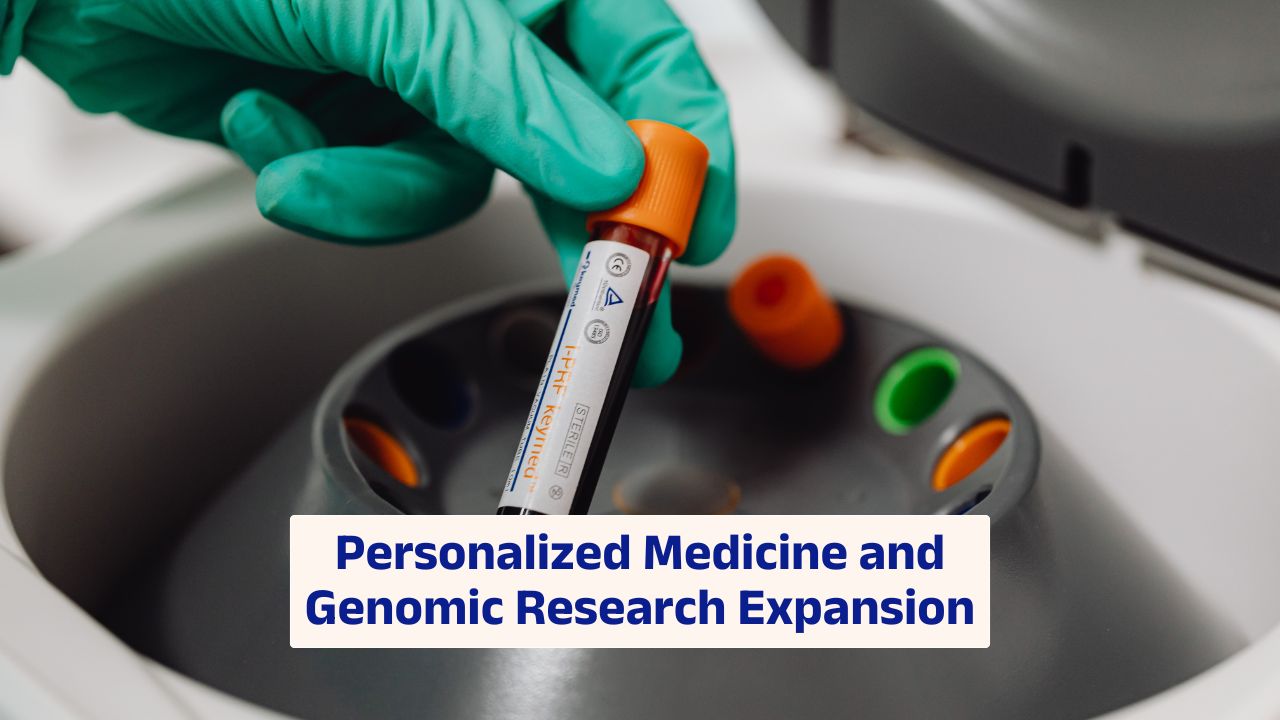
Personalized medicine and genomic research expansion are redefining the strategic architecture of US healthcare innovation. As sequencing costs decline and bioinformatics capabilities mature, genomic data are increasingly integrated into clinical decision making, drug development pipelines, and population health strategies.
What began as a research-driven initiative within academic medical centers has evolved into a commercial and regulatory focal point. Biopharmaceutical companies, diagnostics developers, and health systems are aligning around precision-driven models that connect molecular insight with targeted therapeutic intervention.
| CMS coverage policies influence the adoption of genomic tests and precision therapies. | Details |
|---|---|
| Clinical Integration | Genomic sequencing informs oncology, rare disease, and pharmacogenomic decision pathways. |
| Regulatory Oversight | FDA review governs companion diagnostics and certain genomic testing platforms. |
| Data Infrastructure | Secure data storage, interoperability, and privacy compliance are central to scalability. |
| Reimbursement Models | CMS coverage policies influence adoption of genomic tests and precision therapies. |
| Commercial Strategy | Biotech firms leverage genomic insights to de risk pipelines and stratify clinical trials. |
Clinical Impact
In oncology, genomic profiling is now embedded within standard-of-care decision frameworks at leading US institutions. Molecular characterization enables targeted therapy selection and supports enrollment in biomarker-driven clinical trials.
Rare disease diagnostics have also benefited from expanded sequencing capabilities. Whole exome and whole genome sequencing approaches have accelerated the identification of pathogenic variants, reducing diagnostic odysseys for certain patient populations.
Pharmacogenomics represents another high-growth segment, linking genetic variants to drug metabolism profiles. As health systems seek to reduce adverse drug events and optimize prescribing, genomic insights are increasingly positioned as a risk mitigation tool.
Regulation
Regulatory oversight remains central to sustained expansion. The US Food and Drug Administration’s in vitro diagnostics framework governs many genomic testing platforms, particularly when results inform therapeutic decisions.
Companion diagnostics linked to targeted biologics require coordinated review processes, aligning therapeutic approval timelines with test validation. This co-development model has become increasingly common in oncology pipelines.
Laboratory-developed tests have historically operated under a different oversight structure, but policy discussions continue regarding harmonization and expanded regulatory clarity. Manufacturers and laboratories must anticipate evolving guidance and ensure robust analytical and clinical validation data.
Reimbursement
Coverage policy plays a decisive role in adoption. The Centers for Medicare and Medicaid Services’ Medicare Coverage Database provides insight into national and local coverage determinations affecting genomic testing utilization.
Reimbursement decisions often hinge on demonstrated clinical utility rather than analytical validity alone. Evidence that genomic testing improves outcomes, informs treatment selection, or reduces unnecessary interventions strengthens coverage positioning.
Value-based care frameworks further incentivize precision approaches when they reduce downstream complications or hospitalizations. However, evidence generation must be rigorous and aligned with payer expectations.
Commercialization
For biotech companies, genomic research expansion offers a strategic advantage in target identification and patient stratification. Molecularly defined cohorts increase the probability of clinical trial success by aligning the mechanism of action with genetically characterized subpopulations.
Data partnerships between sequencing companies, academic medical centers, and pharmaceutical developers are expanding proprietary genomic databases. These datasets support the discovery of novel biomarkers and inform licensing or acquisition strategies.
However, commercialization strategies must integrate data governance safeguards. Compliance with federal privacy laws, cybersecurity standards, and ethical data use principles is essential to maintain patient trust and institutional credibility.
Looking ahead, personalized medicine and genomic research expansion will likely deepen integration across therapeutic development, diagnostics, and reimbursement policy.
As regulatory clarity improves and data infrastructure matures, precision-driven healthcare models may transition from specialized practice to standard operating paradigm within US healthcare systems.
Strategic alignment between innovation, regulation, and payer evidence requirements will determine long-term scalability.
FAQs
What is personalized medicine?
Personalized medicine uses genetic, molecular, and clinical data to tailor prevention, diagnosis, and treatment strategies to individual patients.
How does genomic research support drug development?
Genomic insights help identify disease targets, stratify patient populations, and improve clinical trial design by aligning therapies with molecular mechanisms.
Are genomic tests regulated in the US?
Many genomic tests are regulated under the FDA in vitro diagnostic frameworks, particularly when results guide therapeutic decisions.
How does reimbursement affect genomic testing adoption?
Coverage by CMS and private payers depends on demonstrated clinical utility and evidence that testing improves patient outcomes or reduces costs.
What challenges limit the expansion of personalized medicine?
Data privacy, regulatory uncertainty, reimbursement variability, and infrastructure investment requirements can slow widespread implementation.