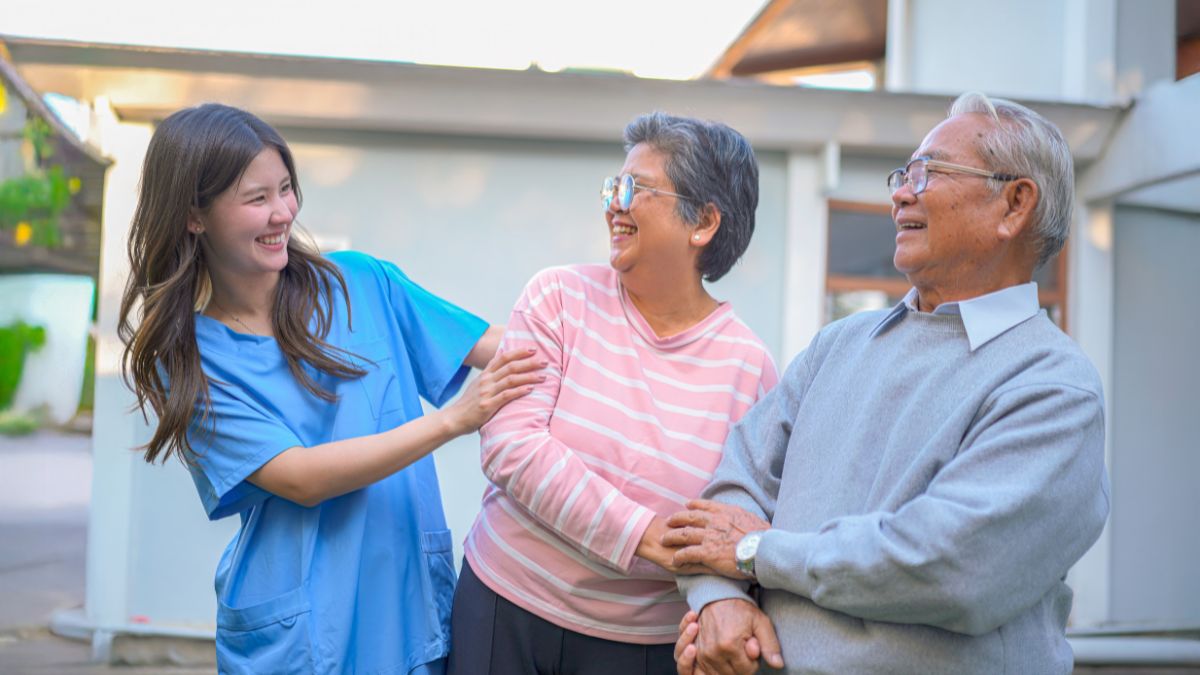
There is a noticeable difference between people who age with ease and those who appear worn down by time. It is not always explained by health routines, income, or access to better care. In many cases, the distinction comes down to something less visible but more influential: whether a person genuinely likes their life.
This quality tends to show itself in subtle but consistent ways. It appears in posture, facial expression, and how someone carries themselves in everyday situations. Two individuals of similar age can present very differently, not because of physical condition alone, but because of how they experience their daily lives.
Observation
Consider a common setting such as a store or public space. One older individual may move with ease, engage naturally with others, and appear comfortable in their surroundings. Another, not much younger, may seem withdrawn, tense, or fatigued.
The difference is not necessarily age. It is often the presence or absence of ease.
This ease is not the result of a single habit or decision. It reflects a broader relationship with life itself.
Expression
The body often reflects long-term emotional patterns. Over time, repeated stress, dissatisfaction, or disengagement can influence posture and movement.
Common physical signals include:
| Emotional Pattern | Physical Expression |
|---|---|
| Ongoing stress | Tension in shoulders and face |
| Disengagement | Slower, heavier movement |
| Contentment | Relaxed posture and natural gestures |
| Engagement | Alert and open body language |
These patterns develop gradually. They are not fixed, but they are shaped by years of lived experience.
Engagement
One consistent trait among individuals who appear younger than their age is ongoing engagement with life. This does not require major achievements or dramatic changes. Often, it is rooted in simple, repeatable activities that provide a sense of interest or satisfaction.
Examples include:
- Maintaining social routines such as regular gatherings
- Pursuing hobbies like gardening, writing, or crafts
- Staying mentally active through conversation or learning
- Finding small events to look forward to during the week
These activities create structure and anticipation. They provide reasons to participate rather than withdraw.
Routine
Daily routines play a significant role in shaping long-term outlook. When routines consist primarily of obligation or passive activity, they can reinforce a sense of endurance rather than participation.
In contrast, routines that include even small elements of enjoyment can shift perception over time.
| Routine Type | Likely Outcome |
|---|---|
| Passive and repetitive | Reduced motivation |
| Balanced with interests | Sustained engagement |
| Socially connected | Improved emotional outlook |
| Isolated | Increased withdrawal |
The difference is not necessarily in how busy a person is, but in how meaningful those activities feel.
Adaptation
A common assumption is that life patterns become fixed with age. However, evidence and lived experience suggest that change remains possible well into later years.
Adjustments may include:
- Reframing daily habits
- Reconnecting with relationships
- Exploring new or previously neglected interests
- Modifying long-held beliefs about communication or behavior
These changes are often gradual and may involve discomfort. However, they can influence both emotional well-being and outward presence.
Perspective
Two individuals can share similar circumstances but experience them differently. One may focus on limitations or losses, while the other identifies areas of continuity or possibility.
This difference in perspective affects:
- Willingness to remain active
- Openness to new experiences
- Quality of social interactions
- Overall sense of purpose
Perspective does not eliminate difficulty, but it shapes how that difficulty is processed.
Presence
People who report satisfaction with their lives often display a stronger sense of presence. They engage more fully in conversations, respond with interest, and appear attentive to their surroundings.
This presence contributes to how they are perceived by others. It can create an impression of vitality that is not strictly tied to physical condition.
Continuity
Enjoying life does not require constant positivity or the absence of hardship. Many individuals who remain engaged have experienced loss, change, or difficulty.
What distinguishes them is continuity. They continue to participate in life despite those experiences. They maintain routines, relationships, and interests that provide structure and meaning.
Reflection
The contrast between individuals who appear energized and those who seem depleted is often gradual and cumulative. It reflects years of interaction between habits, mindset, and environment.
A useful question to consider is whether daily life includes elements that are actively valued, rather than simply endured. Even small adjustments in this direction can influence both internal experience and external expression over time.
In the end, aging is not only a biological process but also a behavioral and psychological one. While physical factors remain important, the way individuals relate to their own lives plays a significant role in how they age and how they are perceived.
FAQs
Why do some older people look younger?
They stay engaged and satisfied with daily life.
Does mindset affect aging?
Yes, it influences stress and physical expression.
What habits support healthy aging?
Social activity, hobbies, and active routines.
Can lifestyle changes help after 60?
Yes, adjustments can improve well-being at any age.
Is happiness linked to physical appearance?
It often reflects in posture and facial expression.