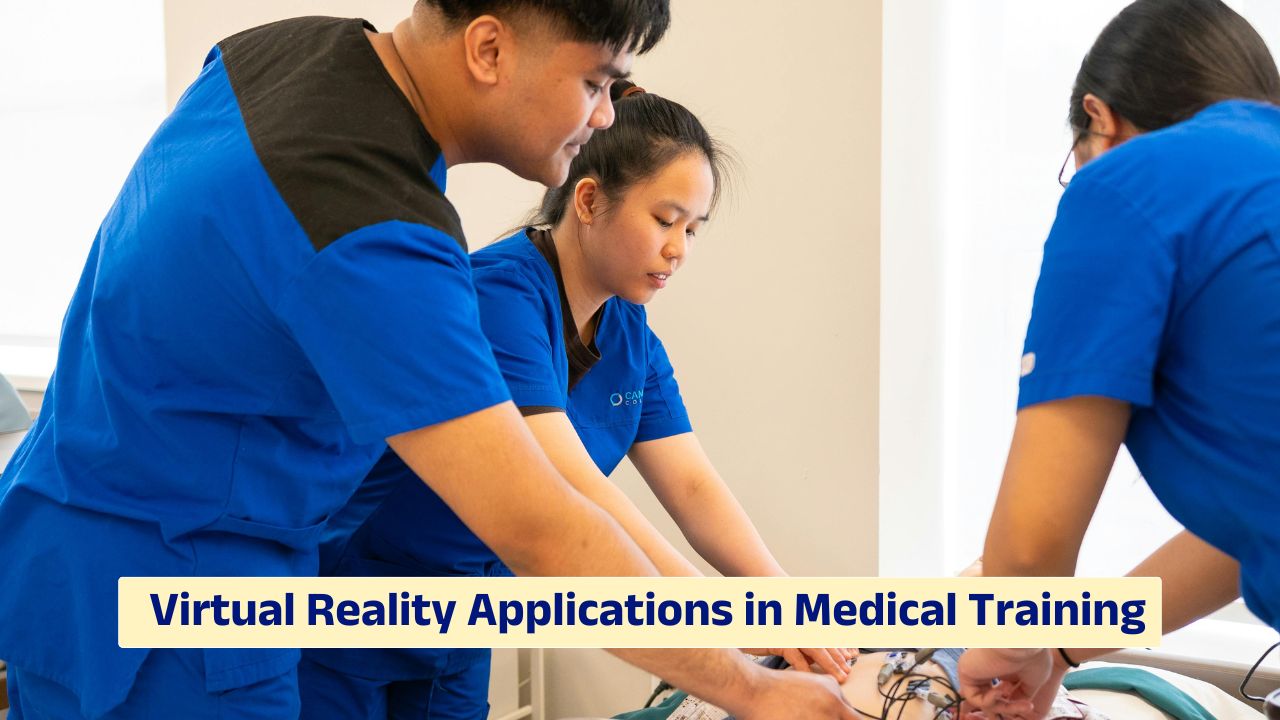
Virtual reality in medical training has transitioned from experimental simulation to a commercially viable component of clinical education in the United States.
Academic medical centers, hospital systems, and private training providers are increasingly deploying immersive platforms to enhance procedural learning, reduce training variability, and improve patient safety outcomes.
This shift reflects broader digital transformation trends across healthcare, where experiential learning technologies are gaining institutional and regulatory attention.
| Key Point | Details |
|---|---|
| Clinical Simulation | VR enables realistic procedural training without patient risk |
| Regulatory Interest | FDA’s validation frameworks for digital training tools and simulations |
| Cost Efficiency | Reduces reliance on cadavers and physical simulation labs |
| Standardization | Ensures consistent training experiences across institutions |
| Commercial Models | Subscription platforms and enterprise licensing dominate revenue strategies |
Applications
Virtual reality applications in medical training span surgical simulation, anatomy education, and emergency response training. Surgical residents can practice complex procedures repeatedly in controlled environments, improving precision and reducing error rates.
VR-based anatomy modules also allow students to visualize structures in three dimensions, enhancing comprehension beyond traditional cadaver-based learning.
Emergency medicine training has emerged as a high-impact use case. VR scenarios simulate trauma cases, enabling clinicians to develop rapid decision-making skills under pressure.
These applications align with hospital priorities to improve readiness without exposing patients to unnecessary risk.
Regulation
The regulatory landscape for VR in medical training is evolving alongside broader digital health frameworks. While most VR platforms are not classified as medical devices, certain applications that influence clinical decision-making may fall under regulatory oversight.
Developers must evaluate whether their products meet the criteria for software as a medical device.
Guidance from the FDA Digital Health Center of Excellence underscores the importance of validation, usability testing, and risk assessment. Companies that proactively align with these standards are better positioned to secure institutional adoption and mitigate compliance risks.
Adoption
Adoption of VR training platforms is being driven by academic medical centers and large hospital systems seeking scalable education solutions.
Integration with existing learning management systems and electronic health records enhances usability and supports data-driven training assessments.
Institutions are increasingly evaluating VR solutions based on measurable outcomes, including skill acquisition speed and procedural accuracy.
Partnerships between VR developers and healthcare providers facilitate real-world validation, strengthening the commercial case for broader deployment.
Economics
From a commercialization perspective, VR platforms offer a compelling value proposition. Initial hardware investments are offset by long-term reductions in training costs, including decreased reliance on physical simulation infrastructure. Subscription-based pricing models allow institutions to scale usage across departments.
Reimbursement is less direct compared to clinical AI applications, but cost savings and training efficiency improvements drive procurement decisions.
Healthcare organizations are increasingly incorporating VR into capital planning strategies, particularly as workforce shortages intensify the need for rapid skill development.
Innovation
Technological advancements continue to expand the capabilities of VR in medical training. Integration with artificial intelligence enables adaptive learning environments that tailor scenarios to individual performance.
Haptic feedback systems are also improving realism, allowing users to experience tactile responses during procedures.
Collaborative initiatives supported by organizations such as the National Institutes of Health are advancing research into immersive training technologies.
These efforts contribute to evidence generation, which is critical for institutional adoption and long-term commercialization.
The commercial growth of virtual reality in medical training will depend on continued validation of clinical outcomes, alignment with regulatory expectations, and integration into healthcare education systems.
As US healthcare providers prioritize efficiency and standardization, VR platforms that demonstrate measurable value are positioned to become core components of medical training infrastructure.
FAQs
What is virtual reality in medical training
Virtual reality in medical training uses immersive digital environments to simulate clinical scenarios for education and skill development.
How is VR used in surgical training
VR allows surgical trainees to practice procedures repeatedly in realistic simulations, improving precision and reducing errors.
Is VR in medical training regulated by the FDA?
Some VR applications may fall under FDA oversight if they influence clinical decision-making or meet software as a medical device criteria.
What are the benefits of VR in healthcare education
Benefits include improved learning outcomes, reduced training costs, standardized experiences, and enhanced patient safety.
Are hospitals adopting VR training solutions?
Yes, hospitals and academic centers are increasingly adopting VR to improve training efficiency and scalability.