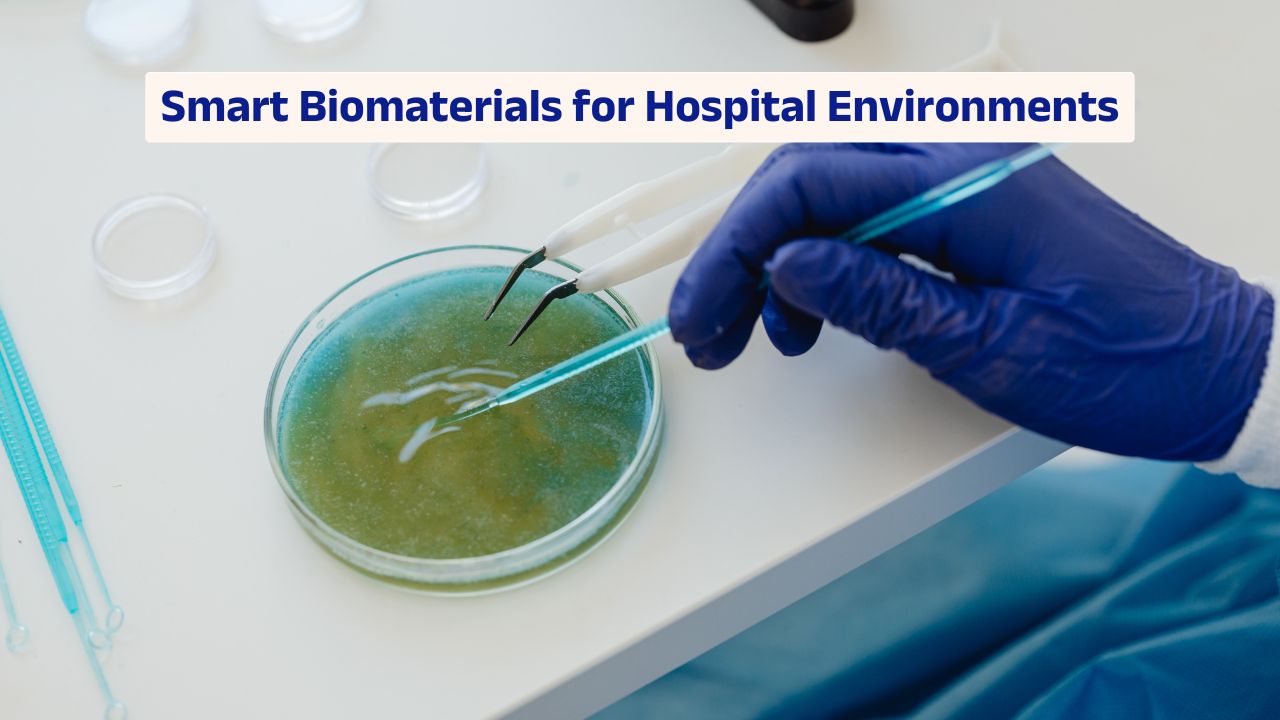
Smart biomaterials for hospital environments are emerging as a strategic convergence point between infection control, material science, and healthcare infrastructure modernization.
As US hospitals face persistent healthcare-associated infections, antimicrobial resistance, and reimbursement pressure from value-based care models, advanced surface technologies are gaining renewed commercial and regulatory attention.
Unlike conventional coatings or passive construction materials, smart biomaterials are engineered to respond dynamically to environmental triggers such as microbial load, moisture, light exposure, or mechanical stress.
Their integration into high-touch surfaces, surgical suites, and critical care units reflects a shift toward preventive infrastructure design rather than reactive infection management.
| Self-disinfecting, antimicrobial, and bioresponsive polymers are being engineered for high-contact surfaces. | Details |
|---|---|
| Clinical Need | Hospital acquired infections remain a major quality and reimbursement concern under CMS value based purchasing programs. |
| Material Innovation | Self disinfecting, antimicrobial, and bioresponsive polymers are being engineered for high contact surfaces. |
| Regulatory Pathways | Products may be regulated as medical devices, combination products, or antimicrobial pesticides depending on claims. |
| Commercial Drivers | Hospital procurement decisions increasingly align with infection reduction metrics and long term operational savings. |
| Market Landscape | Biotech startups and established materials companies are forming cross sector partnerships to accelerate adoption. |
Innovation
Smart biomaterials designed for hospital use typically incorporate antimicrobial peptides, metal ion technologies, photoactivated compounds, or stimuli-responsive polymers. Some surfaces release active agents when microbial colonization is detected, while others alter surface energy to prevent biofilm formation.
Biofilm prevention is particularly relevant in intensive care units and surgical settings, where persistent contamination can compromise outcomes. According to the Centers for Disease Control and Prevention, healthcare-associated infections remain a significant clinical burden, reinforcing the value of infrastructure-level interventions.
Emerging materials also integrate sensor enabled capabilities, allowing facilities teams to monitor contamination levels in real time. While still in early deployment, these hybrid biomaterial systems align with broader hospital digital transformation strategies.
Regulation
Regulatory classification of smart biomaterials depends heavily on intended use and marketing claims. If a product is designed to actively reduce microbial load and is positioned as contributing to infection prevention in clinical settings, it may fall under the oversight of the US Food and Drug Administration medical devices program.
However, certain antimicrobial surface treatments may instead be reviewed under Environmental Protection Agency antimicrobial pesticide frameworks. The distinction is critical for commercialization timelines, evidence requirements, and labeling strategy.
Manufacturers must also consider biocompatibility standards, durability validation, and long-term exposure risk assessments. Hospitals require assurance that antimicrobial functionality does not compromise patient safety, particularly in neonatal and oncology units where immunocompromised populations are concentrated.
Commercialization
The economic argument for smart biomaterials extends beyond infection metrics. Under Centers for Medicare and Medicaid Services reimbursement models, hospital performance on quality measures directly influences payment adjustments. Infrastructure investments that demonstrably reduce infection risk may therefore yield indirect financial returns.
Procurement committees increasingly evaluate lifecycle costs rather than upfront capital expense. Self-disinfecting surfaces that reduce manual cleaning frequency or chemical disinfectant use can create operational efficiencies over time. This value narrative is particularly relevant for large integrated delivery networks.
Strategic partnerships between biotech innovators and construction or facility management firms are accelerating deployment. Rather than selling standalone coatings, companies are embedding smart biomaterials into flooring, bed rails, door handles, and wall panels during renovation cycles.
Challenges
Despite promising innovation, adoption barriers remain. Clinical validation in real-world hospital environments is complex, requiring longitudinal studies that isolate material performance from cleaning protocols and human factors.
There is also increasing scrutiny regarding antimicrobial resistance. Materials that continuously release biocidal agents must demonstrate that they do not contribute to selective pressure or environmental accumulation. Regulatory agencies are likely to require robust post-market surveillance for certain technologies.
Capital budgeting cycles present another constraint. Hospital construction and renovation timelines are multi year projects, meaning market penetration for smart biomaterials may follow a gradual rather than exponential curve.
Looking ahead, smart biomaterials for hospital environments are poised to become part of a broader infection-resilient design paradigm. As health systems prioritize prevention, digital integration, and measurable quality outcomes, material science innovation will increasingly intersect with healthcare strategy.
For biotech developers, success will depend not only on technical performance but also on regulatory clarity, reimbursement alignment, and cross-sector collaboration.
FAQs
What are smart biomaterials in hospital environments?
Smart biomaterials are engineered materials that respond to environmental triggers such as microbial presence or moisture to reduce contamination or prevent biofilm formation in healthcare settings.
How are smart biomaterials regulated in the US?
Depending on claims and intended use, they may be regulated as medical devices by the FDA or as antimicrobial products under other federal frameworks. Classification determines evidence and approval requirements.
Do smart biomaterials replace hospital cleaning protocols?
No. They are designed to complement, not replace, established environmental cleaning and infection control procedures within healthcare facilities.
What commercial factors influence adoption?
Hospital reimbursement models, lifecycle cost analyses, infection reduction metrics, and construction cycles all influence purchasing decisions.
Are there concerns about antimicrobial resistance?
Yes. Continuous release of antimicrobial materials must be evaluated carefully to ensure they do not contribute to resistance development or environmental risk.